

Here's my Top 10 links from around the Internet at 10 am in association with NZ Mint.
I welcome your additions in the comments below or via email to bernard.hickey@interest.co.nz.
I'll pop the extras into the comment stream. See all previous Top 10s here.
Today we have talking dogs (sort of) at Number 10.

1. 'We're too big to fail' - Investment News reports a Merrill Lynch-Bank of America adviser telling clients that they can stay with them because the government has proved before that Merrill-BoA is too big to fail and won't be allowed to fall over.
The moral hazard and the arrogance is extraordinary.
I'm beginning to wonder if these banks should just have been allowed to fall over in September 2008.
It would have cleaned out the system.
Instead now we have a bunch of zombie banks with US$2 trillion of cash who can't or won't lend it out.
America's economic growth is grinding to a halt again.
Here's the moral hazard detail writ large.
“It's definitely making our job more difficult,” said a veteran Merrill broker, who asked not to be identified.
“Clients are calling and asking if their money is safe at the bank. I tell them Ben Bernanke said we're too big to fail.”
2. Is the People's Bank of China letting the yuan float higher? - Reuters looks at the speculation.
This is a crucial factor at the heart of the global trading and capital flow imbalances. If China does let the yuan float it will be major news.
In the past three weeks, China has come tantalizingly close to signaling some sort of a policy shift. The PBOC has fixed the yuan mid-point at a series of record highs, and did so yet again on Monday.
A flurry of articles and editorials in government-controlled newspapers have argued that the time is right for faster appreciation.
But just when investors and economists smelled a change, the PBOC stepped back and let the yuan drift sideways for a week. Reuters spoke with several analysts at Chinese government think-tanks, who said expectations of a big move were misplaced.

Consumption from China and India has helped boost prices nearly 50 per cent since the start of 2010 -- mostly in the past six months -- and pushed them to historic highs, according to industry price lists and gem traders in Antwerp, the global capital of the diamond business.
The value of top-quality polished diamonds of 5 carats, or 1 gramme, has risen to about $150,000 a carat, up from about $100,000-$120,000 a year ago, according to PolishedPrices, which compiles data on the wholesale market. Other categories of polished and rough diamonds have also risen.
Rough-diamond prices were hit hard during the credit crisis, but saw support in 2009 after the leading producers, including De Beers of South Africa, held back supplies to push prices up.
"In Asia the emerging middle classes are buying their first diamonds," said Pooja Kotwani, the India managing director of Rapaport, a diamond services company. "They are moving from a traditional gold band to a diamond-set ring. This is having a huge effect."
4. Lagarde's bombshell - Ambrose Evans Pritchard at The Telegraph explains what Christine Lagarde's surprising Jackson Hole speech really means.
Europe’s inter-bank market is effectively frozen and EMU banks have lost access to America’s $7 trillion (£4.3 trillion) money markets. Lenders have parked €126bn (£112bn) at the European Central Bank for safety rather than risk exposure to peers.
The IMF exhorted Europe’s banks over the last two years to beef up their capital base while the rally lasted. Many failed to do so and will now face harsher terms. Some may fall under state control, wiping out shareholders.
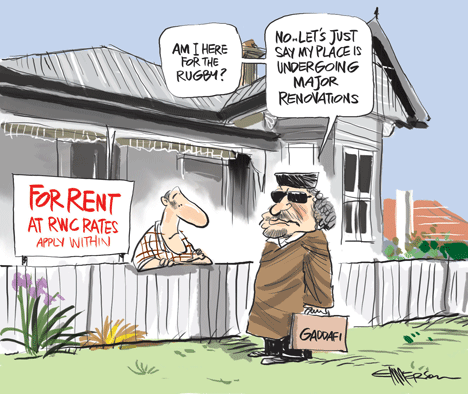
5. The German revolt - Ambrose also details the big political problems Angela Merkel now has trying to force the already discredited Euro rescue package through.
German Chancellor Angela Merkel no longer has enough coalition votes in the Bundestag to secure backing for Europe's revamped rescue machinery, threatening a consitutional crisis in Germany and a fresh eruption of the euro debt saga.German media reported that the latest tally of votes in the Bundestag shows that 23 members from Mrs Merkel's own coalition plan to vote against the package, including twelve of the 44 members of Bavaria's Social Christians (CSU). This may force the Chancellor to rely on opposition votes, risking a government collapse.
Christian Wulff, Germany's president, stunned the country last week by accusing the European Central Bank of going "far beyond its mandate" with mass purchases of Spanish and Italian debt, and warning that the Europe's headlong rush towards fiscal union stikes at the "very core" of democracy. "Decisions have to be made in parliament in a liberal democracy. That is where legitimacy lies," he said.
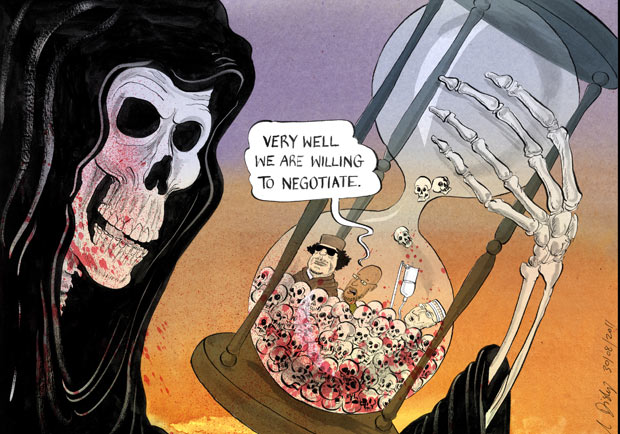
6. Good job from the RBNZ - Leith van Onselen at Macrobusiness liked the RBNZ submission to the Productivity Commission on Housing Affordability and said it may have some lessons for that crazy Australian housing market.
I'm not so sure the RBNZ has done a fantastic job on housing, but it's a good submission.
7. Bill Gross blew it - FTAlphaville reports PIMCO maestro Bill Gross admitting he should have kept buying US Treasuries.
“Do I wish I had more Treasuries? Yeah, that’s pretty obvious,” Mr Gross told the Financial Times last week, adding: “I get that it was my/our mistake in thinking that the US economy can chug along at 2 per cent real growth rates. It doesn’t look like it can.”
When the yield on the 10-year Treasury was 3.5 per cent in January, Mr Gross warned that the risk of rising inflation made government debt a poor investment.
Mr Gross still argues that on a long-term basis, governments are likely to use financial repression, where the rate of inflation is higher than bond yields, to erode the value of sovereign debt over time.
But he also suggested that the “new normal” – Pimco’s view of the global economic outlook in which growth rates for developed countries are slower than in the past – may have to be revised downwards to a “new normal minus”.
8. Qatar to the rescue - FTAlphaville reports the Greek bank merger overnight is some cause for some to hope, partly because there is fresh Qatari money involved.
This is a critical moment for the Greek banking sector, if the foreign participation is to materialise as we’ve been hearing. It can also prove critical for the implementation of the derailed Greek austerity plan, particularly if the finance ministry is to expect new investors to offer cash and become involved in the country’s economic fate, as the expected Qatar move seems to do.
But what the Alpha-Eurobank merger also shows is that by adding two banks’ troubles you get more aggregate trouble. It will take determined, resilient, patient and well-endowed investors to endure the tumult of the next few months and years in the Greek market. Alpha and Eurobank are hoping that Qatar is one. More will certainly be needed.
9. 'The Botox economy' - Satyajit Das is always worth listening too. Here he is on Channel 7's morning show in Australia. HT Yves at Naked Capitalism.
10. Totally two dogs argue. Sorry. Best I could do today.
15 Comments
#3 Diamonds. Dunno about that. I read a report a couple of years ago that suggested that now than diamonds can be manufactured (unlike, say, gold), they are in danger of becoming a commodity. But de Beers has been good at creating a sense of scarcity & glamour. I notice that the article's references are de Beers & a diamond merchant - hardly neutral.
Interested in comments from those more informed
Cheers.
You can make synthetic diamonds but the last I heard it was under extreme pressure and temperature....so a lot of capital investment...and in reality natural diamonds are artificially held up by De-beers holding them off the market....but they could easily drop their price bankrupting any wanna be setups, and then restrict them again.
regards
Just so Philly. The market is rigged by de Beers - stones which are mined for say $20 a carat in SW Africa retail for a hundred times that in the US. There is no real scarcity, particularly in the sub 1 carat range. There is a decent summary here:
http://www.photius.com/diamonds/the_diamond_industry.html
This quote says it all: ''Unlike precious metals such as gold or platinum, gem diamonds do not trade as a commodity: there is a substantial mark-up in the sale of diamonds, and there is not a very active market for resale of diamonds''.
If you doubt the latter take the wifes engagement ring with the 0.75ct solitaire down to the jewellers and see what he will offer you for it - in all probability he will be more interested in the gold band (if its 18ct) that the stone. My wife (who is a silversmith) is always staggered by the way folk have been gulled into the diamond 'myth' - particularly noteworthy are those Michael Hill adverts where they tell you that you are getting X amounts of ct in a bracelet etc - when in fact they are almost worthless diamond chips who's additive value is nowhere near the X ct advertised.
There may be a case to invest in the top end range of bigger diamonds (those rarer stones with particular colours ie blues, or high clarity etc) . But then you are talking hundreds of thousands plus. Australian opals (which ARE rare and close to being mined out) or other stones were the market is not so-rigged (ie high quality emeralds) probably represent better investments.
Making diamonds via industrial processes is relatively straightforward and de Beers have become very concerned in recent years about Russian production. Just wiki industrial diamonds.
We New Zealanders need a reality check . Did anyone see the weekend papers about the council employee in Orewa who had a salary of $ 300,000.00 per annum, and then got another $300,000 paid to him "in error " when Auckland was united into the Supercity ?
Do me a favour , how can any Public Servant be worth such an annual salary?
This kind of money paid to a man who carries almost no respnsibility for anything that goes wrong , where almost all decisions are made by committees, and where things would probably be no different if he was not even there ?
The private sector is straining under this terrible recession , while Public Servants live off the fat of the land .
council workers have had a %68 increase in wages in the last 7 years and councils have budgeted to raise wages an extra %50 in the next 8 years.
youre being a bit generalistic here about public servants. There are many who do long hours over and above for no extra..no bonus's, no company car, no share buy in scheme, no ownership oppurtunity, beggar all career opps unless they move to Welly, no company freebees and so on.
try keepng up with a nusre on a day/night shift delaing with the drunken floatsome and you'll get a taste!
That aside, the mangement level are a diffrent kettle of fish.
The reality check goes something like some public servants (i.e. the ones at the top) get paid hundreds of thousands of dollars, just like private sector top bods get lots of dosh. The D-G of Health gets a higher salary than his equivalent in the UK.
But the world for the rest of us wage slaves is real pay cuts for at least the last three years, ....
AND ANOTHER RANT .....Just in case anyone had any doubts about a correlaton between Captial Gains Tax and housing booms , I quote from RBNZ report (6) above:
"Our reading of the international literature suggests that the presence or absence of a capital gains tax is not a decisive factor explaining house price behaviour here or in other countries...."
Someone should tell Phil Goff to drop this dumb idea of paying any more taxes than we already have to.
True, the presence of a CGT did not stop the creation of a housing bubble in the US or Australia. The argument in favour of a CGT is that it is fairer and reduces distortion in the allocation of resources. However, Labour's suggested implementation has several flaws, e.g. in the exemption of the family home, no allowance for inflation, and I have no idea how it would treat capital losses.
Something from the Richmond Federal Reserve for English, Bollard and TSY to reflect on:
http://www.richmondfed.org/research/our_perspective/toobigtofail/index…
- including how you got it wrong with SCF, and aren't right with the open bank policy, etc, etc.
Wonder where Q Daffy is, maybe holed up with his mate Tony B Liar.
#5 So where is the action as oppoosed to the waffle?
We dont hear much about the Irish house price crash - suffice to say its still on-going - 46 months of consecutive price falls, prices down between 40-47% depending on where you live:
http://www.thejournal.ie/house-prices-continue-to-fall-as-property-mark…
Re #6 (RBNZ submission to Productivity Commission enquiry into Housing Affordability)
So the organisation responsible for setting interest rates and regulating banks thinks that house prices are mostly due to supply issues, with a bit of tax policy thrown in. Nothing to do with artificially low interest rates and total failure to regulate what the banks were doing then.
Would you like a cuppa tea?
"Body tissue is dissolved and the liquid poured into the municipal water system. Mr Sullivan, a biochemist by training, says tests have proven the effluent is sterile and contains no DNA, and poses no environmental risk."
We welcome your comments below. If you are not already registered, please register to comment
Remember we welcome robust, respectful and insightful debate. We don't welcome abusive or defamatory comments and will de-register those repeatedly making such comments. Our current comment policy is here.