

Here's a holiday edition of Top 10 links from around the Internet at 10:00 am today.
The regular schedule for these curations and reviews will resume next week.
As always, we welcome your additions in the comments below or via email to david.chaston@interest.co.nz.
See all previous Top 10s here.

1. Soros worries about China
The biggest risk that the world economy now faces isn’t the stability of the euro zone or the logjam of US politics, according to famed investor and philanthropist George Soros.
Rather, China is the reason to doubt optimism about the global economy, he says.
Soros’s concern is that the Communist Party’s renewed focus on economic growth is at odds with its commitment to structural reform.
He also likens China’s financial condition to those in the US before the financial crisis.
The major uncertainty facing the world today is not the euro but the future direction of China. The growth model responsible for its rapid rise has run out of steam.
That model depended on financial repression of the household sector, in order to drive the growth of exports and investments. As a result, the household sector has now shrunk to 35% of GDP, and its forced savings are no longer sufficient to finance the current growth model. This has led to an exponential rise in the use of various forms of debt financing.
There are some eerie resemblances with the financial conditions that prevailed in the US in the years preceding the crash of 2008. But there is a significant difference, too. In the US, financial markets tend to dominate politics; in China, the state owns the banks and the bulk of the economy, and the Communist Party controls the state-owned enterprises.
Aware of the dangers, the People’s Bank of China took steps starting in 2012 to curb the growth of debt; but when the slowdown started to cause real distress in the economy, the Party asserted its supremacy. In July 2013, the leadership ordered the steel industry to restart the furnaces and the PBOC to ease credit. The economy turned around on a dime. In November, the Third Plenum of the 18th Central Committee announced far-reaching reforms. These developments are largely responsible for the recent improvement in the global outlook.
The Chinese leadership was right to give precedence to economic growth over structural reforms, because structural reforms, when combined with fiscal austerity, push economies into a deflationary tailspin. But there is an unresolved self-contradiction in China’s current policies: restarting the furnaces also reignites exponential debt growth, which cannot be sustained for much longer than a couple of years.
How and when this contradiction will be resolved will have profound consequences for China and the world. A successful transition in China will most likely entail political as well as economic reforms, while failure would undermine still-widespread trust in the country’s political leadership, resulting in repression at home and military confrontation abroad.
2. The specialisation myth
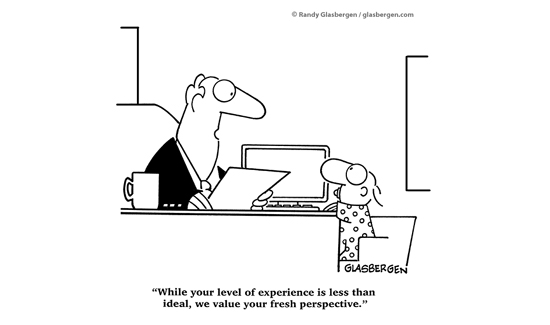
New Zealand has a comparative advantage in some key rural products - dairy, meat, logs, wool. At the moment these key commodities are serving us well. But is it a trap? Will such specialisation undermine us in the end?
Ricardo Hausmann says we may be on a wrong track. Companies should specialise, but societies really need to diversify he says. The idea that cities and countries actually do specialise, and that therefore they should specialise, is a "very wrong and dangerous idea" he says.
In the process of development, cities, states, and countries do not specialize; they diversify. They evolve from supporting a few simple industries to sustaining an increasingly diverse set of more complex industries. Achieving this implies solving important coordination problems, because an industry that is new to a city will not find workers with industry experience or specialized suppliers. But policymakers can do a lot to
This is why the idea that cities, states, or countries should specialize in their current areas of comparative advantage is so dangerous. Focusing on the limited activities at which they currently excel would merely reduce the variety of capabilities – or “letters” – that they have. The challenge is not to pick a few winners among the existing industries, but rather to facilitate the emergence of more winners by broadening the business ecosystem and enabling it to nurture new activities.
This is all the more important today, because the globalization of value chains is delocalizing supplier-customer relations. Cities and countries would be ill-advised to focus on a few “clusters” and consolidate the value chains in their location, as is so often recommended. Instead, they should worry about being a node in many different value chains, which requires finding other industries that can use their
Competition inevitably tends to winnow out the less efficient firms and industries. It is not the policymakers’ role to hasten their death. Their task is to identify productivity-enhancing interventions that can harness economies of agglomeration by adding new activities and productive capabilities, making the whole bigger than the sum of the parts.
3. What is the lasting solution to the 'income inequality' problem?
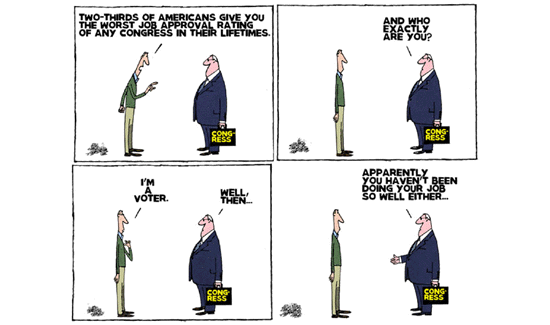
President Obama recently identified combating inequality is the 'defining challenge of our time'. He's right, but he has not led any big enough efforts to address the issue and seems unlikely to do so. It's an issue that won't be solved by reactionary policies - closing borders, confiscating assets, or possibly even punitive taxes (although progressive tax systems probably do have a part to play - certainly getting rid of tax-free gains and abilities to game the system by sheltering in offshore jurisdictions).
The only sustainable solutions will be found in ensuring the benefits of productivity are fairly spread. The more who benefit, the greater the purchasing power, the better off everyone will be. But without rising productivity (and I am not saying 'rising production'), a simple reallocation of wealth will just cause atrophy.
So how do you do that? especially when rising tech is raising productivity but the benefits are being concentrated?
New highly productive technologies are about to hit us - robots, AI, 3D printing, innovative bio-tech, etc. A handful of highly talented people are likely to get all the rewards. Most people will make zero contribution to these big new trends (although will no doubt adopt the ideas on offer), but won't participate in any aspect at all to their development or distribution. How can they benefit (why should they benefit)?
So far, the only solution being seriously proposed is to raise the minimum wage. I agree this is an important step. Living wages are essential.
But that nowhere near addresses the big issue. We can't have most people on a minimum wage.
There was a relatively short period (1940 - 1980) when the generation after those who moved off the land 'made stuff' (and not just physical products). There was a lot of public infrastructure being developed. Education was basic but adequate, producing just enough skill to drive productivity.
Times have changed to such an extent that 'education' is nowhere near adequate for most people so they can face a future with enough skills to be productive. True many are getting what is needed, but most are not. The job requirements for sustainable employment into the future are substantially higher now. If we keep doing what we are doing, we will have an even larger inadequately prepared 'class' who can never hope to generate more output than they 'cost'. In such a case, why would anyone pay them more than the value of their work?
The new education standards are scary. But probably no more so than what 1920's born grandparents watched when baby boomers first entered the job market. Today's 'boomers' need to accept they have been left behind in the 'job skill' market. That's not the problem; the problem is when new job entrants have no better skills than what boomers had way back then.
Education itself needs a productivity revolution - perhaps one the monopoly state system is incapable of producing ? Maybe the State should contract out?
The problem is we have too many low-skill workers. The solution is to get most workers being high skilled. It is no solution to just pay the low-skilled the same as the high-skilled.

4. The fear of losing money
Humans are loss-averse, some more than others, but that is true of most of us. It shapes how we make investment decisions. It probably answers why so many in KiwiSaver are still in the default or conservative funds.
Most of us will struggle to put together a decent retirement nest-egg - although by the time we figure out our 'mistake' we will choose the 'greed' option (as we saw during the finco meltdown).
Adam Alter has some useful insights into loss-aversion.
Almost three decades have passed since the psychologists Daniel Kahneman and Amos Tversky first demonstrated loss aversion. Since then, other researchers have shown that loss aversion drives real, long-term behavior beyond hypothetical lab experiments.
In one field experiment, four economists offered to reward Chicago schoolteachers according to how much their students’ test scores improved during the 2010-2011 academic year. The teachers stood to earn up to eight thousand dollars (roughly eight per cent of their annual salaries) if their students improved significantly more than other students with similar starting test scores. The economists promised one group of teachers that they would get the reward at the end of the year.
With another group, they handed out four thousand dollars at the beginning of the year, and told the teachers that they would have to return some of the money if their students’ improvement fell short of the average gain. Most reward schemes, from annual holiday bonuses to sales commission, work according to the first approach. They promise compensation for good performance.
But the second approach was novel, capitalizing on the sting of loss aversion. The teachers in the second group coaxed roughly five per cent more improvement from their students than did teachers in the first group, presumably because the prospect of having to return money at the end of the year motivated them to devote more care and effort to teaching.
5. 'It could get ugly'
When the US Congress reconvenes tomorrow, one of the first issues it will take up is whether to renew an emergency federal unemployment program that expired on December 28, cutting off 1.3 million jobless workers.
Enacted in 2008 at the start of the recession, it provided up to 47 weeks of benefits for those still looking for work when their state unemployment benefits ran out. Senate Majority Leader Harry Reid says he’ll try to pass a temporary extension, but most Republicans have balked at the US$25 billion-a-year cost. If the program isn’t revived, the impact could be significant - not just for the 1.3 million people losing a vital lifeline but on the broader American economy.
BusinessWeek has looked at what happened in North Carolina when something similar happened there - limiting benefits to only 12-20 weeks then making people go cold turkey. It 'encouraged' people to get jobs, but more importantly it lowered the participation rate.
Economic research has shown that some job seekers do become less selective about the jobs they’re willing to take once their unemployment insurance expires—the so-called “employment effect.” There’s evidence this may be occurring in North Carolina. A Dec. 20 note from JPMorgan Chase’s chief U.S. economist, Michael Feroli, pointed out that the state’s employment growth has outpaced national growth since July. Yet he also noted that labor force participation has fallen much faster than it has nationally. “In this case,” he concluded, “it would appear both channels are operative but the participation effect may be more important.”
It’s hard to draw firm conclusions from limited data. But if the expiration of jobless benefits is prompting large numbers of North Carolinians to give up looking for work, it would augur poorly for the state’s economy and the country’s, too. Working-age Americans who can’t find gainful employment represent lost economic value and unmet U.S. growth potential. While some may settle for part-time work, others will try to qualify for disability. Long stretches of unemployment reduce the likelihood of finding a job, as skills and connections atrophy.
As people cycle in and out of the unemployment system this year, an additional 3.6 million workers will lose access to benefits if federal insurance isn’t restored, according to a December report by the White House Council of Economic Advisers. That’s a lot of misery and squandered economic potential. It’s also why “the Tar Heel test tube,” as Feroli has dubbed it, is worth paying attention to. Says Chatterji, “The statistics are so dramatic.”

6. How to fix national productivity issues
The Aussie competition authority is calling for a major sell-off of federal and state assets, saying consumers have been gouged while they have been in public ownership. More in the AFR:
Australian Competition and Consumer Commission chairman Rod Sims said the federal government’s root-and-branch review of competition laws would be more far-reaching than business expected. The review should recommend the government relinquish control of long-held assets to maximise productivity and create the greatest benefit to consumers, he said.
“I think it will be the most important driver of how Australia improves its productivity,” Mr Sims told The Australian Financial Review. “Of all the reviews going on, this will be the most important because it will be removing impediments to competition right across the economy.
“Government ownership versus private ownership massively affects the incentives people have to drive productivity change,” he said.
Mr Sims said consumers would have paid lower electricity prices if the assets had been in private hands.
“There is no doubt in my mind that energy prices, particularly in NSW and Queensland, would now be lower had the private sector owned those network business rather than them staying in the pubic sector,” he said. “I don’t think there is any doubt about that.”
Outlining his priorities for this year, the ACCC boss said he would continue to pursue large penalties against big companies for breaching consumer laws, was preparing for a series of significant merger decisions, and was closely monitoring petrol prices.
7. A new pressure on the international bond market
Chinese banks need money - in huge amounts, according to McKinsey. To meet Basel III global banking regulations, which took effect at the beginning of last year and will fully come into force in 2018, China's big banks will need to have tier-one capital - mostly common equity - set aside that is worth 9.5% of their assets.
Most large state lenders, except the huge Agricultural Bank of China have already met these requirements, but in the next couple of years, China's five biggest banks will have to refinance 118 billion yuan worth of debt set to mature between 2014 and 2015, according to Moody's Investors Service and reported by the WSJ.
All up, McKinsey reckons they need to raise a third of a trillion US dollars.
China's banks have long tapped foreign equity investors for funds, but they are set to count on overseas bond buyers for billions of dollars in cash in the next few years.
The country's banks will need to raise up to two trillion yuan (US$330 billion) from share and bond sales in the next five years, according to McKinsey & Co. With growing levels of bad debt in a slowing domestic economy, weakness in stock markets and rising capital requirements, Chinese banks can no longer rely on share sales and the country's four-trillion-yuan bond market for cash.
"Chinese banks are…asking international investment banks to assist them to gain access to the offshore market," said Dominique Jooris, head of credit capital markets for Asia ex-Japan at Goldman Sachs. "This is a broad trend of China's switching to overseas funding [but it] is only a thin slice of their vast overall financing needs," said Mr. Jooris.

8. A body emotion map
Random link to something I found interesting:
Researchers found that the most common emotions trigger strong bodily sensations, and the bodily maps of these sensations were topographically different for different emotions. The sensation patterns were, however, consistent across different West European and East Asian cultures, highlighting that emotions and their corresponding bodily sensation patterns have a biological basis.
"Emotions adjust not only our mental, but also our bodily states. This way the prepare us to react swiftly to the dangers, but also to the opportunities such as pleasurable social interactions present in the environment. Awareness of the corresponding bodily changes may subsequently trigger the conscious emotional sensations, such as the feeling of happiness," said the Finnish professor who did the study, from Aalto University.


9. Unintended benefits
The new mayor of New York has recently committed to providing all 4 year olds in the City's 5 boroughs with full-time daycare. President Obama has made it a similar goal (although is unlikely to achieve it).
It's a political goal aimed at getting kids off to a good educational start. But the science is dubious.
However for parents, the benefits are much clearer; for governments and society even more so.
Instead of emphasizing the benefits of early education for children, perhaps we should focus on its benefits for parents, and specifically for working mothers, who bear a disproportionate share of the child care burden. And if we accept that early education is fundamentally about freeing working parents from child care duties, we might be able to craft a lower-cost, and more taxpayer-friendly, approach.
Conor P. Williams, a researcher at the New America Foundation, recently highlighted the impact of Quebec’s subsidized child care program in The Daily Beast. Between 1997, when the program was launched, and 2007, Williams observes that labor force participation among mothers of young children sharply increased while public assistance sharply decreased, reducing public expenditures and raising revenues by enough to cover 40 to 50 percent of the day care program’s costs. Williams also acknowledges that Quebec’s overall mix of welfare state policies is quite different from what you’ll find in the United States, and that the province was experiencing robust economic growth.
Nevertheless, the apparent success of the Quebec program shows us that even if preschool doesn’t give a huge boost to children’s skills, it could help their parents build a firmer economic foundation for their families — and give them the self-esteem and independence they need to serve as good role models. That is a cause that all voters who care about the dignity of work can get behind.
10. Today's quote
"A bargain is something you can’t use at a price you can’t resist." - Franklin Jones

We welcome your comments below. If you are not already registered, please register to comment
Remember we welcome robust, respectful and insightful debate. We don't welcome abusive or defamatory comments and will de-register those repeatedly making such comments. Our current comment policy is here.