

Today's Top 10 is a guest post from Matt Nolan.
As always, we welcome your additions in the comment stream below or via email to david.chaston@interest.co.nz.
And if you're interested in contributing the occasional Top 10 yourself, contact gareth.vaughan@interest.co.nz.
See all previous Top 10s here.
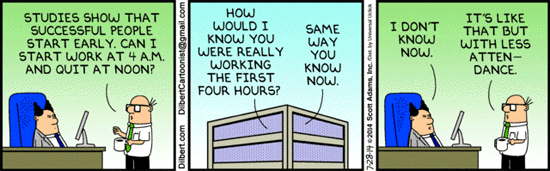
This time around I thought I’d do something a little different for the Top 10 – instead of commenting on ten links, I would make a Top 10 list on a topic.
At work I use the job title “economist”, chatting to people with a variety of economics backgrounds.
As a result, I thought I’d do a list of the Top Ten misconceptions about economists. The discussion below is, in part, based on the links found here.
1. Economists never agree with each other
Probably the most common criticism I get from people is that economists don’t agree with each other, or seem unwilling to take a position and thereby agree with themselves. Winston Churchill articulated this view early in the twentieth century:
If you put two economists in a room, you get two opinions, unless one of them is Lord Keynes, in which case you get three opinions.
It is true that economists are often unwilling to take extremely strong positions on issues in their official role.
However, this is because they recognise that we do not have universal truths available to us, and instead have to be very careful to get the conditional knowledge we can. Furthermore, make a conclusion involves making value judgments – something economists are nervous about inadvertently hiding in their analysis.
However, it is certainly not true that economists generally don’t agree with each other. Remember the situations where you have likely seen economists provide a biased sample of their views – they generally turn up in the paper or on TV when it is already known they disagree, on social issues that are contentious!
A clear example of how often economists can agree, even when it comes to policy conclusions, is the IGM forum. Many of the world’s best economists are on the panel, and give their educated view on a number of questions put in front of them. In the latest panel, they were asked whether the American Recovery and Reinvestment Act had lowered unemployment in the US – and there was a near consensus in agreement.
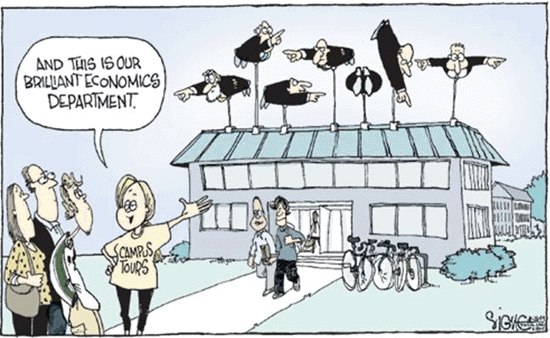
2. Economists mainly talk about what will happen to house prices, interest rates, and exchange rates
Whenever an economist is out having a drink, it is more than likely someone will ask them what is going to happen to house prices or mortgage rates.
Failing that, someone will ask about the New Zealand dollar.
However, just because someone isn’t an economist doesn’t mean they will have spent time thinking about these things – economics is a massive discipline filled with sub-disciplines, implying that if you met five economists they would probably specialise on five entirely different things.
In truth, only a small number of New Zealand’s economists are paid to keep up with the data on house prices, interest rates, and the exchange rate in New Zealand – and an even smaller number of those work in an area where they are trying to “predict” anything related to those issues.
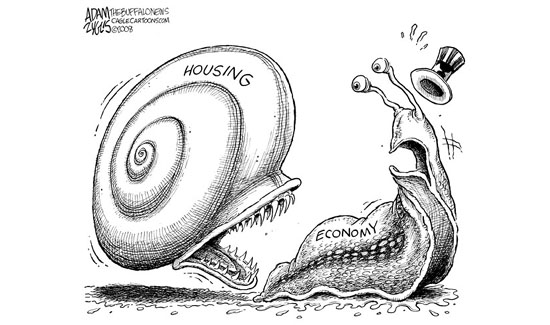
3. Economists job is to predict things
Predicting, or forecasting, things is often assumed to be the role of someone who is an economist. There are multiple reasons why people believe this to be the case:
- If economists aren’t predicting where economic variables will go, then what value are they adding?
- If economists aren’t creating novel predictions with theory that can be subject to testing, then how is what they are doing scientific
- Friedman said all that matters about economic models is prediction
However, the vast majority of economists are not – and should not be – perform forecasting in the broadest sense of seeing it. In fact, a majority of economists find forecasting, and the attention it receives, to be a negative thing for the reputation of the discipline as a whole. Greg Mankiw discusses this well here.
The economists you see on TV are often trying to predict the future, but that is hardly a random sample of top economists. Indeed, one reason I am not fond of TV appearances is that TV hosts frequently ask questions that presume PhD economists can see into the future better than others, whereas actual PhD economists know that very little of our training has anything to do with forecasting.
With regards to the three issues above, there is some confusion regarding making novel hypotheses that can be tested, and the description of how policy and economies work, and “forecasting”.
There are economists who are paid to do forecasting as it is a big part of the institutions role (eg the Reserve Bank) or because they use it as a device to help provide business planning services (eg Infometrics). But these forecasts are strongly conditional (dependent on assumptions outside the model) and only exist to fill a certain role.
Most economists are instead trying to understand some element of society/social order, and to apply a rigorous, logical, and data driven framework to answering questions.
When so much is unknown about the world, and the unforeseeable shocks that we may face, this type of analysis is very different from forecasting.
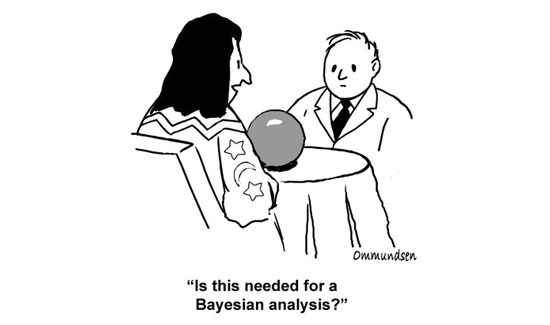
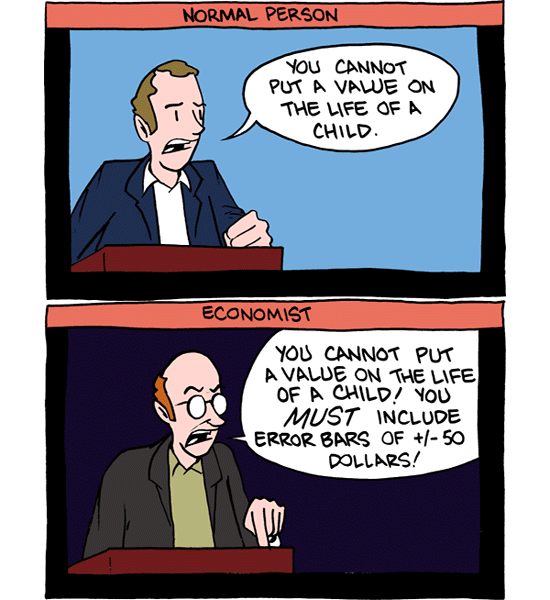
4. Economists ignore non-monetary value
In public perception, economists and GDP go together like steak and potatoes.
But in the same way a vegetarian (such as myself) would see the two as very separate, economists are generally lukewarm on GDP for many questions – and dismissive of it as a fair measure of wellbeing.
It isn’t just the measurement issues associated with GDP, which make it a weaker measure of income for a small open economy, which concern economists. It is the fact that non-market transactions often can’t be included, government spending is included in an ad hoc manner, and most importantly it alone tells us little about the trade-offs faced if different policy choices were made.
For some economists, there is a view that we could improve matters by creating a different measure of “the economy”.
However as I noted earlier, economists get a bit uncomfortable about saying we should do X or Y – instead economics is at its best when it is a descriptive discipline. In the case of government policy, this involves outlining the trade-offs that exist for varying policy choices.
The multi-faceted ethical choices required to pick a set of policies is a complicated question, one that requires democratic voting, prices in markets, a good legal system, consideration of the opportunity of individuals, and appropriate information.
Economists do not ignore the existence of non-monetary value – they merely admit that trying to do all these things themselves would be a mixture of folly and egotism, and instead try to describe trade-offs to help inform broader policy making.
[HT Saturday Morning Breakfast Cereal]
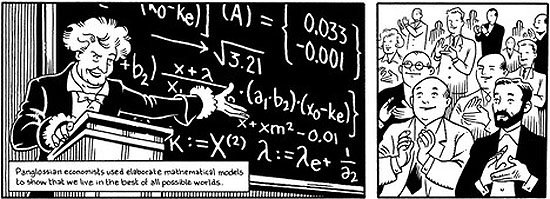
5. Economists care more about neat maths tricks than considering the real world
Economics does involve a lot of maths and statistics. And economists do tend to enjoy problem solving and clever solutions to things – as David Autor said:
It’s nearly impossible to overstate the value that economists ascribe to cleverness. (Like most obsessions, this one is not altogether healthy.)
However, to take this comment alone is to miss a very important point – would economists care so much about neat tricks, which make problems more tractable, if it was easy just to describe the “real world”?
Whenever someone makes statements about “the real world” I quickly have to make up my mind regarding whether the person is being naive or obtuse in what they are discussing with me.
Each of us has our own limited experience of what the world is, and it is only by trying to clearly and accurately communicate these ideas between each other that we can create knowledge. Maths, logic, and the associated neat tricks are essential for economists to try to say much about the actual “real world” without leaning solely on arbitrary ideology.
6. Economists are accountants, right?
This one is surprisingly common.
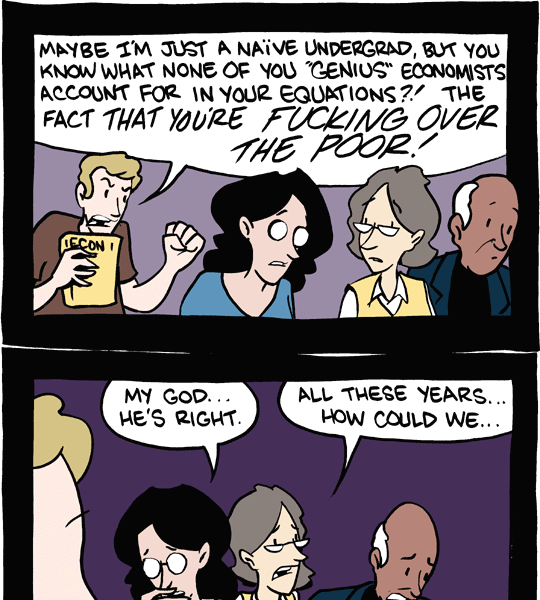
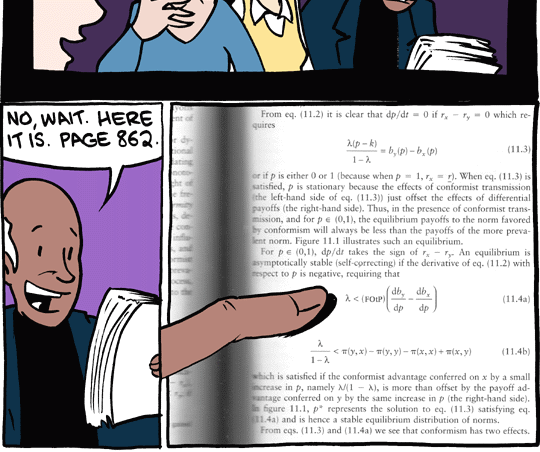
Don’t get me wrong, accountants are wonderful people – and there are policy areas where the skills of economists and accountants intertwine. But an accountant is “a person whose job is to keep or inspect financial accounts”, while an economist is someone who “investigates questions regarding the allocation of resources given scarcity”.
I can’t understand why they get confused.
[HT Saturday Morning Breakfast Cereal]
7. Economists are just a pro-business lobby group
I find this view of economists very confusing. Economists are generally in charge, or in very senior positions in regulatory authorities. Economists staff the Commerce Commission, which restricts the actions of firms when they are seen as anti-competitive, and directly sets prices in some cases. Economists fill Treasury which has been proposing a broader view of living standards, and government’s role.
However, this view is common, and clearly articulated over on this “economist jokes” website:
A mathematician, an accountant and an economist apply for the same job.The interviewer calls in the mathematician and asks "What do two plus two equal?" The mathematician replies "Four." The interviewer asks "Four, exactly?" The mathematician looks at the interviewer incredulously and says "Yes, four, exactly."Then the interviewer calls in the accountant and asks the same question "What do two plus two equal?" The accountant says "On average, four - give or take ten percent, but on average, four."Then the interviewer calls in the economist and poses the same question "What do two plus two equal?" The economist gets up, locks the door, closes the shade, sits down next to the interviewer and says "What do you want it to equal?"
I’ll admit, the way economists can discuss things can be counter-intuitive, filled with terminology, and at times it can feel that economists are trying to pull the wool over your eyes.
As Joan Robinson (a famous economist) once said "The purpose of studying economics is not to acquire a set of ready-made answers to economic questions, but to learn how to avoid being deceived by economists."
But in truth, this does not stem from a desire for economists to be pro-business or pro-government – but instead from the fact that social phenomenon are very complex.
8. Economics was debunked by the Global Financial Crisis
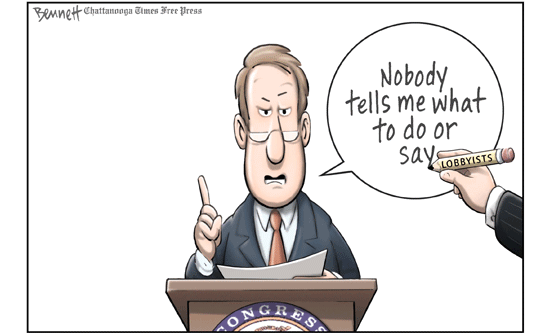
The Global Financial Crisis, its causes, and the associated policy failures are issues that the substantial minority of economists involved in analysing these issues need to consider and think about.
However, this doesn’t invalidate an entire discipline.
- Macroeconomists, and associated financial economics, is only a subset of economics – economists in other fields do not deserve the same criticism.
- Even within macroeconomics it is important to ask what policy failures may have occurred and what risks have been overlooked – not to throw away the entire framework for looking at economic questions.
The Global Financial Crisis was undeniably a bad thing, but to learn from it we need to ask simple sounding questions that have complicated answers: Why was it bad? What could policy have done better to lessen the extent of the GFC? What is the cost of policy that would have lowered the likelihood of such an event?
If broad macroeconomic policy is like insurance, then these questions need to be chewed over. Our understanding of the economy and policy needs to improve. But the current framework is appropriate for discussing these types of questions (much of business cycle theory stems from the Great Depression) and there is no ready made alternative that can answer these questions. And this is the way macroeconomics seems to be moving forward.
9. Individual economists use “a” model
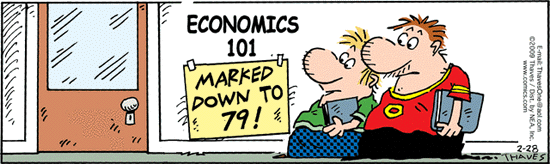
One common area of confusion is the belief that economists use “a model”. The financial crisis was blamed, at times, on DSGE models for example [Note: A good discussion on DSGE models is found here].
However, this criticism is somewhat unfair. Central banks tend to look at multiple models of the economy, with modern “model averaging” a technique that these institutions use to extract quantitative information from a variety of frameworks.
Social science phenomenon are complex, and the use of a single model would be a staggeringly naive move by economists. In truth, the difficulties economics faces with trying to discuss policy problems does not come from picking the wrong universal model – but from knowing what partial model of an economic phenomenon is appropriate at a given point in time, given how much is unobservable!
Dani Rodrik takes this a step further, recommending that economics requires more foxes and fewer hedgehogs:
The philosopher Isaiah Berlin famously distinguished between two styles of thinking, which he identified with the hedgehog and the fox. The hedgehog is captivated by a single big idea, which he applies unremittingly. The fox, by contrast, lacks a grand vision and holds many different views about the world – some of them even contradictory.We can always anticipate the hedgehog’s take on a problem – just as we can predict that market fundamentalists will always prescribe freer markets, regardless of the nature of the economic problem. Foxes carry competing, possibly incompatible theories in their heads. They are not attached to a particular ideology and find it easier to think contextually.Scholars who are able to navigate from one explanatory framework to another as circumstances require are more likely to point us in the right direction. The world needs fewer hedgehogs and more foxes.
Ultimately, this is a question of balance between models. An important question, but one without the simple solution of just saying “use model X instead of model Y!”.
10. Economists aren’t sexy
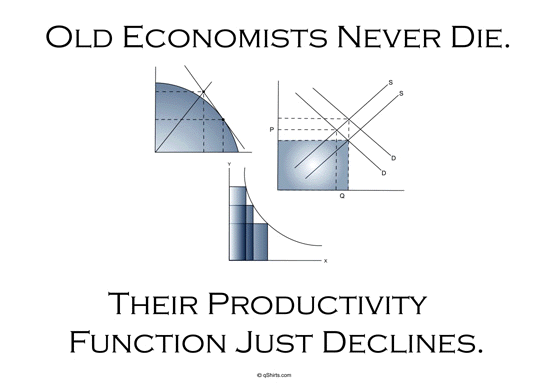
Now don’t get me wrong here – I’m not talking about sexy in the strict objectifying sense. I use the term in a far more appropriate sense here, as a synonym for awesome.
There is a belief that the work of economists is of little interest: it is either purely common sense or someone trying to debunk common sense to show how smart they are. But this is far from the truth – as this year’s sexiest economist competition showed, there are a number of economists whose work is based on genuinely trying to find ways to improve the wellbeing of people in New Zealand.

--------------------------------------------------
* Matt Nolan is an economist at Infometrics, and an author at the blog TVHE. He specialises in looking at the household sector, and household economic data, but will offer an opinion on pretty much anything related to business and the social sciences.
We welcome your comments below. If you are not already registered, please register to comment
Remember we welcome robust, respectful and insightful debate. We don't welcome abusive or defamatory comments and will de-register those repeatedly making such comments. Our current comment policy is here.