
By Bernard Hickey
It's time the Reserve Bank found a way to rein in New Zealand's biggest landlords, who are pouring plenty of fuel onto Auckland's housing market again.
It's true the High Loan to Value Ratio 'speed limit' imposed in October last year did cramp their highly leveraged style somewhat, but it was even more restrictive on First Home Buyers, who usually have less equity to contribute.
Now mortgage brokers are reporting the fixed mortgage rate reductions of as much as 50 basis points to well under 6% in the last month have fired up the investor market again in Auckland.
The election result removing the prospect of a capital gains tax for the foreseeable future was the final green light.
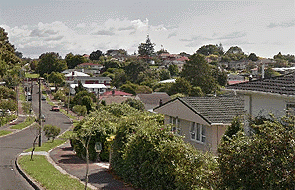
It's no accident that single level brick and tile units are fetching record sums in suburbs like One Tree Hill, often double the capital values assessed just three years ago.
The 30-40% increase in prices in many Auckland suburbs since the last rating valuation has built up the equity needed for rental property to get back on the leverage wagon, even if it less than the 80% threshold deemed to be high LVR by the Reserve Bank.
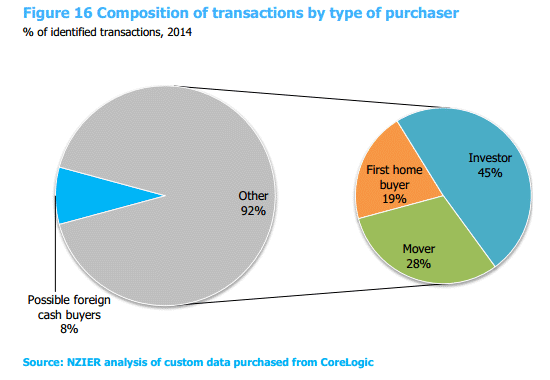
An NZIER analysis of CoreLogic data that was published in July found 45% of buyers in 2014 were rental property investors, while 28% were owner-occupiers moving into another home and just 19% were first home buyers.
Westpac even changed its mortgage marketing team this year so it could better service the growing rental property sector. That was reflected in Westpac's annual results, which showed its mortgage lending grew by NZ$1 billion in the last six months, faster than other banks.
This surge in rental investor borrowing in Auckland is often happening through mortgage brokers because investors tend to use brokers more aggressively to get the best deal.
It is even encouraging BNZ, which has not used brokers for more than a decade, to look at using brokers again.
In 'normal' inflationary times the Reserve Bank would simply put up interest rates to cool down the market, or more usually, wholesale interest rates would rise naturally and push up fixed mortgage rates.
But New Zealand's inflation and interest rates are far from normal, and neither are the rest of the world's.
Central banks in Japan and Europe are ramping up their efforts to pump more zero percent cash into their economies, which in turn is helping flood the rest of the world with cheap money.
The Reserve Bank couldn't use its interest rate tool last year because inflation was so low and the New Zealand dollar was so high, which prompted it to invent its high LVR speed limit. This 'macro-prudential' tool was designed to reduce the risks to the financial system of too much highly leveraged lending into a housing market that international experts judge to be anything from 20% to 40% over-valued.
This year the Reserve Bank jumped ahead of its fellow central banks to put up its Official Cash Rate to slow inflationary pressures it thought were galloping over the horizon.
Unfortunately for the Reserve Bank, annual inflation has been surprisingly subdued at just 1.0% in the September quarter. This forced the Reserve Bank last month to pause its rate hiking plans for the foreseeable future and some economists are even suggesting a cut some time in the next year.
The Reserve Bank is expected to update everyone on the future of the high LVR speed limit at its half yearly Financial Stability Report on November 12.
The limit was supposed to be temporary. The bank has previously indicated it could be eased towards the end of this year.
But there are few signs that finance companies, which are exempt from the rules, are getting around the speed limit to corrode its effectiveness, as some had feared.
That gives the bank the option of leaving the limit in place until well into next year to keep at least a small rein on the investors.
But it could do more.
Last year the Reserve Bank proposed a new rule that would force banks to put aside more capital to back loans to rental investors with more than five properties.
It was supposed to apply from July, but was initially delayed until December so banks could work out how to comply with the rule.
The banks argued it would be difficult to know which investors had more than five properties, given they often spread their loans around various banks and properties may be owned by more than one legal entity.
They also said such a rule would increase costs for borrowers, given higher capital requirements would force the banks to charge higher interest rates to maintain their profitability.
This week the Reserve Bank quietly delayed implementing the 'five properties' rule again until the first half of 2015 while it did more work with bankers to make it practical.
The regulator should keep pressing to get this control in place before the heat simmering in the Auckland market fires up again. The rest of New Zealand already can't afford to keep paying Auckland interest rates and coping with an Auckland-powered currency.
Neither can the Government, which faces mounting budget pressure to pay higher accommodation supplements and rent subsidies as rents inevitably rise to follow rental property prices.
The humble brick and tile units in Greenlane, One Tree Hill and Onehunga look set to be the Reserve Bank's and the economy's next nemesis unless it can rein in the investors.
------------------------------
A version of this article was first published in the Herald on Sunday. It is here with permission. The NZIER report is here.
We welcome your comments below. If you are not already registered, please register to comment
Remember we welcome robust, respectful and insightful debate. We don't welcome abusive or defamatory comments and will de-register those repeatedly making such comments. Our current comment policy is here.