

Here's my Top 10 items from around the Internet over the last week or so. As always, we welcome your additions in the comments below or via email to bernard.hickey@interest.co.nz.
See all previous Top 10s here.
My must read is #4 on the political and economic problems in Europe.
As it always does, it is coming down to a fight between bond holders and the unemployed, which the bond holders will win unless the poor get their act together to revolt.

1. I really think so - I'm (Europe) turning Japanese, yes I'm turning Japanese...I really think so. See the video below.
It's a great song, and now it's being sung by Royal Bank of Scotland's economists about the European economy, which faces the same problems of an ageing population slowing economic growth, creating deflation and the grounds for massive money printing.
Essentially, the developed world (or at least those parts that don't allow much migration) is seeing its economic 'metabolic rate' slow down in line with that of the biggest chunk of its population. Older people spend proportionally less, they save more, the invest less and take fewer risks.
Eventually they buy adult nappies at a greater rate than the number of nappies needed for babies.
Luckily for New Zealand, we have a high migration rate of young people and some parts of our population (Maori and Pacifica) have a relatively higher birth rate, which is helping.
But in Europe the picture is much darker, Ambrose Evans Pritchard at the Telegraph tells the story well with the help of RBS' economists. The key message: buy bunds with your ears pinned back, even if the real yield goes below zero (see chart below). It's all about the capital gain. Where have we heard that before? (Oh yes. Everywhere).
German bond yields are to fall below Japanese levels and plumb depths never seen before in history as Europe becomes the epicentre of global deflationary forces, according to new forecast from the Royal Bank of Scotland.
“We are seeing `Japanification’ setting in across Europe,” said Andrew Roberts, the bank’s credit strategist. “We expect 10-year Bund yields to cross the 10-year Japanese government bond and we are amply positioned for such an outcome.”
Mr Roberts said it is a “weighty win-win” situation for investors. If the European Central Bank launches full-blown quantitative easing, it will almost certainly have to buy large amounts of German Bunds, and these are becoming scarce.

2. Show us the innovation - One argument put forward for the strangely slowing rate of economic growth in the developed world in the last few years is a lack of technical innovation.
The golden era of inventing things like the steam engine, the petrol engine, the jet engine, electric power, nuclear reactors and the toaster has ended, it seems.
Here's Ben Southwood with a look at the evidence on patents (at least). I'm not sure I buy this argument, but some people use it. I think you could just as easily have lots of innovation and hardly any real economic growth for most of the population as the benefits are captured by a lucky and clever few.

3. The problem with Britain - New Zealand is in better shape than many other economies, but we are subject to many of the same trends such as the globalisation of services, the evaporation of jobs and wages into the cloud, the advent of 'zero hours' McJobs and a lack of investment in new products, services and technologies.
In Britain, the GFC and the above trends have driven wages of younger workers significantly lower, as Chis Giles points out at the FT.
New Zealand has softened the blow somewhat over the last decade with significant increases in the minimum wage and some redistribution of income to poorer workers through the likes of Working For Families and Interest Free Student Loans.
Britain has not been so lucky.
Here's Giles:
Apart from the huge squeeze in pay, the only other thing of note in the distribution is an unprecedented improvement for the old relative to the young. As Paul Gregg, Steve Machin and Mariña Fernández-Salgado have demonstrated, the fall in real wages for those aged 18 to 25 has been so extreme, they are now back to levels last seen in 1988. Older workers appear unconcerned by seeing more junior colleagues suffer.
If past trends are clear, the present is statistically murky. There is again no sign of any increase in wage or income inequality and younger people are still bearing the brunt of squeezed incomes, but the degree of squeeze is very difficult to gauge. The latest ASHE shows simultaneously that overall real median pay fell 1.6 per cent in the year to April, but that pay for the continuously employed rose 2.3 per cent. How so?
First, pay gains for the continuously employed almost always exceed the raw median because the measure includes promotions but excludes retirement – but the gap is unusually large this year. So the second part of the explanation is that there has been a large change in the composition of the workforce with an increase in low wage employees, depressing the average.

4. Where have we heard this before? - Wolfgang Munchau reckons Europe needs to restructure its debt to solve its economic problems. Fat chance. The older generations holding the bonds will not stand for it.
But Munchau wonders if the young and the poor will eventually rise up and force a restructuring. He points to the growth of a new left wing party in Spain called Podemas:
Of the radical parties that have emerged recently, the one to watch is Podemos. It is still young, with an agenda in the making. From what I have read so far, it may be the one that comes the closest of all those in the eurozone to offering a consistent approach to post-crisis economic management.
In a recent interview, Nacho Alvarez, a senior member of the party’s economics team, laid out his programme with a refreshing clarity. The 37-year-old economics professor says the Spanish debt burden, both private and public, is unsustainable and needs to be reduced. That could include some combination of a renegotiation of interest rates, grace periods, debt rescheduling and a haircut. He also said Podemos’ goal was not to leave the eurozone – but that equally the party would not insist on membership at all costs. The aim is the economic wellbeing of the country.
To an outsider, that seems a balanced position. Not so in Spain. The establishment fears that this agenda will turn the country into a European version of Venezuela. But there is nothing controversial about the statement that if debt is unsustainable it needs to be restructured. Or that if the euro were to bring decades of suffering, it would be perfectly legitimate to question the eurozone’s institutions and policies.
5. How old is too old? - As #3 above shows, the young are having to save for longer to repay student debt and save up deposits to buy houses. They're having to wait until well into their 40s before buying.
But is that too late? New mortgage rules in Britain may stop those in their late 30s and 40s from borrowing because of fears they may retire before they've paid off their mortgages.
Increasingly, we will see banks and regulators acknowledging that with very low interest rates for the forseeable future, longer term mortgages and very late retirement ages, that they will have to allow those in their 50s and 60s to borrow to buy houses. Or more importantly, banks will be encouraging those in their 50s and 60s to buy houses, particularly rental properties that can be funded from the equity gained from ownership of previous homes (or lump sums being withdrawn from pensions).
No worries.
Here's what's happening in Britain.
Experts warned that the rules brought in by the Mortgage Market Review (MMR) on lending to older borrowers lacked clarity, meaning many people in their forties or even late thirties could face difficulty getting a mortgage. Rising house prices have led many households to take out mortgages with terms of 30 years or more.
The Intermediary Mortgage Lenders Association (IMLA), which represents brokers across the UK, warned in a report that a "substantial" number of borrowers would be affected because many lenders now require them to prove their income from the state pension age, regardless of whether they intend to stay in work for longer.
"With lengthening mortgage terms and the general difficulty people are having getting mortgages, the issue of lending into retirement has reached further down the spectrum than people might have imagined," said Peter Williams, executive director of the IMLA.
"I think many lenders have interpreted that as people over 65, but even then you’ve got a problem because now there isn’t a statutory retirement age."
6. Unusual suspects - Even the World Bank is worrying now about the frightening prospects for global economic growth from Climate Change. It has put out a new report.

7. A tonne of cash - Literally a tonne of cash was found in the home of one of China's top-ranking generals in a recent hunt by anti-corruption officials. It should remind us about the dangers of money laundering.
Here's Jamil Anderlini with the shocking details, including the system of naming the sources of the bribes for promotions:
When investigators searched the Beijing home of Xu Caihou, one of China’s highest-ranking army generals, they found so much cash and precious gems they needed a week to count it all and 12 trucks to haul it away.
The cash was neatly stacked in boxes, each with the name of the soldier who had paid the bribe in exchange for promotion up the chain of command. Many of the boxes, each containing millions of renminbi, had never been opened, said people familiar with the case.
Investigators swooped on Gen Xu in March, but details of his extraordinary hoard emerged only this week. Chinese law enforcement officials confirmed the cash in total weighed more than a tonne.
Gen Xu’s hoard is not the largest so far. In May, investigators detained Wei Pengyuan, the deputy head of the National Energy Administration’s coal department. It took 16 machines to count the more than Rmb200m he had stashed in his home, according to Xinhua, the official news agency. Four of the machines reportedly burnt out due to the workload.
Another Xinhua report told of Ma Chaoquin, the former general manager of a state-owned water company in Hebei province, who kept more than Rmb100m in cash and 37kg of gold in his flat. Mr Ma had also amassed a portfolio of 68 properties by the time investigators caught up with him, said Xinhua.
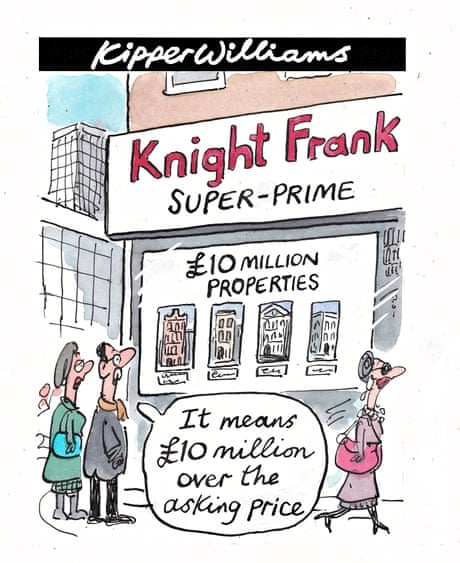
8. US$2 trln fat bill - McKinsey have published a study showing the global obesity epidemic is costing the global economy US$2 trillion a year. Yet little is being done here to address this.
9. Regression to the mean - What would China look like with a 2% growth rate? What might cause it? Larry Summers and Lant Pritchett reckon it could be plain old 'regression to the mean' in a paper titled "Asiaphoria meets regression to the mean."
David Pilling reports here:
For them, “the single most robust and striking fact” about growth is “regression to the mean” of about 2 per cent. Only rarely in modern history, they say, have countries grown at “super-rapid” rates above 6 per cent for much more than a decade.
China has managed to buck the trend since 1977 by harnessing market forces, engineering possibly the longest spell “in the history of mankind”. But what goes up, the authors tell us, must eventually come down.
We welcome your comments below. If you are not already registered, please register to comment
Remember we welcome robust, respectful and insightful debate. We don't welcome abusive or defamatory comments and will de-register those repeatedly making such comments. Our current comment policy is here.