

Here's my Top 10 items from around the Internet over the last week or so. As always, we welcome your additions in the comments below or via email to bernard.hickey@interest.co.nz.
See all previous Top 10s here.
My must watch is #9 from John Oliver on the rise of fast fashion and cheap clothes. A compelling view of globalisation and what it means for inflation (and labour standards).

1. The problem with Air New Zealand - I'm a regular flier around the country and use Air New Zealand a lot, and Jetstar a bit too.
I often have to fly to regional airports, which means I don't have much of a choice. Even on the main Auckland-Wellington-Christchurch trunk line, it seems prices are not falling like they are in the rest of the economy. Jetstar has backed off its more cut throat pricing in recent years and has also dropped some routes.
Prices should be falling domestically, given lower fuel prices and the increasingly efficient nature of the new and bigger planes such as the latest A320.
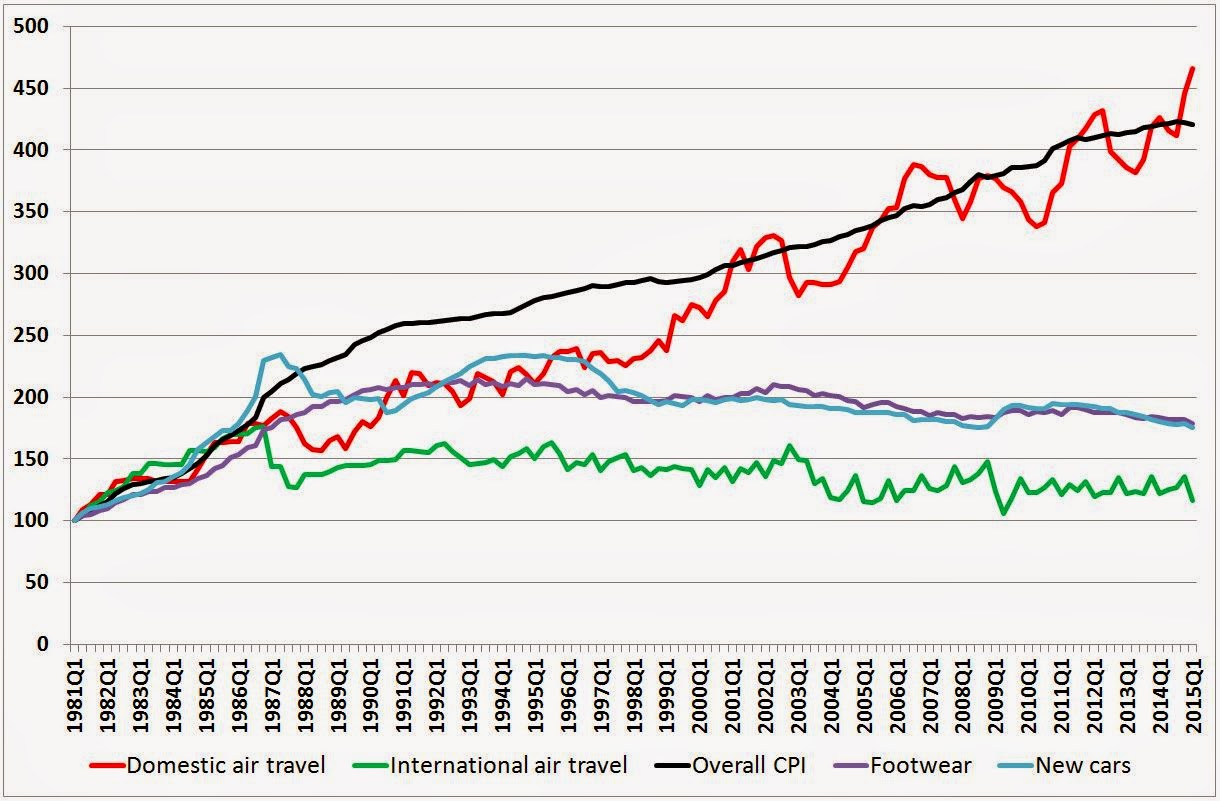
So Donal Curtin has done us all a great favour by collecting the data from Statistics NZ that compares domestic and international air travel over a long period.
It shows domestic air travel prices have basically risen in line with inflation, while international travel prices have been consistently flat in nominal terms and down in real terms.
Domestic air travel prices only appeared to undershoot wider inflation during the Ansett days...
Here's Donal on his excellent blog and the chart is below:
In real terms, relative to the overall CPI, domestic prices are slightly higher than they were in 1981. International air travel prices, in real terms, are hugely lower. The numbers wobble around a bit, but you're paying a quarter or a third of what you would have paid back in 1981.
And I suppose there may be some good operational reasons, other than competition playing too weak a disciplinary role, why the domestic airlines haven't been able to match the falling international prices. They don't, for example, have the access to cheap secondary airports that the budget European and American carriers do: perhaps their fares have to reflect the market power of the airports. Or perhaps they've been lumbered with higher regulatory costs than your typical overseas operator.
But you're still left with the feeling that competition isn't restraining local air prices as well as it might. It might be a coincidence, but the only time that domestic air price inflation lagged behind CPI price inflation as a whole, as you can see on the graph, was in the late '80s and through most of the '90s - precisely the period when Ansett New Zealand was most active.
2. Big problems in big China - As the speculation grows about China starting to print money too, Reuters reports China's Ministry of Finance has warned of slowing tax revenue growth and told local authorities to speed up issuance of newly-approved municipal bond debt.
In a statement, the Ministry of Finance urged local finance bureaus to "speed up local government debt issuance and scheduling, rationally set debt issuance times, and urgently complete the work of issuing bonds." The direction to accelerate bond issuance comes as local government revenue from land sales is dropping sharply, and signs emerge that the ministry's plan to tap China's fledging local government bond market to make up for the loss of tax proceeds and off-balance sheet fundraising may be faltering.
Reports that banks are reluctant to purchase the new debt at the yields on offer have appeared in official media following the postponement, for unspecified reasons, of a Jiangsu provincial bond auction initially set for April 23.
3. Easy problem to solve - Just print money to buy the Local Government bonds. There's renewed speculation in recent days that the People's Bank of China will buy these hard to shift local government bonds with printed money.
And where might all that cash go once it's been printed in China?
Quite a lot is managing to squirt out under and over the various restrictions, which are also being relaxed as China looks to 'internationalise' the renminbi.
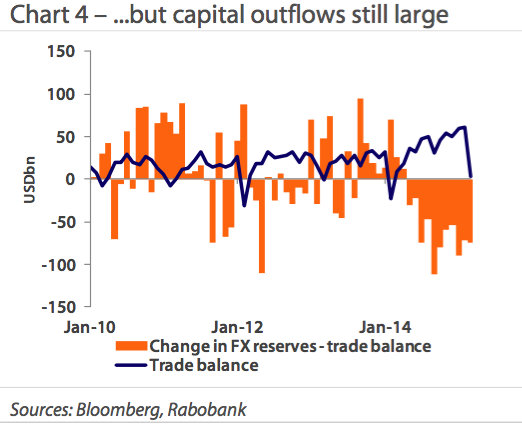
This Rabobank chart shows the accelerating capital flows out of China in orange.
4. Buy cheap houses in New Zealand - One answer for where some of that printed money might go is into New Zealand residential property, largely because it is so cheap and easy to get hold off. That's relative to property in China and the other hot spots such as Sydney, Vancouver, Singapore and Hong Kong, where Governments have cracked down on foreign buyers.
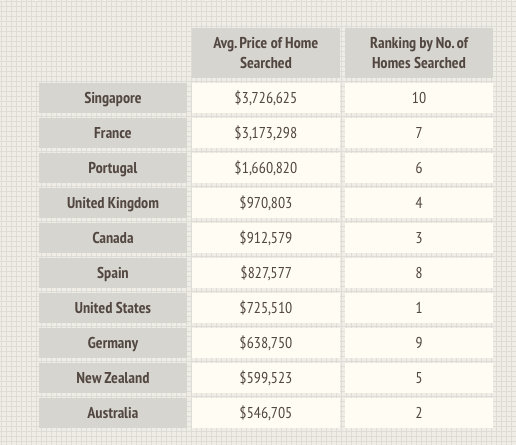
Juwai says New Zealand is the fifth most popular place for readers of its Chinese language listings site to look, but is only the 9th most expensive at (US$599,523) NZ$800,000.
Here's the detail courtesy of the WSJ and the chart that explains why we're so attractive.
5. When will they riot? - That's a question many have asked in the years since the bank bailouts and money printing exercises in the United States that led to a massive widening of the gap between the very rich and the very poor.
We certainly have had some riots in recent months.
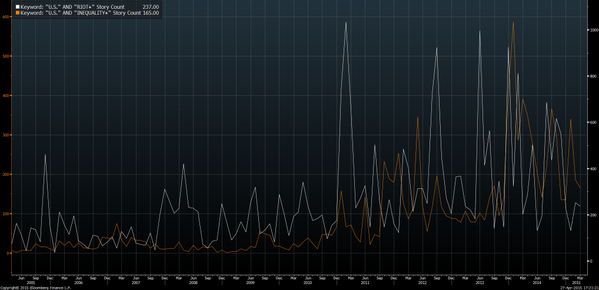
Here's an interesting chart from Bloomberg showing the story counts on Bloomberg mentioning the word "riot" in white and the word "inequality". Many would say the police brutality and the large number of black men killed by police are the driving force. There is at least a correlation though.
6. Unlocking the equity in the family home - Australia's Centre for Independent Studies has released a report recommending Australia solve its pension cost blowout by ensuring rich pensioners start digging into the equity in the family home to pay for their retirement.
It's good to see these sorts of solutions discussed. Means testing is of course a third rail of New Zealand politics, but at some point in the future when the fiscal pain becomes intense this sort of debate will bubble up here too. Especially given the huge numbers involved in fiscal terms and of the value of property.
"As the population ages the pressure on the pension will only get worse," Cowan says. "The answer is for government to count the family home in the assets test, boost take-up rates for reverse mortgages and including that income in the pension income test.
"Australians are continually told they don't save enough for retirement, but there is $625 billion in pensioner housing assets that could be raising pensioner living standards. The potential benefits are enormous," Cowan says.
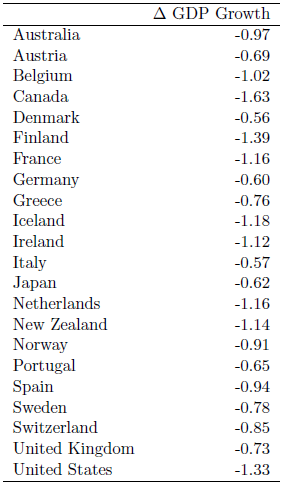
7. Slowing growth - This research published in VoxEu by Yunus Aksoy, Henrique Basso, Tobias Grasl and Ron Smith illustrates how ageing populations in the developed economies are slowing economic growth. The reckon New Zealand's growth rate will be dragged 1.14% lower.
The demographic structure may affect the long- and short-term macroeconomic conditions through several channels. Different age groups (i) have different savings behaviour, according to the lifecycle hypothesis; (ii) have different productivity levels, according to the age profile of wages; (iii) work different amounts – the very young and very old tend not to work, with implications for labour input; (iv) contribute differently to the innovation process, with young and middle age workers contributing the most; and (v) provide different investment opportunities, as firms target their different needs. Thus, demographic structure changes can be expected to influence real interest rates, inflation and real output in the long and short-term either directly or via their effects on expectations on the future course of key variables.
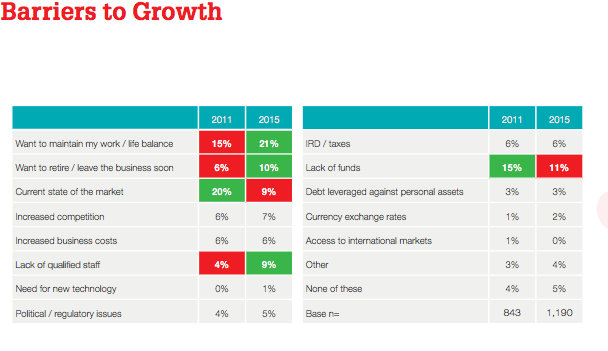
8. The problem of older business owners - This Westpac survey of the investment intentions and ownership intentions of small to medium business owners in New Zealand found more than half were either planning not to invest in their businesses or were scaling back because they wanted to have a better life style as they neared retirement.
This lack of enthusiasm for growth appears to be based around lifestyle goals, with 31% of respondents saying the biggest block to growth was their desire to maintain work/life balance or retire – a 10% increase on 2011.
“The economy is going better than 2011 and prospects are good,” says Westpac Chief Executive David McLean, “but for many SMEs the improved conditions are the cream on the lifestyle cake rather than looking to grow or expand.
10. Totally Clarke and Dawe on the prospect of a double dissolution of Australia's Parliament.
We welcome your comments below. If you are not already registered, please register to comment
Remember we welcome robust, respectful and insightful debate. We don't welcome abusive or defamatory comments and will de-register those repeatedly making such comments. Our current comment policy is here.