

Here's my Top 10 items from around the Internet over the last week or so. As always, we welcome your additions in the comments below or via email to bernard.hickey@interest.co.nz.
See all previous Top 10s here.
My must read is #5 on the future of work when we're all contractors.

1, A post broadcast world - I've been thinking a bit lately about what 'news' and journalism might look like in video form after the free-to-air channels abandon serious news to instead focus on entertainment, scandal and reality television.
It's topical.
I hope Campbell Live doesn't get the chop, but the economics of ad-funded free-to-air broadcast television are painfully ominous in the long run as advertising spending moves to the increasingly mobile worlds of Youtube and Facebook in the hunt for millenial viewership. The kids (ie anyone younger than me) don't own televisions, and if they do, they don't watch many of the ads at anything slower than X 30.
But there is hope.
Here's a useful Guardian piece on Vice Media's ability to do some serious (and some not so serious) video journalism that pays for itself through youtube ads.
Launched in March 2014, Vice News is one of the fastest growing news channels on YouTube with more than a million subscribers to date. It’s easy to see the growing appeal of online video, for advertisers at least. Three-quarters of adults watch an average of 115 hours of TV news a year compared with just 27 hours a year among 16- to 24-year-olds, according to the latest Ofcom research.
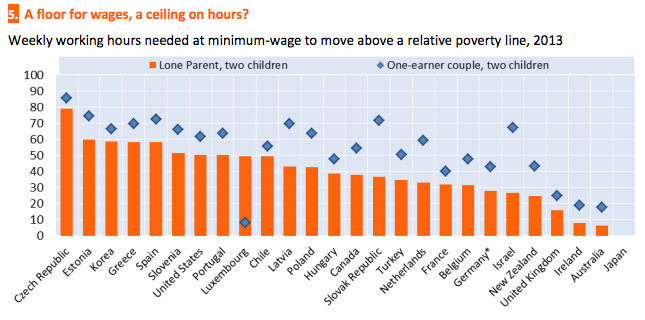
2. Thank goodness for our minimum wage - This OECD paper shows the importance of a strong minimum wage in helping to reduce poverty.
New Zealand has over the last decade or so kept increasing its minimum wage to over 55% of the median wage, which is the sixth highest in the OECD. It means a single parent with two children has to work less than 30 hours a week to get above the poverty line, although that's a national figure rather than an Auckland one.
Working for Families also helps immensely.
It's one of the reasons why poverty is much less awful for us as a first world country than say other first worlders such as United States, which has a relatively low minimum wage and a single parent has to work more than 50 hours to get over the poverty line.
Here's a chart:
3. The last hope? - Auckland's housing market seems unstoppable at the moment.
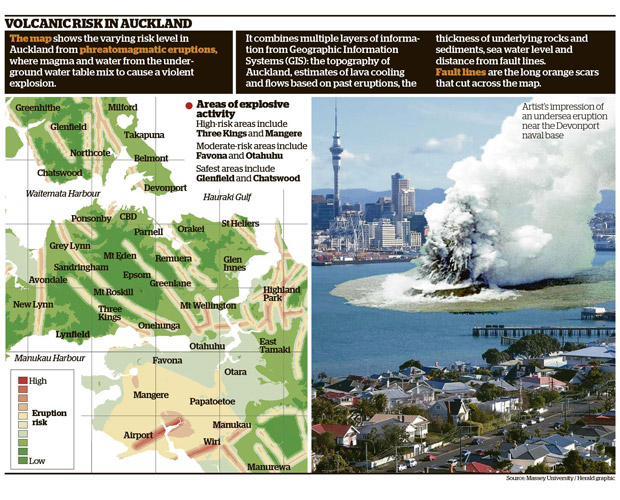
I wouldn't wish this on my worst enemy, but a volcanic eruption would indeed take the steam (sorry couldn't resist the pun) out of the market (and cut GDP 46% in the process).
South Auckland and Howick seem most vulnerable, the Herald reports.
4. Bubble? What bubble? - Reading Mike Hosking, you get the feeling not even a volcano could stop the unending goodness and joy. He says there's never been a crash in Auckland and there won't be one. Worth printing this one out.
There is no crisis, there is no bubble. Increased numbers of houses will come on to the market, interest rates will rise, migration will slow ... market forces will meld their way into their own natural solution.
This is the way it's always been in this country.
Do remember the oft quoted fact - in 45 years we've never actually had a housing crash.
5. The Hollywood Model - The future of work is a hot topic in this era or the 'Rise of the Robots', 'The Second Machine Age' and the rise of the precariat and zero hours.
So this Adam Davidson piece looking at how Hollywood organises people very efficiently on discrete projects is worth a read. The strong role of unions there is important too.
A project is identified; a team is assembled; it works together for precisely as long as is needed to complete the task; then the team disbands. This short-term, project-based business structure is an alternative to the corporate model, in which capital is spent up front to build a business, which then hires workers for long-term, open-ended jobs that can last for years, even a lifetime. It’s also distinct from the Uber-style “gig economy,” which is designed to take care of extremely short-term tasks, manageable by one person, typically in less than a day.
With the Hollywood model, ad hoc teams carry out projects that are large and complex, requiring many different people with complementary skills. The Hollywood model is now used to build bridges, design apps or start restaurants.
6. Eradicating homelessness - The problem of homeless people is a massive one for first world economies, not least for the people themselves.
So this Washington Post profile of homelessness researcher and activist Sam Tsemberis is worth a read. His simple but radical solution of simply providing a home first and asking questions later is actually working in some states in America.
According to academics and advocates, he’s all but solved chronic homelessness. His research, which commands the support of most scholars, has inspired policies across the nation, as well as in the District. The results have been staggering. Late last month, Utah, the latest laboratory for Tsemberis’s’s models, reported it has nearly eradicated chronic homelessness. Phoenix, an earlier test case, eliminated chronic homelessness among veterans. Then New Orleans housed every homeless veteran.
7. The IMF is coming - Australians are a little nervous about their booming housing market. Now they have a bit more to worry about because a team of five IMF experts are coming to Australia in June to kick the tyres on its housing market. Let's hope they don't notice the cheap flights to Auckland and have a quick look at our own little boomlet.
At the end of broad consultation with locals from June 11 to June 25, the IMF will issue a four-page initial assessment and a press conference, ahead of a more detailed full report months later, according to the Weekend AFR. It will recommend whether monetary policy or macro prudential regulation, such as loan-to-valuation caps, higher bank capital or adjusting risk weightings for bank balance sheets, were most appropriate.
The IMF’s investigation of the local property market is a clear sign of just how Australia is getting itself noticed for all the wrong reasons, and just how much of an outlier Australia has become when it comes to house affordability.
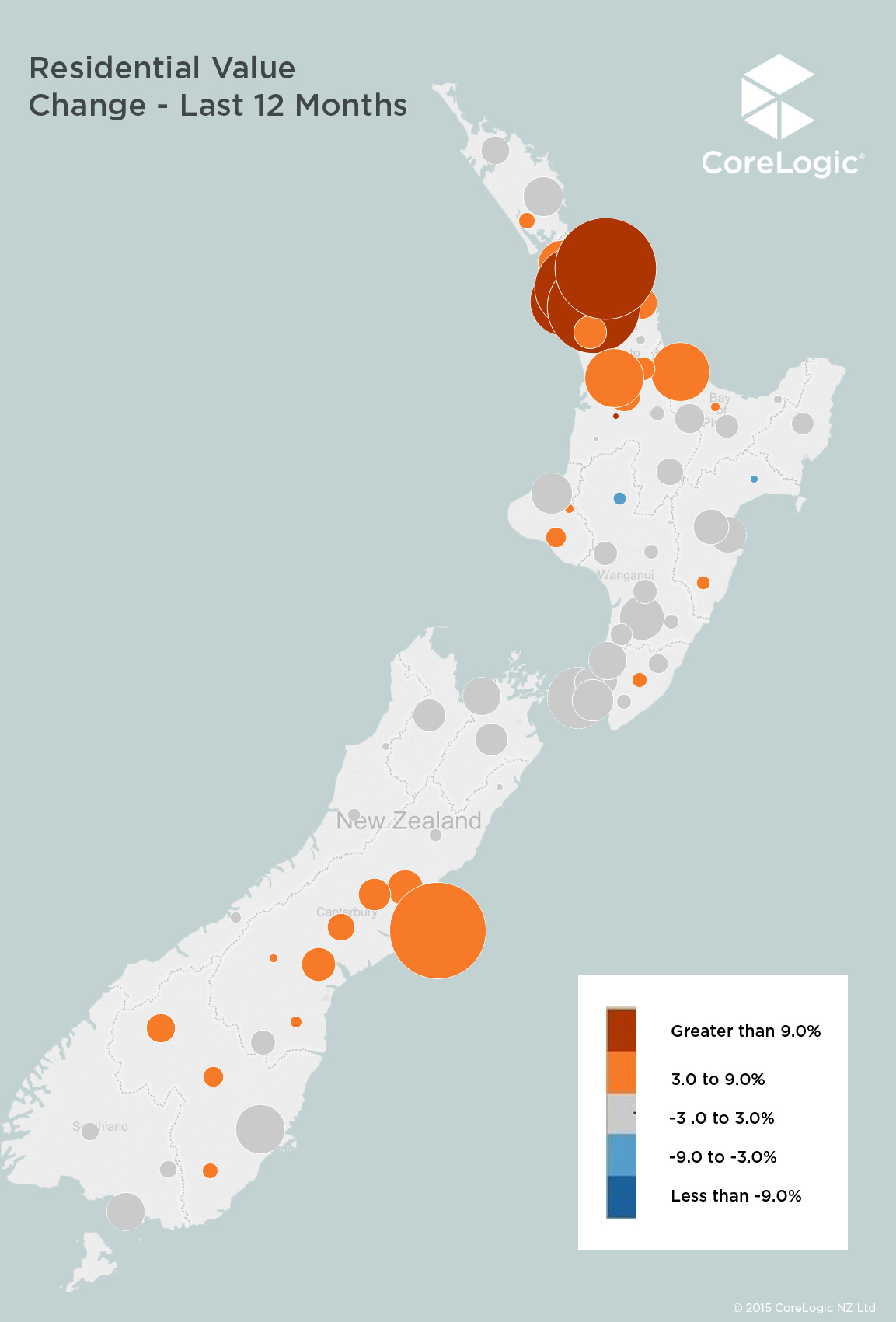
8. Bubble? What bubble? 2.0 - Jonno Ingerson at Core Logic has written a useful commentary on the housing market that questions the narrative about a bubble in Auckland. He highlights the role of foreign buyers and why Auckland may not be a bubble while they're still buying. The graphic below is an eyeopener for those outside Auckland and Christchurch.
here are some signs of property speculation in the Auckland market from investors and Chinese buyers. Let’s look at those two groups for a moment.
At the low end of the value range (the bottom 30% of Auckland properties by value) turnover has increased to near all-time highs. The most active group of buyers there are investors who are now picking up 42% of all the sales in this low value bracket. They do so largely at the expense of first home buyers who back in 2006 were buying around 38% of low-end properties but now are just above 26%.
The LVR speed limits have definitely had an effect in this part of the Auckland market. Incidentally, there has been little change in first home buyer turnover at the low end of the market in other parts of the country. The other demand driver in Auckland are the much discussed foreign buyers. There is no decent measure of foreign buyers available anywhere, so getting hard facts on this is difficult.
However the anecdotes support Chinese buyers in particular paying above the odds in Auckland for multiple properties. Auckland property is seen as a safe place to invest their money, but also a great place to live and educate their children. And still much cheaper than Melbourne and Sydney I might add!
9. Where's the liquidity? - All the bond buying by central banks in recent years and tougher regulation of banks acting as market makers (or players) has dried up liquidity in the bond markets at least.
Szu Ping Chan writes about what that might mean for financial markets if (or when if you're that way inclined) the US (ever) puts up interest rates.
Market liquidity, or the ease with which an investor can quickly buy or sell a security without moving its price, has evolved since the financial crisis. Investment banks, which traditionally supported liquidity in times of stress, have been shrinking their activities.
Corporate bond inventories have fallen by 75pc in the US and 50pc in Europe since 2007, according to IIF data. While much of this has been driven by banks unwinding large credit books, regulation has also discouraged them from holding large quantities of bonds that could help cushion violent swings in prices.
Mr Adams said a “dramatic revolution” of the players and risks of market making had also pushed risk “out into the shadows” of non-bank lending.
10. Totally Clarke and Dawe with Stu Pidlaw being quizzed on general knowledge...
(Updated to label Hosking article as number 4.)
We welcome your comments below. If you are not already registered, please register to comment
Remember we welcome robust, respectful and insightful debate. We don't welcome abusive or defamatory comments and will de-register those repeatedly making such comments. Our current comment policy is here.