

Here's my Top 10 items from around the Internet over the last week or so. As always, we welcome your additions in the comments below or via email to bernard.hickey@interest.co.nz.
See all previous Top 10s here.
My must reads are #1 and #2 on how new technology changes a lot of things.

1. Good thing or bad thing? - I'm fascinated with the amazing pace of technological change and how it's transforming the way we work, how our economy works and the way humans interact.
It's not all good. Or all bad.
But it is a thing.
So this Nautilus piece on how we'll be able to record, database and search everything we and everyone else has ever said is thought provoking.
It means we could check exactly what we said to that supplier in a phone call last year. Or whether the minister really did say before the last election the exact opposite of what he or she is promising now.
It's both scary and exciting. And it would change the way we think about what we're about to say.
Much of what is said aloud would be published and made part of the Web. An unfathomable mass of expertise, opinion, wit, and culture—now lost—would be as accessible as any article or comment thread is today. You could, at any time, listen in on airline pilots, on barbershops, on grad-school bull sessions. You could search every mention of your company’s name. You could read stories told by father to son, or explanations from colleague to colleague. People would become Internet-famous for being good conversationalists. The Record would be mined by advertisers, lawyers, academics. The sheer number of words available for sifting and savoring would explode—simply because people talk a lot more than they write.
With help from computers, you could trace quotes across speakers, or highlight your most common phrases, or find uncommon phrases that you say more often than average to see who else out there shares your way of talking. You could detect when other people were recording the same thing as you—say, at a concert or during a television show—and automatically collate your commentary.
2. Use it or lose it - One implication of not having to bother to remember what was said is that it could allow our brains to atrophy. Possibly.
In his book The Shallows, Nicholas Carr argues that new technology that augments our minds might actually leave them worse off. The more we come to rely on a tool, the less we rely on our own brains. That is, parts of the brain seem to behave like muscle: You either use it (and it grows), or you lose it. Carr cites a famous study of London taxi drivers studying for “The Knowledge,” a grueling test of street maps and points of interest that drivers must pass if they are to get their official taxi license. As the taxi drivers ingested more information about London’s streets, the parts of their brain responsible for spatial information literally grew. And what’s more, those growing parts took over the space formally occupied by other gray matter.
3. Does migration really help the economy? - Michael Reddell over at Croaking Cassandra has been doing some excellent work digging into the numbers and arguments behind New Zealand's surprisingly lax and high migration levels.
He has found that most of the migrants coming aren't nearly as skilled as we might think and the economic value they add is not as high as we all assume.
Officials explicitly recognise that large proportions of the people we give permanent residence approvals to (eg lots of family approvals) can’t really be expected to add anything much economically, and many represent a significant net fiscal cost. Officials note that a large proportion of skilled migrant category approvals are to former students in New Zealand, while observing that a large proportion of those have fairly low-level qualifications, and “we seem to have become less effective in retaining the skilled graduates we want”.
MBIE notes that “we are seeing a higher proportion of recent migrants (temporary and permanent) employed in industries with overall low or declining productivity. In particular, we are seeing temporary migration increasingly becoming a structural feature of the workforce – with certain sectors (eg dairy) increasingly relying on a ‘permanent pool’ of temporary migrant labour”.

4. Capital outflows - The initial thought on hearing about China's stock market wobbles and the apparent slowing of economic growth there is that this will reduce the investment intentions of Chinese residents, or that they might hunker down and reduce investments in overseas assets.
It turns out it's doing the exact opposite.
The FT reports a survey it did of wealthy residents in China in July that found 60% said they planned to increase their overseas holdings over the next two years. Their first priority was to invest in overseas property.
With uncertainty rising at home, China’s rich have started looking elsewhere to store their wealth.
“China’s policy changes so quickly,” said a businessman in Shenzhen who would only give his name as Mr Huang. “I am worried about the safety of my wealth.”The survey found that 47 per cent of so-called high net worth individuals had earmarked more than 30 per cent of their assets for investment overseas.
The top reason for overseas investment, cited by more than 38 per cent of respondents, was to make it easier to get their children into good schools. As wealthy parents race to send their kids abroad to receive western education, many are buying apartments in college towns.
“The focus of China’s high net worth families has shifted from making as much money as you can to protecting your wealth,” said Shang Dai, chief executive of Kuafu Properties, a New York-based developer that draws funds from Chinese investors.
Many parents are buying properties to make sure their children have a slot at top schools.
5. The problem with driverless cars? - Cars with drivers. I'm excited about the prospect of driverless cars, but I wonder if they're really going to happen.
This New York Times piece looks at some of the challenges.
Google, a leader in efforts to create driverless cars, has run into an odd safety conundrum: humans.
Last month, as one of Google’s self-driving cars approached a crosswalk, it did what it was supposed to do when it slowed to allow a pedestrian to cross, prompting its “safety driver” to apply the brakes. The pedestrian was fine, but not so much Google’s car, which was hit from behind by a human-driven sedan.
Google’s fleet of autonomous test cars is programmed to follow the letter of the law. But it can be tough to get around if you are a stickler for the rules. One Google car, in a test in 2009, couldn’t get through a four-way stop because its sensors kept waiting for other (human) drivers to stop completely and let it go. The human drivers kept inching forward, looking for the advantage — paralyzing Google’s robot.
6. A third deflationary wave - Deflation and or low inflation seems endemic at the moment and this piece in the FT from FIdelity's Dominic Rossi argues the world economy is on the brink of a third deflationary wave as emerging markets slide. Last night's hints from the ECB that it will expand QE tally with this idea. Even 2.75% seems remarkably high for our OCR in this environment.
This third deflationary wave will mean that world GDP will continue to operate at a level below potential output. Downward pressure on prices will persist and a supply-side contraction in developing nations will be required before prices stabilise. A further fall in potential global output is now unavoidable. The adjustments to GDP forecasts are still ahead of us.
Consequently an economic landscape, formed of low nominal growth and low interest rates, will shape the developing world as it has shaped the developed world for some time. Those who hoped the secular opportunities of developing nations would insulate them from these woes will need to rethink.
Nor will a fresh round of competitive devaluations offer an escape route from these supply side adjustments. On the contrary, this would only intensify these price and volume shocks. A tightening of US monetary policy, and a stronger dollar, comes to the same thing. Either of these policy options would lower aggregate demand at a time it is already too low.
7. History does repeat - One of the big questions for those who think about global economics and New Zealand's future is whether China can avoid repeating Japan's mistakes.
We all remember Japan's astonishing rise through the 70s and 80s. Then its stock market and land markets crashed, heralding an era of stagnation that has lasted 20 years and is still dragging on.
Gillian Tett looks here at where China can avoid history repeating.
If you want to see what can happen when a government tries to prop up stock and land prices, Tokyo’s story is sobering. It shows that not only do interventions carry a financial cost (since they rarely work for long), but that they can be a lasting drag on investor psychology.
Consider the parallels. In the past two decades China has delivered impressively high economic growth by investing heavily to build an industrial export machine. This was supported by a bank-centred, state-controlled financial system that channelled cheap funding to favoured industries at the expense of consumers. The price of money, in other words, was set by autocratic fiat.
This is roughly what Japan also did in the decades after world war two (although such state control was more subtle and indirect in Japan than in China).
But Japan’s model changed from the 1970s onwards. As the country’s economy matured, Japanese companies had less need for bank-supplied cheap credit, and, as it grew wealthy, investors started hunting for places to put their cash. The government slowly started to move away from a bank-dominated, tightly controlled financial system towards something that had the trappings of capital markets open to the outside world. However, Japan’s pace of liberalisation was belated and uneven (if not downright arbitrary) and asset price bubbles developed as capital swirled around.
Monetary policy and exchange rate swings made the problem worse. So, by the end of the 1980s, stock and land prices had soared — in much the same way that they have in China, as Beijing has also tiptoed towards patchy liberalisation and embraced some capital market structures.
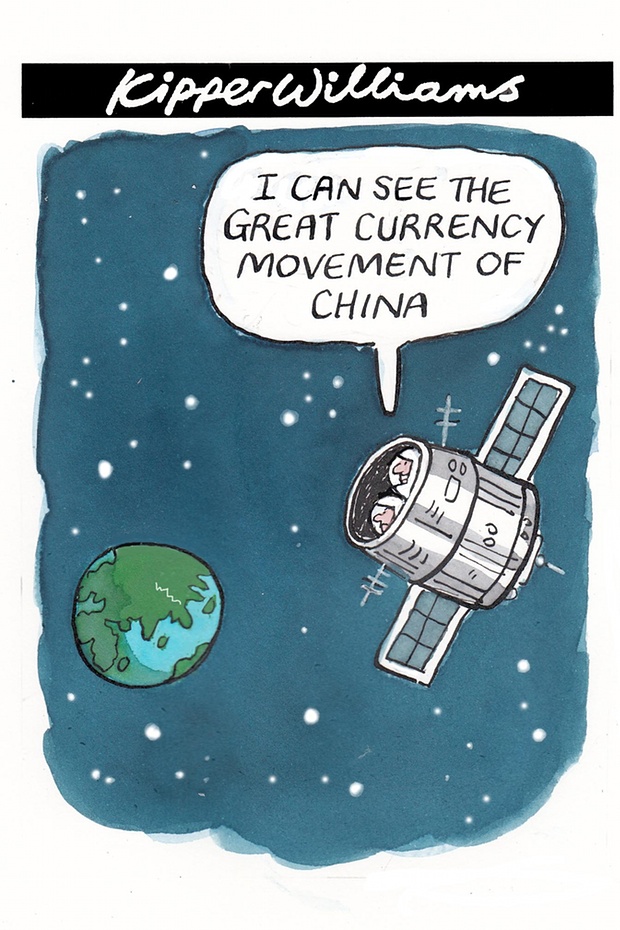
8. Trust is everything - Tett's conclusion was that Japan's bureaucrats who had tried to prop up the markets in the early 1990s eventually lost the trust of investors as banks who had not repriced assets at lower market levels eventually had to fess up in the mid 1990s. Stagnation ensued for 20 years.
By the mid 1990s share prices seemed to have stabilised at lower levels. But in 1997, when news seeped out that the banks were sitting on massive unrecognised losses (which later totalled almost $1tn), a financial crisis erupted, and asset prices slid. By that point, the system was also plagued by a pernicious lack of trust.
After a decade of (largely futile) meddling, investors no longer believed that Japanese bureaucrats were as powerful as they had seemed in the decades after the second world war. But they did not have much faith in “market” prices either, since everyone knew these were being propped up. Japan was thus in a limbo: the traditional pillars of faith that once supported asset values had crumbled, but there was nothing else to replace them.
Nobody really knew the “clearing prices” of assets, as traders like to say, or how far prices might fall if markets were free. Investors were haunted by an uneasy fear that bad news could seep that would push prices down again.
9. Totally John Oliver on Native Advertising.
10. Totally Clarke and Dawe - The anonymous leaker has a very shiny head....
We welcome your comments below. If you are not already registered, please register to comment
Remember we welcome robust, respectful and insightful debate. We don't welcome abusive or defamatory comments and will de-register those repeatedly making such comments. Our current comment policy is here.