
Here's my Top 10 items from around the Internet over the last week or so. As always, we welcome your additions in the comments below or via email to bernard.hickey@interest.co.nz.
See all previous Top 10s here.
My must read is #8 from Ambrose previewing a possible Fed rate hike.
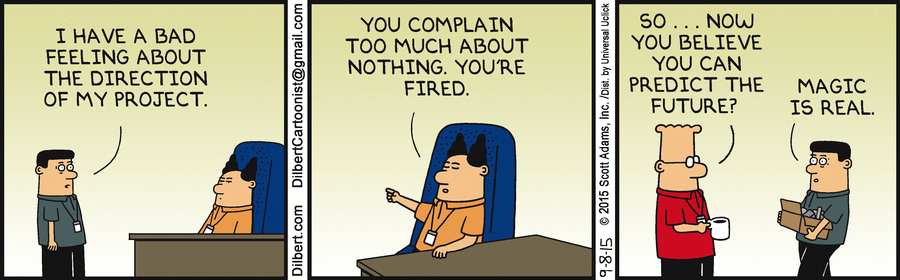
1. The real sharing economy is dead - It was a seductive idea. We've all heard the story about how we all own drills that we only use for a total of 13 minutes in the life of the drill.
The solution was to use peer to peer sites to share the drill and avoid a lot of waste and cost. If, somehow, each neighbourhood only needed one drill then wouldn't the world be a much better place?
That was the theory. In practice, the peer-to-peer economy has thrived only when we've been able to make a buck out of something and it was comparable to something that already existed such as a hotel room or a taxi ride..
The big ones, of course, are Uber and Airbnb. I'm a regular user of both and they've helped save me plenty.
But this piece in Fast Company about the end of the sharing dream is well worth a read.
"Let me ask you this," Williams says. "For a drill, which by the way now costs $30, and you can get it on Amazon Now and have this thing delivered to you in an hour if you live in New York City—for something worth $30, is it really worth your time to trek potentially 25 minutes to go get something that you spent $15 to use for the day, and then have to trek back?"
The most successful "sharing economy" startups ended up being those that made the process as efficient and transactional as possible. "What Airbnb did quite well is that the process where you rent a room anywhere is actually quite similar to a hotel room," says Cige, the founder of Zilok. "For peer-to-peer car rental, it’s exactly the same."
Other companies that claimed space under the "sharing economy" umbrella and its halo effect, meanwhile, have transitioned away from that narrative. Lyft may have debuted its service as a more neighborly, peer-to-peer version of Uber—encouraging people to greet their drivers with a fist bump, fuzzy pink mustaches—but now it’s competing on price instead.
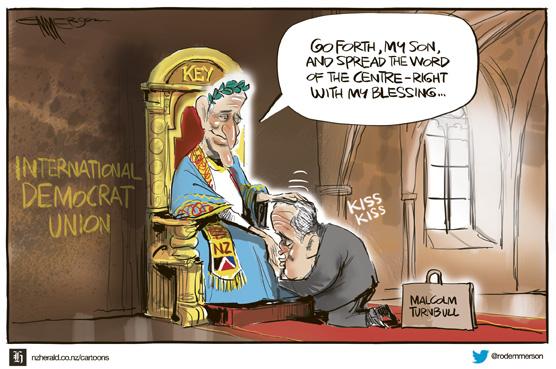
2. Paul Keating vs John Hewson - I covered politics in Australia in the mid 1990s and brushed up against the Paul Keating legend before he was beaten by John Howard in the 1996 election.
The shenanigans over the last few days reminded me of how wild Australian politics can be.
This rap/duet video tribute to the battle between Keating and John Hewson over GST in 1993 is a brilliant tribute. Keating won, of course, in the 1993 election "for the true believers."
3. Who's afraid of the bearded wolf? - The election of Jeremy Corbyn to the leadership of Britain's Labour Party shocked a few people. A few are rejoicing, including those on both the left and right, for different reasons.
This piece in the New Yorker is a nice summary. Here's a taster:
To those who study such arcana, it is an article of faith that you cannot hope to win a general election without securing the hearts, minds, gut feelings, and wallets of Middle England—that nebulous but sacred zone which, with its touch of Tolkien, refers to the millions of citizens who have acquired the hobbit-y habits of moderation, and who, having done O.K., would like to do better still.
To them, the nineteen-seventies are not a paradise lost but a wrecking yard where British industry went to die, and where Labour governments got snarled in the machinery of the unions. It was the epoch when the lights went out, when garbage was stacked in the streets, and when the I.R.A. planted bombs in English pubs. And who was it, such folk may now remind each other, who invited Sinn Féin—assumed, at the time, to be the public face of the I.R.A.—to the House of Commons, only weeks after a bomb, intended for Mrs. Thatcher, had exploded at a hotel during the Conservative Party conference and killed five people? Jeremy Corbyn.

4. The demise of Tony Abbott - This piece in the Guardian on the political death of Tony Abbott paints a more nuanced picture. It resonates with me. I remember him as a backbencher who came to Canberra in 1994. He was always a bit different to the usual Liberal crowd. He was more socially conservative and more economically conservative too. Much has changed.
The IPA crowd once mocked and disdained Abbott for his lack of ideological commitment. The Mad Monk worshipped at the wrong altar. He was remnant Democratic Labour party – a soft-headed person who had told John Howard that WorkChoices was a mistake, who’d once confessed boredom with economics. Now it had to be in lockstep, marching in formation to the Lodge.
To be trusted with the party leadership, Abbott needed to shrug off the ill discipline, the boundary riding, the sulking, the periodic raging, the crazy blue sky dreaming of his old life in politics. He would become the victory machine, the talking point spouting automaton, the box checker who would align his interests with fellow travellers powerful enough to set agendas in several continents, and cast shadows over democratically elected governments.
Coal would be good for humanity, and the Coalition would develop the policies to prove it. The deeply suspicious progressivism of carbon pricing would be scrapped, whatever the cost. ($7bn, but who is counting.) Abbott’s signature aggression was to be a targeted weapon, not the manifestation of random acts of pique.
5. Corbyn and austerity - Paul Krugman has a few views on the surprising success of Jeremy Corbyn in the UK. Not surprisingly, they focus on the austerity thing. Rightly, he questions the view now prevailing that the Blair/Brown Labour Government was profligate. The parallels with New Zealand are eerie. The current National Government, which has never run a surplus, accuses Labour of profligacy, even though it never ran a deficit.
Political pundits say that this means doom for Labour’s electoral prospects; they could be right, although I’m not the only person wondering why commentators who completely failed to predict the Corbyn phenomenon have so much confidence in their analyses of what it means.
On economic policy, in particular, the striking thing about the leadership contest was that every candidate other than Mr. Corbyn essentially supported the Conservative government’s austerity policies.
Was the last Labour government fiscally irresponsible? Britain had a modest budget deficit on the eve of the economic crisis of 2008, but as a share of G.D.P. it wasn’t very high – about the same, as it turns out, as the U.S. budget deficit at the same time. British government debt was lower, as a share of G.D.P., than it had been when Labour took office a decade earlier, and was lower than in any other major advanced economy except Canada.
It’s now sometimes claimed that the true fiscal position was much worse than the deficit numbers indicated, because the British economy was inflated by an unsustainable bubble that boosted revenues. But nobody claimed that at the time. On the contrary, independent assessments, for example by the International Monetary Fund, suggested that it might be a good idea to trim the deficit a bit, but saw no sign of a government living wildly beyond its means.
6. China's new capital controls - Last week without much fanfare China reimposed tougher capital controls to slow the surge to the exits that is pressing the renminbi lower.
Jamil Anderlini has the story:
The State Administration of Foreign Exchange (Safe), the unit of the People’s Bank of China in charge of managing the currency, has in recent days ordered financial institutions to step up checks and strengthen controls on all foreign exchange transactions, according to people familiar with the matter and an official memo seen by the Financial Times.
The Safe has ordered banks and financial institutions to pay particular attention to the practice of over-invoicing exports, used to disguise large capital outflows. The administration confirmed the existence of the memo, but declined to comment further.
China has long imposed limits on the amount of foreign exchange that can be bought or sold by individuals and companies, but those controls have broken down somewhat in recent years as the renminbi has become more widely used around the world.
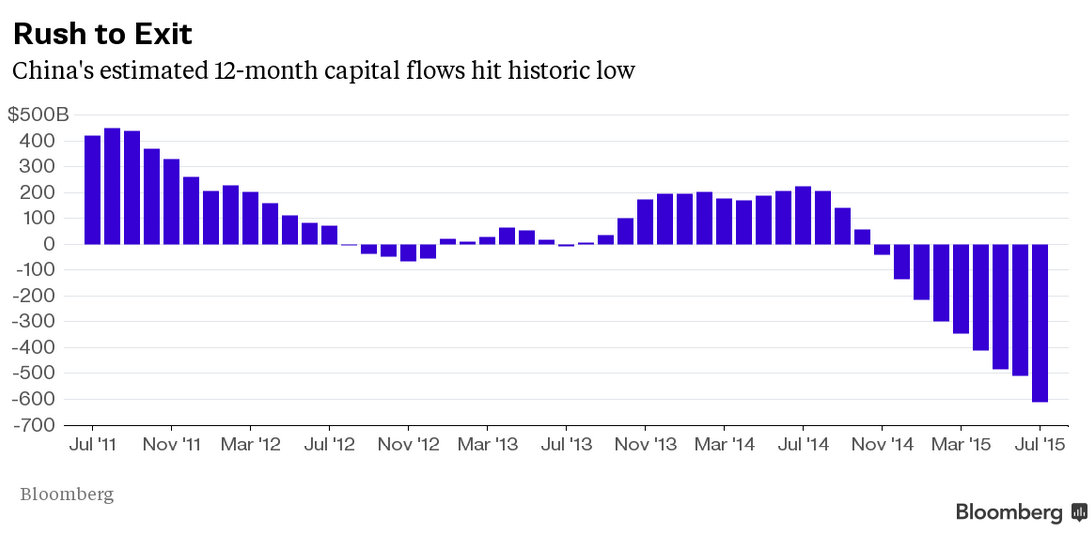
7. Are those controls beginning to bite already? - The AFR reports those controls on Chinese capital flows are already beginning to affect demand for Australian property.
Chinese purchases of Australian property have dropped significantly in the past month, according to agents, as buyers struggle to shift money out of the country following Beijing's move to tighten capital controls.
One Chinese agent said the latest efforts by the central government to avoid large capital outflows were having a "significant impact" on his business.
"It has affected 70 to 80 per cent of current transactions and some have already been suspended," said the agent who asked not to be named.
The tighter foreign exchange rules are also set to impact the federal government's relaunched Significant Investor Visa (SIV), which provides fast-tracked residency for those investing at least $5 million into Australia.
"I think it will be big, big trouble for the SIV program because the amount of money is just too large," said one Shanghai-based adviser, who sells Australian property and advises wealthy clients on their migration plans.
8. Bracing for the Fed - Friday morning's decision by the US Federal Reserve is shaping up as epic, particularly if it's a hike.
Here's Ambrose in rip-snorting good form:
Debt ratios have reached extreme levels across all major regions of the global economy, leaving the financial system acutely vulnerable tomonetary tightening by the US Federal Reserve, the world's top financial watchdog has warned.The Bank for International Settlements said the wild market ructions of recent weeks and capital outflows from China are warning signs that the massive build-up in credit is coming back to haunt, compounded by worries that policymakers may be struggling to control events.
"We are not seeing isolated tremors, but the release of pressure that has gradually accumulated over the years along major fault lines," said Claudio Borio, the bank's chief economist.
Adding to the toxic mix, off-shore borrowing in US dollars has reached a record $9.6 trillion, chiefly due to leakage effects of zero interest rates and quantitative easing (QE) in the US.
This has set the stage for a worldwide dollar squeeze as the Fed reverses course and starts to drain dollar liquidity from global markets.Dollar loans to emerging markets (EM) have doubled since the Lehman crisis to $3 trillion, and much of it has been borrowed at abnormally low real interest rates of 1pc. Roughly 80pc of the dollar debt in China is on short-term maturities.
9. Totally John Oliver reading you your rights to an attorney.
10. Totally Clarke and Dawe talking to Homer (I can't wait for their latest on Abbott's demise)
We welcome your comments below. If you are not already registered, please register to comment
Remember we welcome robust, respectful and insightful debate. We don't welcome abusive or defamatory comments and will de-register those repeatedly making such comments. Our current comment policy is here.