

Here's my Top 10 items from around the Internet over the last week or so. As always, we welcome your additions in the comments below or via email to bernard.hickey@interest.co.nz.
See all previous Top 10s here.
My must read is #6 on longevity, inequality and public investment in health. New Zealand has so many good things going for it (compared to many others), and our public health system is one of them.

1. Helicopter money - Our Reserve Bank has yet to talk about the idea of Helicopter Money, which is taking off (geddit) in Europe at the moment.
But Glenn Stevens of the Reserve Bank of Australia has had a few things to say. He's not a fan, as The Australian reports.
Governments should focus on infrastructure projects rather than dropping “helicopter money” into individuals’ bank accounts in order to boost growth and inflation, according to Reserve Bank of Australia Governor Glenn Stevens.
“The main complication is surely that it would be a lot easier to start doing helicopter money than to stop, if history is any guide,” Governor Stevens told a Credit Suisse conference in New York. “Governments have found that a difficult decision to get right.
“Desperate times call for desperate measures, perhaps. Are we that desperate?” he asked, pointing out that central bank financing of governments is frowned upon or illegal in many countries and overturning such taboos “would be a very large step”.
That's all fair enough for New Zealand and Australia, which have half-way functional Governments and polities, and who have relatively low debt and aren't genetically opposed to infrastructure investment. But it is a problem in America and Europe where voters and politicians seem determined not to borrow and invest, either because they are up against debt limits or older voters won't allow it.
When young voters finally work this out and take their revenge through the ballot box (hopefully this way rather than others) then we will be in for some political drama. We are already seeing this a bit in America and Europe, where youth engagement in politics is beginning to rise.
2. The 'new nothingness' - Saxo Bank Chief Economist Steen Jakobsen is always worth reading and his latest on the malaise in Europe and Japan in particular frames the issue of negative interest rates in an interesting way.
We have zero growth, zero inflation and zero hope. That combination has left the countries of this circumstance in total apathy as zero rates are being interpreted as meaning that no reforms are needed. No inflation means no new margins as well as no new wage bargaining, and zero hope means politics and elections may change the affiliation of countries’ leaders, but not their politics and certainly not their vision for the future.This is one of the unintended consequences of zero-bound economies and policies. This apathy has, however, reached a zenith-point that needs to be addressed. Media and policymakers continue to talk about what we can’t do, leaving no room for talk of we can do and characterising dreams as mere fantasies, things best left to children.This new nothingness is creating a youth, a political system and an economic outlook which is based more in peoples’ heads and minds than it is in reality.Every country I visit has terrible macro policies, and features a political class who are mainly interested in maintaining the status quo (as well as a dynamic micro economy). There are always business people and students who are willing to do more and better – to go higher, longer and further – but they are drowned in this "nothingness reality".
3. 'Things could be worse' - I hear myself saying this a lot these days when people talk about some sort of coming catastrophe in global markets and global banking systems. I've heard these claims so many times before and the 'grown ups' have always come up with a response that avoids argmageddon. Banks were rescued and money printed. There are no limits to this sort of response given our fiat money system so there's a lot of relaxation and complacency around, but very little ambition.
New Zealand seems to be doing OK, albeit thanks to record high net migration and two building booms, but real per capita GDP and productivity is going nowhere, much like the rest of the developed world. Luckily, we have some conventional 'ammo' left to respond to a downturn in the form of lower interest rates and government borrowing to fund deficits. Other Governments are not so lucky or well run (in relative terms).
Here's Steen:
My travels prove to me that the world is stuck in neutral. Everyone, in a sense, wants to be “half-pregnant”, wallowing in the idea that “things could be worse” while not dealing with reality.
The consequences for markets are manifold: Companies can’t continue to grow top-line earnings when their customers – the 80% – have less to spend. At this point, a zero-rate environment is one in which “financial engineering” has reached its inbuilt maximum, the pinnacle of the Excel spreadsheet maker's art (discounted cash-flow close to zero = infinite valuation).In addition? Zero expected returns for equity markets, a normalisation of interest rates – not based on growth but instead on the need to “normalise” zero bound – and a tectonic shift from investing in “paper money” to doing so in productivity and jobs among the 80%.
4. The social contract - Steen Jakobsen writes well here about the breaking of a social contract in Europe and the United States. The polling here suggests we're not close to the same breaking point in New Zealand, but we can't ignore the rest of the world.
How do we explain Donald Trump’s rise, the risk of a Brexit, the fact that Marie Le Pen stands a good chance of becoming France's next president, and the general situation of a political world in which all incumbents appear ready to be knocked off their stools? Simple, Dr. Watson! It is the social contract, which is not only being broken but is also being tossed out! Meanwhile, the political elites are losing their hair trying to analyse why someone like Trump, a four-times bankrupt, immoral, profane, self-promoter of a candidate can win the GOP election.
The point is that this has nothing to do with Trump’s policies (or lack thereof) but has everything to do with the fact that he is anti-establishment. We need not fear that the US is turning towards Trump's policies, but the political elite needs to recognise that voters are turning away from the “social contract” and its elitist political judgments.
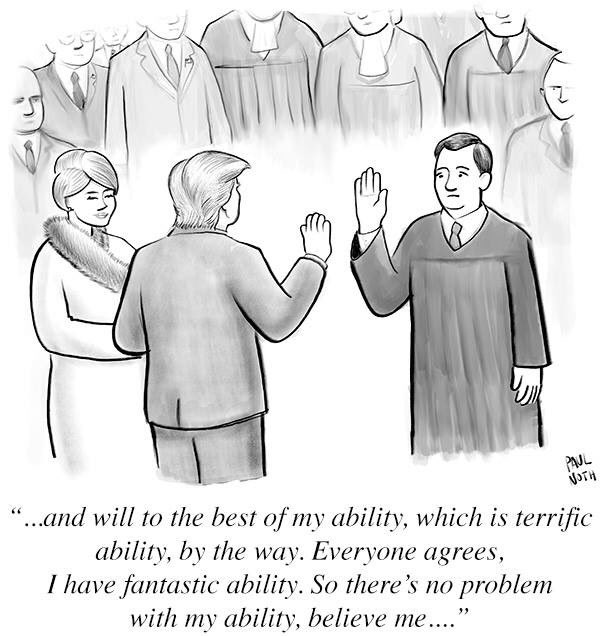
5. Inequality and life expectancy - Michael Specter writes in this New Yorker piece about the growing gap in life expectancy in America (not globally) between the rich and the poor.
It will surprise nobody to learn that life expectancy increases with income. Coming, however, in the midst of a Presidential campaign in which the corrosive effects of income inequality have been a principal debate topic, the data and its implications for public policy are particularly striking: the richest one per cent of American men live 14.6 years longer on average than the poorest one per cent. For women, the average difference is a just over ten years.
The gap appears to be growing fast. The researchers, led by Raj Chetty, a professor of economics at Stanford University, analyzed more than 1.4 billion federal tax returns, as well as mortality data from the Social Security Administration, from the years 2001 to 2014. In that period, the life expectancy of the richest five per cent of Americans increased by roughly three years. For the poorest five per cent, there was no increase.
6. Life expectancy and location - Specter also finds that in America where you live can have a big impact on life expectancy, regardless of income. It seemed public investment in health made a big difference.
To the surprise of many experts, including those who did the research, the study found that the poorest Americans live considerably longer in some cities than in others. In New York, Los Angeles, and Miami, for example, the lowest quarter of income earners lived, on average, until the age of eighty-one. That’s only a few years less than the richest one per cent—and far longer than poor Americans in other regions. The cities with the shortest lifespans for the poor include Las Vegas, Tulsa, and Indianapolis.
The reasons for the difference are not clear, although the authors point out that cities like New York often have aggressive anti-smoking policies and make it harder for people to eat trans fats, and drink sugary sodas—which are implicated in common diseases like obesity and diabetes.
The findings are sure to offer ammunition to those who argue for greater investment in community and public health. “Amid the excitement over personalized medicine,’’ Steven H. Woolf and Jason Q. Purnell wrote in an accompanying editorial, “the fact remains that a patient’s zip code may be more useful for targeting therapy than his or her genotype."
7. Declining social mobility and restrictions on land use - Alex Tabarrok writes at Marginal Revolution about falling social mobility (the ability for poor kids to become richer adults) and the potential connection with land use restrictions (ie zoning rules and metropolitan urban limits). It used to be that poor people could move to a rich city for a higher wage to get richer. That's much harder now in restricted cities with insane housing costs. (I'm looking at you Auckland). All this helps explain falling productivity growth.
Indeed, there is now a slight trend for poor people to move to poor places because even though wages are lower in poor places, housing prices are lower yet.
Ideally, we want labor and other resources to move from low productivity places to high productivity places–this dynamic reallocation of resources is one of the causes of rising productivity. But for low-skill workers the opposite is happening – housing prices are driving them from high productivity places to low productivity places. Furthermore, when low-skill workers end up in low-productivity places, wages are lower so there are fewer reasons to be employed and there aren’t high-wage jobs in the area so the incentives to increase human capital are dulled. The process of poverty becomes self-reinforcing.

8. Solar? Really? - Former Meridian Energy CEO Keith Turner said an amazing thing this week on RNZ which hardly anyone picked up. He said power prices would fall to a third of their current levels in little over a decade because of the spread of solar power and batteries.
Really?
Vox's Brad Plumer is not so sure in this useful explainer.
Thanks to a little-discussed phenomenon known as "value deflation," the electricity generated by solar panels gets less and less valuable as more panels come online. The corollary is that over time, solar panels continuously need to get much, much cheaper if we want them to scale up significantly.
How cheap? Sivaram and Kann argue that the industry should set a goal of pushing the installed price of solar to 25 cents per watt by 2050 — down from around $3 per watt today. That's a mind-bogglingly low number, and it could require thinking about solar innovation in a radically new way. The industry's current approach to cutting costs might not get us there. We may need experimental new technologies. Or novel ways of integrating solar into our walls and windows. Or robot installers.
9. Totally John Oliver on the US electoral system and who is allowed to vote there. Sounds boring, but he makes it enlightening and entertaining.
10. Totally Clarke and Dawe - Lou Poles is very informative too on international tax planning...

We welcome your comments below. If you are not already registered, please register to comment
Remember we welcome robust, respectful and insightful debate. We don't welcome abusive or defamatory comments and will de-register those repeatedly making such comments. Our current comment policy is here.