
This week’s Top 5 comes from Kathy Errington, executive director of public policy think tank The Helen Clark Foundation.
As always, we welcome your additions in the comments below or via email to david.chaston@interest.co.nz.
And if you're interested in contributing the occasional Top 5 yourself, contact gareth.vaughan@interest.co.nz.
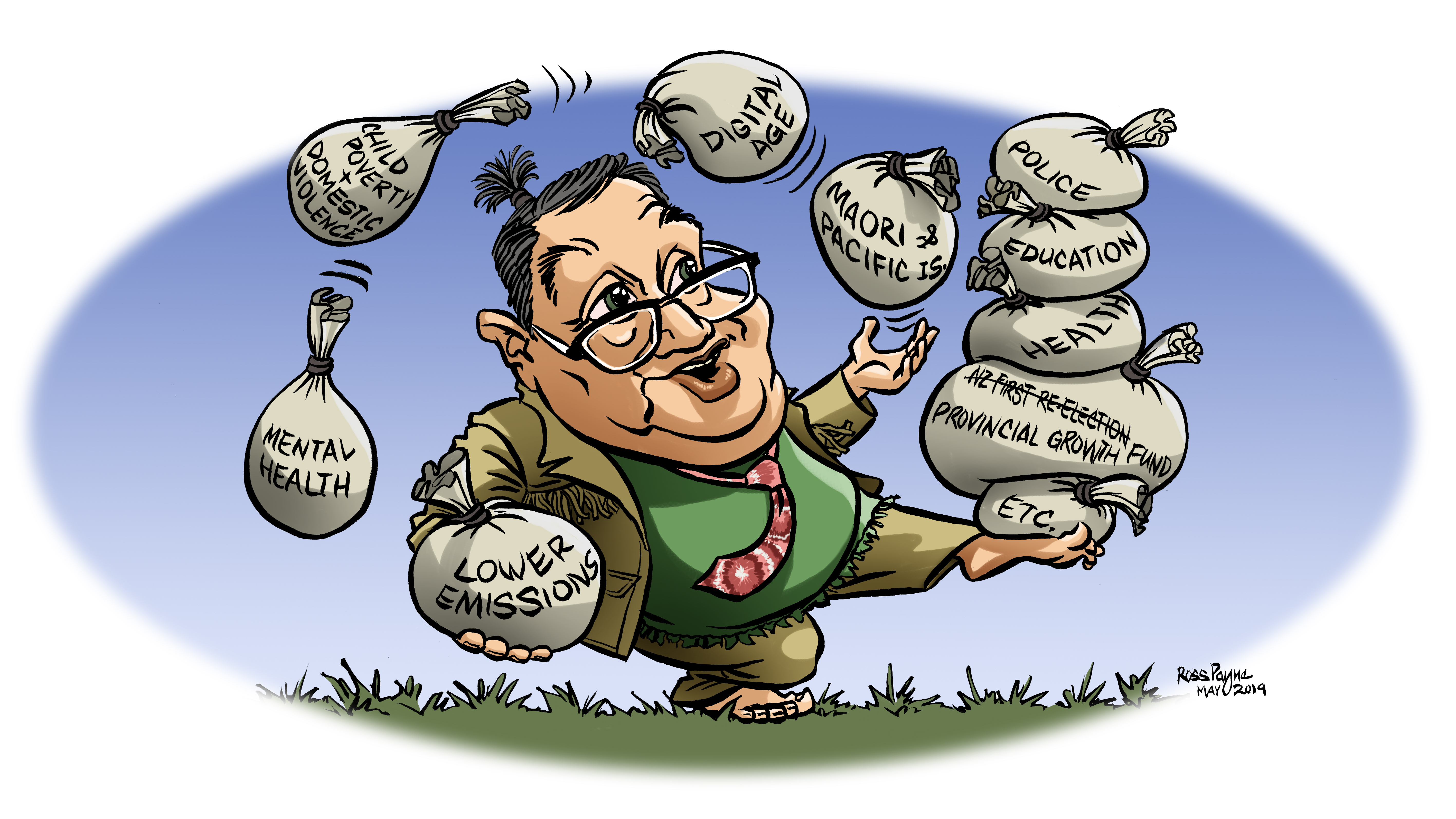
Much of the substance of Thursday's Budget has been overshadowed by the furore surrounding the leak of some parts to the National Party. While writing this column the story changed from ‘Treasury may have been hacked by Russia’ to ‘someone put words into a search bar’. Not exactly Watergate.
But it does make me reflect as a former civil servant on the perils of hierarchy. The civil service remains a pretty hierarchical place to work in my experience. There are a lot of bright young civil servants expected to sit silently in meetings (a bunch of these folk are now interested in writing things for the Helen Clark Foundation - please hit me up if this is you!)
There is no area where this disparity is more pronounced than IT literacy - junior staff as a rule almost always are more comfortable with the topic than older, senior staff. You didn’t need to have much technical expertise to find the Treasury Secretary’s comments on morning report about ‘rooms and bolts’ nonsensical, and massively risky for a generally cautious civil servant to be saying to media. There must be people at Treasury who knew he was talking nonsense, the question is were they ignored or simply unable to make their point at a senior enough level?
It's like the junior engineer who tried to stop the launch of the Challenger but his manager didn’t believe him. After that NASA moved to make sure anyone no matter what level could raise emergency safety concerns anonymously. We need a civil service equivalent for when the CEO’s talking points in a crisis make no sense.
Turning to the substance of the Budget, I thought I’d offer some comment on the potential of a wellbeing approach to advance the interests of women.
Ten years ago, I did a masters in ‘political economy’ because feminist economics wasn’t a discipline catered to in the mainstream faculty, notwithstanding that a New Zealander essentially invented the field. ‘Only economists could look at a room where a woman is giving birth and describe everyone in the room as working except for her’ remains my favourite joke about mainstream economists.
What would be different if we thought of the economy as the production of society by means of people, rather than the production of commodities by means of commodities? There is clear potential for progressing women’s interests in light of the decision by the government – at least rhetorically - to move towards a system of accounting less focussed on GDP and more on a complex set of indicators that better reflect if people’s lives are improving, irrespective of whether this leads to an increase in conventionally defined productivity.
First question – how does the Budget impact on the distribution of care, both paid and unpaid?
One sentiment that I increasingly think unites left and right is a concern that people care about each other less than they used to.
I define caring as work which is trying to help people meet their needs, things like the work of caring for children, caring for the elderly or caring for sick people. If it is costly to be caring, people can be expected to engage in it less over time.
Restrictions on women’s freedom served to provide a large supply of carers in the past – but as these restrictions happily and inevitably give way, there are many consequences for those who still need care. While I applaud the empowerment of women, if we don't establish thoughtful rules defining men and women’s collective responsibilities for care giving, economic competition may drive altruism and families out of business. Having lived most recently in Japan, with its ultra low birthrate, a whole language has arisen to describe the social consequences of such trends.
Significant in this respect I believe are the increased budget commitments made towards caring for those with mental illnesses. The $455 million over five years for a new frontline service should allow for more people to be treated sooner.
A lack of intervention for people with moderate illness results not only in terrifying emergencies for many families, but often many lost days of paid work - and job loss - for those caring for them. Yet taking a strictly economic ‘social investment’ lens would not necessarily show a dollar return on preventative public health interventions - ultimately they prolong life, and therefore increase the likelihood that individuals will utilise health care and pensions in old age (the latter of course is by far the largest area of social welfare spending). The main benefit goes to the families involved, and a wellbeing approach will go some way towards recording this. It will lower the cost to families for being caring to their family members during times of illness.
Secondly – how does the budget help facilitate freedom from violence?
New Zealand has largely made its laws equal when it relates to women in the market (women are now allowed to work at night, for example). But we have struggled to facilitate women’s lives to be free from violence. Together with the scars of New Zealand’s colonial legacy, the affects from family violence ricochet through generations, and are one driver to New Zealand’s appalling incarceration rates. Young people who grow up in homes with family violence make up almost 80% of youth offenders.
The budget announcement that the government will spend $320 million on a programme to reduce family and sexual offending is a significant step in the right direction. Change will need sustained work.
Thirdly – what is in there for women dominated professions, such as midwifery, nursing and teaching?
Not much. For now, perhaps due to the self-imposed and arbitrary budget responsibility rules, there isn’t much sign of meaningful pay increases for caring professions. The Ministry of Health has previously apologised in 2018 for failing to deliver on promises to midwives. And for now the government is sticking to its lowball offer for teachers. Watch this space for more strikes.
Fourthly, does the Budget commit to resuming time use surveys?
Time use surveys are a key way to show how much unpaid work is undertaken in society, the majority of which is done by women. As far as I could tell from the statistics vote, New Zealand does not plan to resume them. But I could be wrong.
Finally, while not related to the Budget, I’d like to introduce our organisation to those of you who may not have heard of us. The Helen Clark Foundation is an independent public policy think tank based at the Auckland University of Technology. You can see our work here.
We welcome your comments below. If you are not already registered, please register to comment
Remember we welcome robust, respectful and insightful debate. We don't welcome abusive or defamatory comments and will de-register those repeatedly making such comments. Our current comment policy is here.