
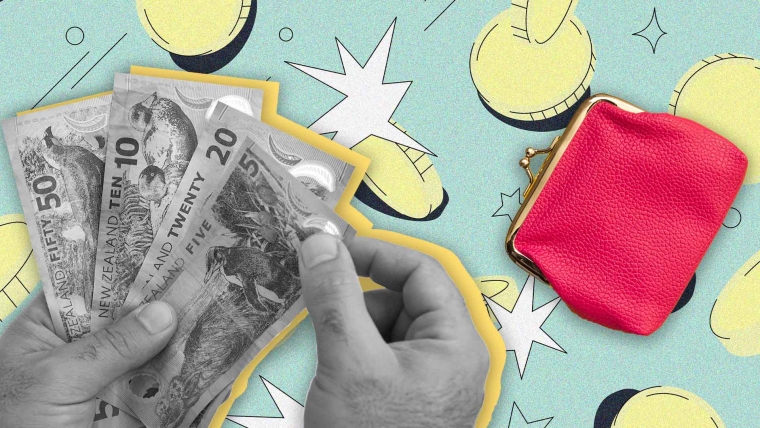
Early KiwiSaver withdrawals in July saw people taking out $260.1 million to buy first homes and to help with financial hardship.
July’s dollar value was $260,082,873 and the number of early withdrawals was 9770, with 5110 going towards financial hardship and 4660 for first home purchases.
By value, first home buyers took out a lot more money than those experiencing financial hardship, but members can withdraw funds under both categories within the same timeframe. People can also withdraw funds in more than one month.
June withdrawals for financial hardship totalled $45.2 million, while first home withdrawals hit $214.9 million. These figures come from Inland Revenue (IRD), which rounds the number of KiwiSaver fund withdrawals up to the nearest 10.
People usually withdraw money from their KiwiSaver when they reach 65, which is retirement age, but you can also apply for early withdrawals to buy your first house or because of financial hardship.
The July early withdrawal figure is lower than the monthly high in March of more than $296 million. In June, early withdrawals were over $244 million.
In July, 845,094 members had their accounts closed or chose to opt out of KiwiSaver. Of this, 655,151 had their accounts closed while 189,943 chose to opt out.
Members usually have their accounts closed because of death, permanently leaving the country, retirement, serious illness or other reasons. Of the members who had their accounts closed in July, the majority had begun retirement.
In July, there were 83,434 savings suspensions, which is when people temporarily stop their contributions. Of those, 1145 had a saving suspension because of financial hardship.
When it came to KiwiSaver schemes, 637,354 members were in default allocated schemes, 205,613 were in employer nominated schemes and 2,624,037 had actively chosen their schemes.
In terms of demographics, the 35 to 44 age group had the largest number of KiwiSaver members at 772,951. This was followed by the 25 to 34 age category with 732,107 members.
During July, 7492 people became active or provisional KiwiSaver members, you have eight weeks before you can choose to opt out. There are a total of 3,475,749 active or provisional KiwiSaver members, IRD data shows.
KiwiSaver has long been a political football to the dismay of some in the financial services industry, and political parties have made several proposals for the savings scheme ahead of November's election.
We welcome your comments below. If you are not already registered, please register to comment
Remember we welcome robust, respectful and insightful debate. We don't welcome abusive or defamatory comments and will de-register those repeatedly making such comments. Our current comment policy is here.