

The Government is getting started making the biggest changes to New Zealand’s building laws in 15 years.
The Ministry of Business, Innovation and Employment (MBIE) has released a consultation paper that proposes a raft of changes to the Building Act 2004.
Of particular importance, it suggests a certification scheme for prefabs be created, and the Act be widened to cover building materials.
Prefabs
MBIE wants to see the creation of a regulatory framework specifically designed for prefabs or “modern methods of construction” (MMC).
The problem at the moment is that the consenting system treats MMC manufacturers the same as traditional builders.
MMC manufacturers are required to get ticks of approval from building consent authorities (BCAs) when certain milestones are reached, even if their projects are replicas of each other.
They also run into trouble when BCAs try to do on-site inspections of work that’s often done far away from the installation site.
Some MMC manufacturers report being required to have two building consents for the same building – one in the region where their factory is, and another at the installation site.
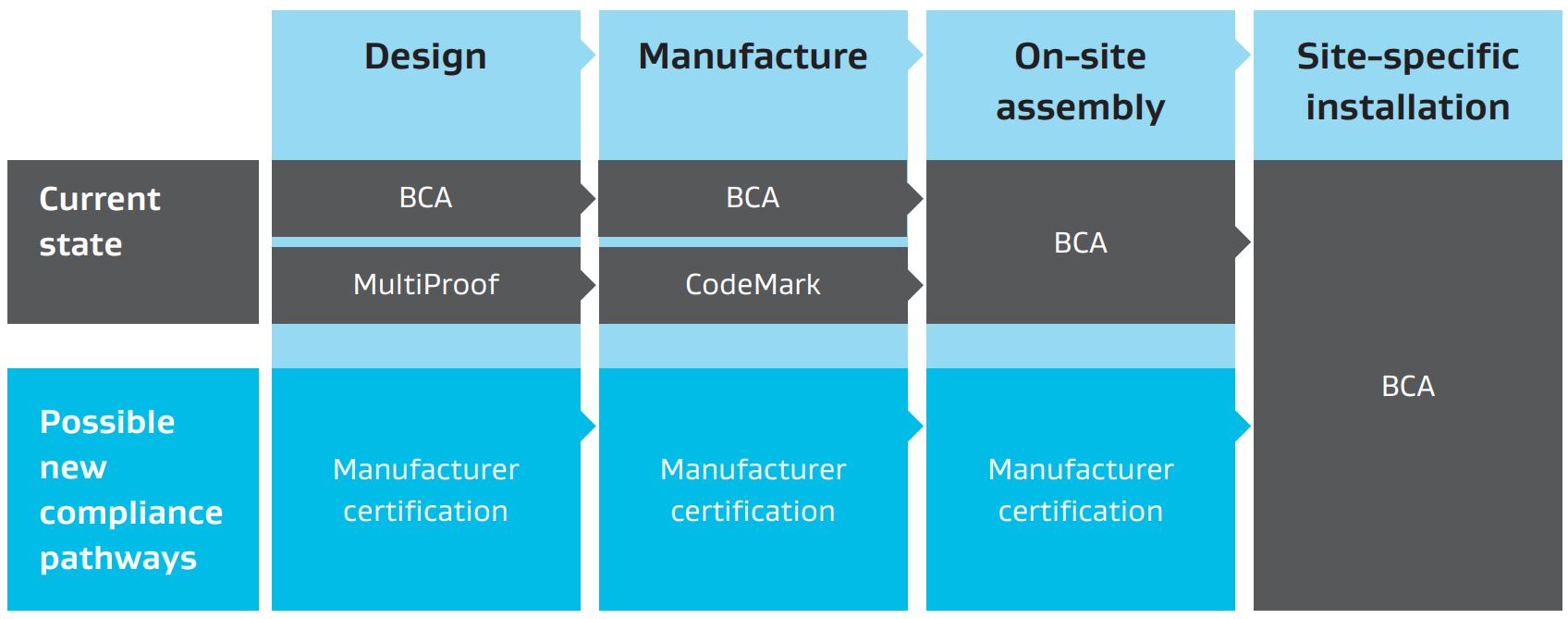
MBIE proposes a voluntary manufacturer certification scheme be created to certify the repeatable processes used by MMC manufacturers.
BCAs would have to treat the work covered by the certification as compliant.
MBIE says it needs to do more work to determine the accreditation requirements for third parties that would do the certifying.
This diagram shows how the certification system would streamline the consenting process for MMC manufacturers and avoid duplication:
MBIE says the proposals should “give the industry a way to demonstrate that their work will comply with the building code across their range of products, rather than requiring a certificate for each product”.
It also says they should give the finance industry certainty, which will help mitigate some of the commercial risks.
Building materials
In the traditional building space, MBIE suggests the purpose of the Act be widened so building products and building methods are regulated.
It proposes requiring building product manufacturers and suppliers to meet set standards around providing publicly-accessible information about their products.
It wants the law to be explicit that manufacturers and suppliers are responsible for ensuring consumer goods are fit for purpose, as existing consumer law doesn’t cover this in all circumstances.
It also wants it to clarify that builders can’t use different products or methods to those specified in the building consent without an appropriate variation to the consent.
On the enforcement front, MBIE proposes the law be changed to give it more teeth so it can require people or companies to give it information to inform investigation on building products and methods.
Finally, and importantly, MBIE wants to have the power to more actively manage product certification bodies.
It proposes that regulations set requirements on product certification bodies, as well as the processes and requirements for registering a product.
There is a raft of other proposals in the consultation document that look at strengthening occupational regulation, the way risk and liability are managed, reducing the building levy, and strengthening penalties for those who don’t comply with the law. Interest.co.nz will examine these further in separate stories.
The public has until June 7 to make submissions on the consultation document.
We welcome your comments below. If you are not already registered, please register to comment
Remember we welcome robust, respectful and insightful debate. We don't welcome abusive or defamatory comments and will de-register those repeatedly making such comments. Our current comment policy is here.