
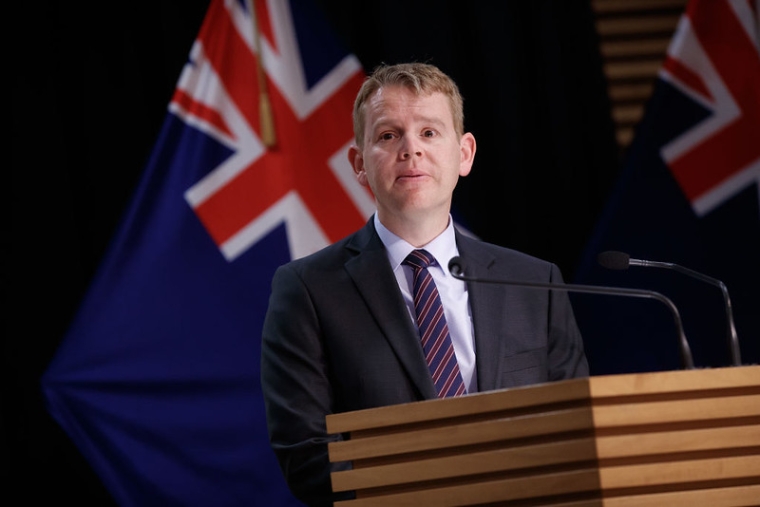
A second set of government programmes will be stopped or delayed to free up $1 billion to spend on offsetting soaring living costs and rebuilding after Cyclone Gabrielle.
Prime Minister Chris Hipkins has already hacked policies such as the RNZ-TVNZ merger and the biofuels mandate, while delaying hate speech laws and a social insurance scheme.
The move appeared popular, with the Labour Party climbing in subsequent political polls, and Hipkins has now turned his attention to a grab-bag of other policies.
“I want New Zealanders to know the Government is doing its bit and is cutting its cloth to suit the times we are in,” he said in a press release on Monday afternoon.
He said scrapping programmes will give the wider government more bandwidth to deal with cost of living issues and the cyclone recovery.
“The two lots of reprioritisation will save about $1 billion, which will be reallocated to support New Zealanders with the cost of living”.
For example, the government will save $568 million by stopping its clean car upgrade scheme, where households can scrap their old cars in return for a grant for a cleaner vehicle or to pay for public transport.
Public transport investments in the country's five biggest cities will also be wound back, as will its unpopular speed reduction programme. Alcohol reform legislation will be pushed back an entire year, and a new law to lower the national voting age to 16 will be scrapped altogether.
Other canceled initiatives include: the social leasing car scheme, the container return scheme, and public consultation on who is a contractor and who is an employee.
Hipkins said Auckland’s light rail project will go ahead in stages, with the first expected to be confirmed by the middle of this year. Staging the rollout may allow it to be better aligned with other transport investments, such as a second Waitematā Harbour Crossing.
Boost for benefits
Some saved money will be spent on an extra boost to benefits to match the rate of inflation.
Increases to main benefits – which include superannuation, jobseeker, student allowances, and family payments — have previously been indexed to the average wage increase.
However, Hipkins said cabinet ministers had agreed to lift benefits in line with inflation to help low incomes households cope with the higher cost of living.
Data released by Statistics NZ on Monday showed food inflation had increased 12% since February 2022, the largest annual increase since 1989.
“The package of bread and butter support we are announcing today will help people who are really feeling the bite from the rise in the cost of living,” he said.
Inflation measured by the consumer price index rose 7.2% in the year to December 2022 while the net average wage lifted by 6.2%.
Deputy Prime Minister Carmel Sepuloni said the “extra one-off boost” to main benefits showed the government was focused on helping New Zealanders deal with the cost of living.
Approximately 1.4 million New Zealanders receive some sort of benefit from the government, roughly two thirds (880,000) are pensioners being paid superannuation.
There are 354,000 working-age beneficiaries, 52,000 students receiving an allowance, and 74,000 people receiving supplementary assistance.
We welcome your comments below. If you are not already registered, please register to comment
Remember we welcome robust, respectful and insightful debate. We don't welcome abusive or defamatory comments and will de-register those repeatedly making such comments. Our current comment policy is here.