
Government revenue was $2.9 billion below forecast in the nine months ended 31 March, due to a lower tax take and the failed March carbon auction.
Core tax revenue was $86.3 billion, $2.3 billion lower than Treasury had expected in its Half Year Economic and Fiscal Update 2022 published in December. Corporate taxes were $900 million lower, individual taxes were down $600m, and GST revenue was $800m below forecast.
The struggling carbon price has also weighed on the Government’s income, with the low price of NZ Emissions Trading Scheme (ETS) units and the failed auction resulting in a $1.2 billion reduction in revenue.
In March 2023, the NZU (NZ units) price was $54.50 compared to the forecast price of $85.
Core crown revenue—which includes tax and other income—was $91.7 billion, or $2.9 billion below expectations, with the loss of ETS income partially offset by higher interest revenue.
Expenses were also marginally lower than expected at $92.5 billion, down $700 million on forecasts, due to less costs in social security and welfare payments among other items.
The operating balance before gains and losses—which represents underlying income and expenses—was a deficit of $3.4 billion, or $2.5 billion worse than forecast.
Treasury said this was largely due to the lower revenue and additional expenditure outside of the core Crown expenses relating to the North Island extreme weather events.
Net gains on financial instruments, such as the NZ Super Fund and ACC investment funds, were better than expected and helped push the total operating balance into a surplus of $4.5 billion, compared to an expected surplus of $700m.
Gross debt was $3 billion higher than forecast at $143.4 billion—or 37.7% of GDP—due to foreign currency borrowings, unsettled trades and government bonds.
Net debt was at $72.8 billion, or 19.1% of GDP, modestly below the forecast of 20.4% and partly due to NZ Super Fund growth.
Tough budget
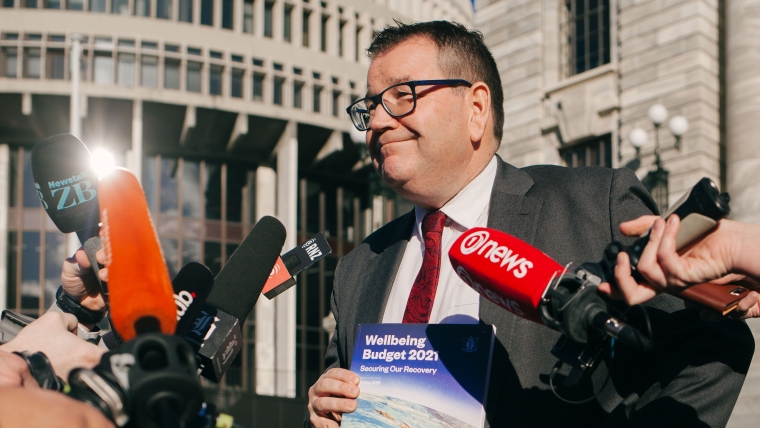
Minister of Finance Grant Robertson said the slowdown in economic activity was being reflected in the Government’s books.
“It’s inevitable that the government’s books will be affected as the economy cools. We are doing our bit to restrain spending and responsibly manage our finances. The upcoming Budget has required tough choices as we respond to the deteriorating economic conditions,” he said in a statement.
The May Budget will prioritize helping those most affected by economic difficulties and damaging weather events.
“Our careful and prudent financial management means we have the fiscal headroom to meet the impacts of Cyclone Gabrielle and the challenges ahead. Our debt levels at 19.1% of GDP are among the lowest in the OECD and well below the Government’s debt ceiling of 30 percent”.
We welcome your comments below. If you are not already registered, please register to comment
Remember we welcome robust, respectful and insightful debate. We don't welcome abusive or defamatory comments and will de-register those repeatedly making such comments. Our current comment policy is here.