
The New Zealand Government ran a $12.9 billion deficit in the year ended June 2024, as revenue growth was outpaced by increased spending.
This spending mostly reflects decisions made in Labour’s Budget 2023, although the National-led government made changes after the election at the December mini-budget.
In a summary of the financial statements, Treasury said total revenue had increased by $14.3 billion during the year despite the softening economy. This was driven primarily by high levels of employment and wage growth but was partly offset by weaker business profits.
However, total expenses grew $18.2 billion due to a wide range of factors. A large share was the increased cost of providing services as wages increased, as well as cost-of-living policies. Other drivers included indexed benefit payments, a higher number of retirees, the settlement of pay equity negotiations, and boosted borrowing costs.
The net result was an operating balance before gains and losses (OBEGAL) of $12.9 billion, up $3.4 billion from the prior year, and equalling 3.1% of gross domestic product. This was the largest annual deficit since the pandemic in 2020, both in nominal terms and as a percentage of the economy.
Besides covid, New Zealand last ran a bigger deficit after the Global Financial Crisis and Christchurch earthquakes. It climbed to $18.4 billion in 2011 which was equal to 8.9% of GDP at the time.
Net core Crown debt, the Coalition’s preferred measure, rose $20.2 billion to $175.5 billion or 42.5% of gross domestic product – net debt, which includes the NZ Super Fund, was at 19.9% of GDP.
Struan Little, the acting Treasury Secretary, said another important measure was overall net worth, which was “the most comprehensive view of assets and liabilities” held by the Government.
Net worth has remained stable at $191 billion, or 46.2% of GDP, as the operating balance deficit was offset by valuation gains on physical assets such as state highways and electricity generation.
This means the Government’s wider balance sheet was still strong even though OBEGAL had weakened and core debt had climbed, he said.
No ‘major’ taxes
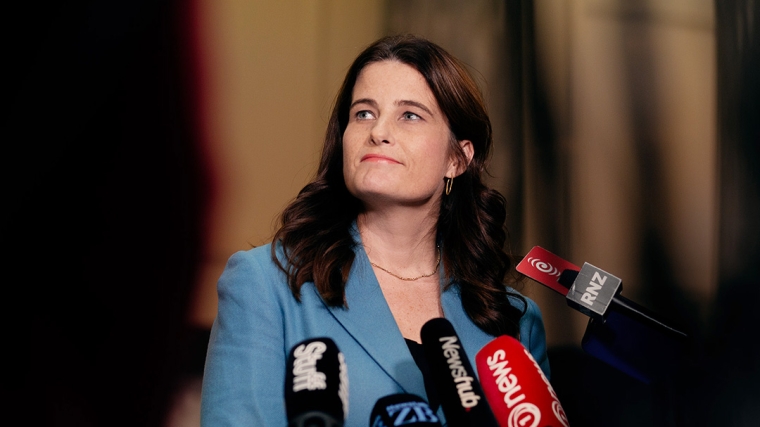
Finance minister Nicola Willis said the Crown accounts for 2023/2024 financial year underscored the need for ongoing spending discipline.
While Willis didn’t get to set this budget, she took office halfway through the year and made policy changes which improved the OBEGAL balance by $1.1 billion.
“To bring revenue and expenses back into balance, the Coalition government … is focussed squarely on controlling spending and restoring fiscal discipline. It is committed to reducing core Crown expenses as proportion of GDP and returning to an OBEGAL surplus,” she said in a statement.
“With prudent control of spending, the Government does not see any need to seek major additional sources of revenue.”
In a note prior to the release, ANZ economists said that annual spending was up $15 billion even after accounting for the increased cost of delivering services and tax-cut spending reductions.
“In other words, the Minister of Finance’s reprioritisation approach certainly appears economically feasible, though politics are always another matter,” it said.
We welcome your comments below. If you are not already registered, please register to comment
Remember we welcome robust, respectful and insightful debate. We don't welcome abusive or defamatory comments and will de-register those repeatedly making such comments. Our current comment policy is here.