
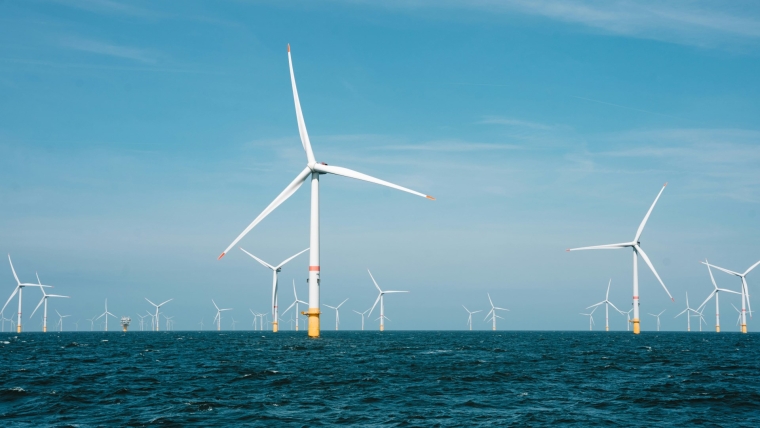
The inclusion of a seabed mining project in the Government’s Fast-track Approvals Bill could kill two offshore wind farm developments which were being explored in Taranaki.
Newsroom first reported on Thursday that Spanish firm BlueFloat Energy was canceling its plans to build wind farms in New Zealand partly due to the “allocation of the seabed”.
This is likely related to the inclusion of a Taranaki seabed iron sands mine in the Fast-track Approvals Bill, which gives it ministerial endorsement and top priority for resource consent.
The offshore wind industry in May warned that allowing seabed mining would make it impossible to build offshore wind farms in that specific area for the foreseeable future.
New Zealand’s best sites for the lowest cost offshore wind projects could be blocked until at least the 2070s and make it harder to reduce energy prices and achieve climate goals.
Seabed mining may even rule out the possibility of building wind farms on adjacent sites as it could amplify the environmental impacts of both developments. There are not any examples of the two industries co-existing anywhere in the world.
“Whilst we acknowledge that the seabed mining could generate its own economic benefits for New Zealand, we encourage decision makers to balance those benefits against the opportunity costs, both economic and environmental, that would result from the lost investment in offshore wind projects in the region and for New Zealand,” the industry said.
One of the signatories to this letter was Taranaki Offshore Partnership, a joint-venture between the NZ Super Fund and Copenhagen Infrastructure Partners.
It has proposed the construction of up to 70 wind turbines in the South Taranaki Bight. This could generate up to a gigawatt of power—enough for 65000 homes—and repurpose existing energy infrastructure.
Giacomo Caleffi, Copenhagen Infrastructure Partners’ development manager, said they were still “firmly committed” to exploring the project but understood BlueFloat’s concerns.
Having the iron sands mine fast-tracked added a lot of uncertainty to these projects and would discourage investors from putting capital into them — particularly if the Government didn’t seem supportive of the industry.
“We can’t minimize the impact that signals like this send,” Caleffi said, “[but] this Government does want offshore wind and so we are trying to clarify the signals”.
Speaking in Parliament, on behalf of Energy Minister Simeon Brown, Chris Bishop said there were opportunities for both seabed mining and offshore wind in New Zealand.
It was “really exciting” that there were international investors wanting to put money into New Zealand’s energy infrastructure, and denied the Fast-track was responsible for the Spanish firm withdrawing from the country.
“Ultimately, the investments that may or may not be made in that wind resource will be made by the market, and we will leave it up to the market to decide where to invest,” he said.
Prime Minister Christopher Luxon has made attracting more foreign investment into New Zealand a top priority for his government and the Fast-track Bill was intended to support that.
Trans Tasman Resources, which wants to mine for iron sands, is also an international company and would bring investment into the region.
Megan Woods, the Labour Party’s energy spokesperson, said the Government was literally driving international investment away from “badly needed electricity generation”.
“We're talking about an industry that could add up to 12,000 jobs in New Zealand and provide tens of billions of dollars of GDP to the New Zealand economy,” she told reporters.
“This Government is putting not only our energy security at risk, but they're putting New Zealand jobs and New Zealand economic development opportunities at risk”.
Bishop said any offshore wind development was still years away and even the most “optimistic timeframes” wouldn’t see projects come to market until the mid-2030s.
“This is not a thing that's about to start tomorrow. There is no legal regime for offshore wind in New Zealand. That's why we're developing one”.
We welcome your comments below. If you are not already registered, please register to comment
Remember we welcome robust, respectful and insightful debate. We don't welcome abusive or defamatory comments and will de-register those repeatedly making such comments. Our current comment policy is here.