By Bamo Nouri & Inderjeet Parmar*
Let’s begin with a simple question that rarely gets a straight answer: what would victory over Iran actually look like? In Washington and Jerusalem, the answers tend to sound definitive: eliminate Iran’s nuclear capability, break its regional power, perhaps even force political change at the top. It’s the language of decisive war, the kind with a clear endpoint.
But shift the perspective to Tehran, and the definition changes completely. Victory, for Iran, is survival. That asymmetry shapes the entire conflict. In wars like this, the side that needs less to claim success often has the advantage – and, right now, Iran needs far less.
There is no denying the military imbalance. The US and Israel can strike with extraordinary precision and reach. They have demonstrated that repeatedly – targeting infrastructure, leadership and strategic assets.
But tactical success has yet to translate into political outcome. Iran’s state hasn’t fractured. Its governing system remains intact, and its networks – military, regional, ideological – continue to function. Even its most sensitive capabilities, including nuclear expertise, remain resilient.
The deeper miscalculation lies in assuming Tehran is playing the same game as Washington. It isn’t. Iran is not trying to defeat the US or Israel outright. It is trying to outlast them, complicate their objectives and raise the cost of progress until it becomes unsustainable.
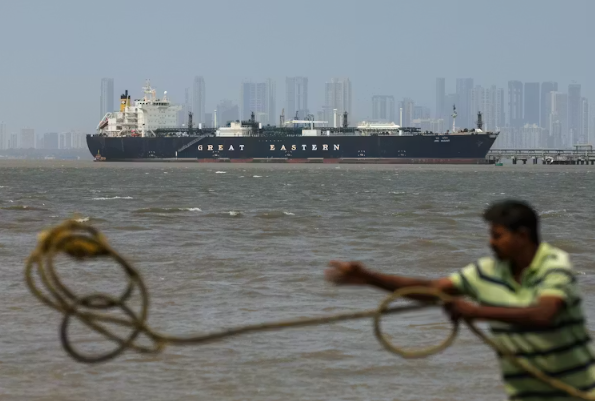
This logic is visible in how the conflict has unfolded. The battlefield extends beyond direct confrontation into shipping lanes, energy markets and regional alliances. Disruptions in the Strait of Hormuz are not incidental – they are pressure points with global consequences.
Iran’s strategy is not about dominance but entanglement. It doesn’t need battlefield superiority if it can draw its adversaries into a conflict that is too costly to resolve and too complex to conclude.
When wars stall, the instinct is to escalate: more bombing, strikes on energy infrastructure, even, in extremis, “boots on the ground”. The assumption is that more force will finally produce a different outcome.
But Iran is not a passive target. It has already shown a willingness to retaliate across the region, including against Saudi Arabia, the United Arab Emirates, Qatar, Kuwait, Bahrain, Oman, as well as targets in Jordan and Iraq. Strikes on Iran’s energy systems would not stay contained – they would invite retaliation against these same states, widening the conflict.
There is another constraint: American is estimated to have already used up around 45% to 50% of key missile stockpiles, including roughly 30% of its Tomahawk missile inventory. So the stark reality is that escalation is no longer just about willingness, but capacity — and in any wider war, the question may not be how far the US can go, but how much it has left.
The consequences would also extend beyond the battlefield. Iran’s response would be sustained attacks on neighbouring countries, on their power, fuel, and water systems, rendering parts of the region increasingly unlivable as temperatures soar over summer. Huge numbers of people would be forced to leave, risking another large-scale displacement crisis.
Even then, the core reality remains unchanged. Iran is built for endurance – any ground campaign would likely become prolonged and attritional. More importantly, escalation misses the point – the problem is not a lack of force, but the absence of a political objective that force can realistically achieve.
Compounding the problem is a quieter but equally significant reality; the US and Israel do not appear to be fully aligned in their end goals. Israel’s posture suggests a pursuit of maximal outcomes – deep, possibly irreversible weakening of Iran’s system, if not outright regime collapse. The US, by contrast, appears to oscillate between coercion, containment and negotiation.
These are not just differences in emphasis – they are differences in strategy. Wars fought without a shared definition of victory rarely produce victory at all. What they produce instead is sustained military activity without strategic convergence – constant movement, but little progress toward resolution.
No conclusion in sight
At some point, it becomes necessary to describe things as they are. This is no longer a war moving toward a decisive conclusion. It is a conflict settling into a pattern – strikes followed by pauses, ceasefires that hold just long enough to prevent collapse, and negotiations that advance just enough to avoid failure.
And those ceasefires tell their own story. Their repeated extension reflects not progress, but constraint. Washington, under Donald Trump, has strong incentives to keep talks alive, avoid deeper escalation, and end the war sooner rather than later. The alternatives – regional war or global economic shock – are far harder to manage. That dynamic gives Tehran leverage. It does not need to concede quickly when delay itself strengthens its position.
Time, in this sense, is not neutral. The longer the conflict drags on, the more it intersects with the most sensitive pressure points of the global economy. Energy markets are stressed, with supply routes under strain and reserves tightening. Industries that depend on stable fuel flows – aviation, shipping, manufacturing – are increasingly exposed.
What began as a regional conflict has morphed into systemic risk. Even limited disruption can ripple outward, affecting prices, supply chains and political stability. The longer the stalemate persists, the greater the cumulative strain and the closer it edges toward a broader economic shock.
Who really holds the advantage?
In purely military terms, the answer is obvious: the US and Israel retain overwhelming superiority. But wars are not decided by capability alone. They are decided by how goals, costs, and time interact.
In that equation, Iran’s position is stronger than it appears. It has set a lower threshold for success, demonstrated a higher tolerance for prolonged pressure, and shown an ability to impose costs beyond the battlefield. Most importantly, it does not need to win. It only needs to prevent its adversaries from achieving their aims. So far, it has done exactly that.
Which brings us back to the original question: can the US and Israel win this war? If winning means forcing Iran into submission or fundamentally reshaping its strategic posture, the answer is increasingly difficult to avoid – they cannot.
What they can do is continue. Manage the conflict, contain its spread and shape its margins. But that is not victory. It is endurance.
The real danger is not defeat, but the persistence of a belief that just a little more pressure, a little more escalation, or a little more time will produce a different result. If that belief is wrong, then this is not a war on the verge of being won. It is a war that cannot be won at all. A forever war.![]()
*Bamo Nouri, Honorary Research Fellow, Department of International Politics, City St George's, University of London and Inderjeet Parmar, Professor in International Politics, City St George's, University of London.
This article is republished from The Conversation under a Creative Commons license. Read the original article.
20 Comments
Iran has done its homework. They have witnessed how the dictatorships Libya, Iraq and Syria collapsed through disloyalty and malfunction of the respective military. The Iranian Republican Guard has been formed, developed and hardened into the dead opposite, and now with the removal of the previous political hierarchy, assumed the reins of power. Iran’s territory in itself is a virtual fortress and Iran has positioned its military accordingly, with modular command. Instead of meeting any invaders in the open, as Iraq ill advisedly opted, the cities and towns will be the points of defence, the population the shields. What runs against Iran is the parlous state of affairs even before the conflict. The people had risen protesting the extreme shortages of basic essentials. Water is short and the dry season about to commence. Given that the sanctions are now biting even harder and the blockade, pressure must be mounting domestically by the day. Iran will need to look to its northern borders and to what relief can be provided by Russia and China.
FG. And worth keeping in mind that the IRGC is a modest 200K strong force with a fair amount of its energy having to be applied to keeping the 90m people in this large country adhering to the party line. A very thin green line.
You might well wonder, of those that are still around, how they feel about their world today compared to that as it was in 1979 under the Shah? Certainly the Shah, in a way similar to the fierce grip of the Saudi regime today, had major issues, corruption and discrimination and a puppet regime under American direction, but there was a modernisation movement at large and at least the women folk were being progressively afforded greater liberties and opportunities and education was not being fanatically indoctrinated.
FG. The Shah gets the credit for modernising the country but his predecessor, the very popular Mosaddegh had actually already introduced sweeping social reform and modernisation.
He might get the credit in the propaganda-ised West - but not at home.
A great piece, thanks Bamo Nouri.
I believe that the end of the war is not near because both leaders, Trump and the IRGC are actually very similar; they are stubborn, entrenched, belligerent and they don't care for their people. Therefore I can not see either side making large concessions needed to end the war permanently.
The Blockade will starve Iran of funding, food etc. God still loves the Marines.
Yes, and is definitely on the side of the big battalions. And Trumpian ones are the biggliest you can get.
You didn't read the article, did you?
I can tell
Back at school, the called it comprehension.
Good skill to have.
Yeah, that IT guy is a real terror for commenting without having read articles. I think we should apply to have him banned until he undergoes attitude correction therapy.
"The Blockade will starve Iran of funding, food etc. God still loves the Marines."
Really, IT? - what a shocker you let slip there - where to even begin?
Comments like this are the type of warmongering tripe that is so typical of Hegseth, Lindsey Graham, Mike Pompeo, Victoria Nuland, etc, and which, until quite recently, were dutifully parroted by the lamestream media such as Fox "News".
These are the hacks that help to orchestrate and cheerlead the multi-trillion-dollar forever wars that keep the global MIC in business.
Over the last 250 years, there were no clear cases of sustained, formal invasions and annexations by Iran (or its predecessor governments) of foreign sovereign states that are even comparable to the constant classic interstate invasions conducted by the US and Israel.
The closest historical episode involving attempts by Iran to control foreign territory were the 19th-century Persian efforts around Herat, which led to the Anglo-Persian War (1856–1857)
20th–21st century Iranian military activity has been defensive actions, limited incursions during the Iran–Iraq War, when Iraq invaded Iran, or involving support for allied states and non-state forces rather than formal invasions.
So tell me, IT, what sort of "God" would approve of "starving Iran of funding, food, etc", when it is one of the least aggressive civilisational states in history?
Besides, Iran won't be starving ... Pepe Escobar at ~11.00...
"Trade with Iran is shooting up, using trucks, and so this American BS that Pakistan is isolated, come on, they have borders with 8 nations. They can do overland trade with everybody..."
https://www.youtube.com/watch?v=UND2vvombLw
... end quote...
And Pepe didn't even need to mention the fact that Iran has 7 nations on its borders - 5 of which are, potentially if not already, trading partners. Via the Caspian Sea, they also have direct access to Kazakhstan and Russia.
Meanwhile, the Orange Oaf's blockade is working only within his vivid and infantile imagination. The US is likely only able to stop a small percentage (perhaps 3 in 100) of ships because it simply doesn't have the Navy capabilities required for a task of that magnitude.
Meanwhile, Iran is making more money from its energy exports than it has in years. If the US is planning on winning this war with a siege strategy, then they will find out the hard way that this simply will not work.
Meanwhile, they will be destroying a huge chunk of the global economy, which could take generations to recover.
The Russian Federation has Iran's back, and China will be right behind them. Those are the only two countries that have a snowball's chance in hell of brokering a deal with Iran that could perhaps avoid a situation far worse than the Great Depression of the 1930s, when the underlying fundamentals were nowhere near as dire as they are today.
Russia and China need to protect the billions of dollars they have already invested in the international trade corridors, in which Iran forms a vital connectivity hub joining up the entire World Island to form a critical juncture for a brand-new multipolar security and economic global paradigm.
The Caspian Sea. Indeed a hardly recognised lifeline for Russia in the worst parts of WW2. The Wehrmacht were kept well to the west. The strategic value well illustrated by the fact that the big three (in alphabetical order) Churchill, Roosevelt and Stalin in 1943 chose Tehran for the first big pow pow. A nation such as Iran has century on century to fall back onto in terms of whats at its disposal, natural resources, transportation and defence of same.
'Iran is built for endurance'. This is the same Iran that was recently considering evacuating a large number of its people from Tehran due to its fragile water supply system being on the point of collapse, whose military recently slaughtered over 30K of its citizens who were protesting the implosion of its economy. Endure the country might for a while under regime coercion, but not because of infrastructural, economic or popular ideological resilience.
You miss the point, and I ask myself why?
Most obvious is a pre-held collection of beliefs, somewhat distant from the truth.
This war is part of the increasing global competition for real - in the case of oi and gas, essential to life - resources by an overshot population. Ask who can endure privation more; Iranians or US citizens? Simple question.
And I agree with someone else above - who actually read it; It is a good appraisal.
My point was about the extent to which Iran is built for endurance. Infrastructurally I assert she is not. I'm less sure about the psychological resilience of her people but a comparison with that of American citizens is of little help in considering this question.
Estimates are that, prior to this illegal and unjustified attack on Iran, Western sanctions had already cost its economy more than $1 trillion.
Add in another third of a billion dollars worth of damage from this latest attack in a war that the US is losing, indeed, Trump is literally begging for an offramp, and you question whether or not "Iran is built for endurance".
The mix of bigotry and gall of some of the comments on this thread simply defies belief.
This current tragedy in Iran is, in terms of unbridled greed, Venezuela 2.0.
It is a direct result of Trump's disgraceful attempted takeover of that country and the fact that the West barely batted an eye of disapproval.
Subsequently, emboldened by his apparent success, the Orange Oaf figured he could repeat the same thing with Iran, and this time actually gain the full support of his lackeys.
Humanity will now pay a huge price for allowing this idiot the opportunity of yet another murderous imperial rampage.
Maria Paez Victor, a Venezuelan sociologist, explains the latest tragedy where humanity stood by and allowed it to happen, and the parallels with what is going on in Iran.
At 8:40, she outlines how the Venezuelan coup was conducted...
https://sovereignista.com/2026/04/27/she-betrayed-maduro-the-truth-abou…
Iranians would like to sell their oil, live the way they choose, and that should be up to them.
The Western slash dominant hegemony has always coveted - indeed needed - the oil.
And still does.
Their chosen way of life including the export of violent terrorism across the ME.
One-eyed balderdash.
Ask why?
Before we started sucking the oil from underneath them, they were a threat to nobody.
What a coincidence.
Pre-held bias is a common affliction
PDK - I would suggest you take Mark Twain's advice -
"Never argue with stupid people, they will drag you down to their level and then beat you with experience."
We welcome your comments below. If you are not already registered, please register to comment
Remember we welcome robust, respectful and insightful debate. We don't welcome abusive or defamatory comments and will de-register those repeatedly making such comments. Our current comment policy is here.