
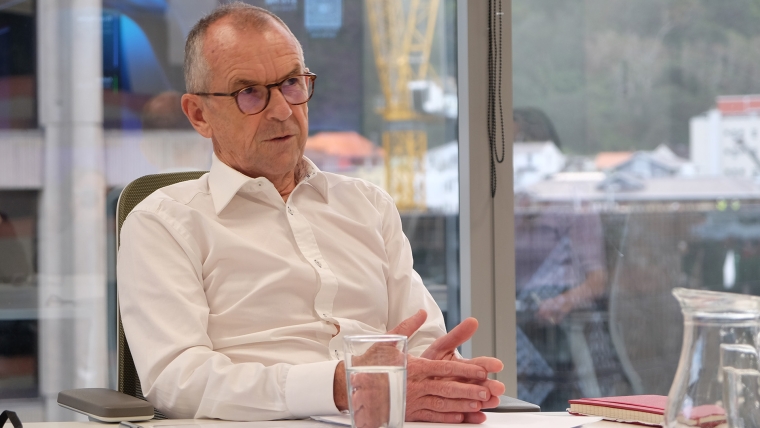
The Public Service is being tasked with a once in 40 year opportunity to redesign and reinvent itself, Public Service Commissioner Brian Roche says, with each agency chief executive currently developing a proposal on what the entire public service could look like in the future.
The Public Service has a lengthy to-do list from the Government - cut costs to free up $2.4 billion, shed almost 9000 workers in three years, significantly reduce the number of agencies and increase the use AI [artificial intelligence] and other digital tools.
Those decisions by the Government gave the public service "a very transparent mandate to actually go away and reinvent yourself", Roche said.
Roche told Interest.co.nz the challenge the public sector has "literally in the next few months, we have to reimagine a very different operating model, and get our thinking and advice straight for the brief to the incoming government."
He has been working with chief executives for almost a year and a half on what the issues are in the public service, and now there's a much higher level of energy and commitment to designing a new operating model than there has been before, Roche said.
The CEs have less than two weeks left to finish their proposals on coming up with agency wide reform.
"It will be the whole smorgasbord of what needs to happen to get to this reimagined public sector," Roche said. "They have to have a system view. Technology is an enabler of that."
"I think some people think this is a real burden, it's not."
"This is an opportunity... We have to change the delivery model, because we can't keep cutting the costs, we have to innovate out of it, and technology is at the heart."
Asked what outcome he had tasked the CEs to achieve, whether it was size or financially based, Roche said: "If we were redesigning what we do in in a more modern, contemporary AI-enabled world, what would it look like?"
Size and money will still come into it, with the need to save $2.4b alongside a mandate to shrink the workforce back to 2017 levels. The latter won't be achievable unless they reinvent the service delivery and operating model, Roche said.
He gave them guidance on his expectations for the task, but wanted to get the balance right between providing leadership and depriving chief executives of their voice.
"They are in the system, they will know a lot more about what can be done than I will, so I want their voice. The more I can give effect to their voice and aspirations, the higher the level of ownership and the higher the probability of success," he said.
"But time is against us in a way, so let's just get on with the task, and then have it all thought through, so we can provide advice to the incoming government and the current government as we go through the next few months."
"The way the chief executives... see it is, this a once in 40 year opportunity to redesign and reinvent, and they're really up for it."
We welcome your comments below. If you are not already registered, please register to comment
Remember we welcome robust, respectful and insightful debate. We don't welcome abusive or defamatory comments and will de-register those repeatedly making such comments. Our current comment policy is here.