
sign up log in
Want to go ad-free? Find out how, here.

Natalia Albert says making sure NZ is a stable liberal democracy is more important for the PM than ruling potential coalition partners out before the election

Public Policy / opinion
Natalia Albert says making sure NZ is a stable liberal democracy is more important for the PM than ruling potential coalition partners out before the election
CL
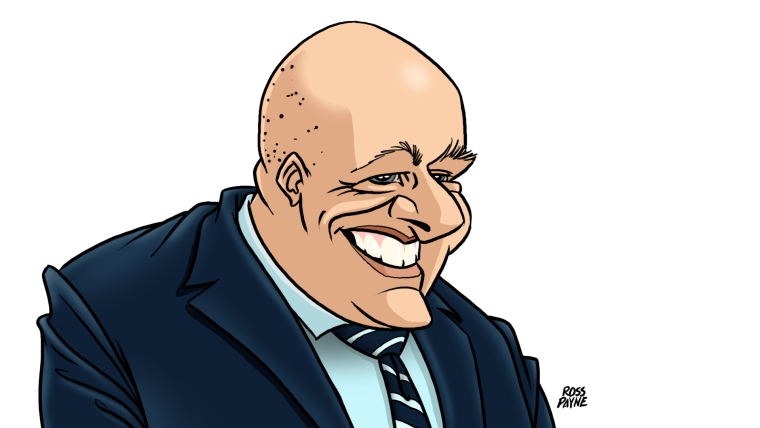
Christopher Luxon by Ross Payne.

By Natalia Albert*

Christopher Luxon has formally ruled out working with the Opportunity Party. "We're a party of low tax," he said, "we don't think we want to do business with them."

That's not the point, Prime Minister. God, please!

You can negotiate with them over which policies actually make it through. The point is the political principle of it. As Prime Minster, making sure this is a stable liberal democracy is one of your main responsibilities. And MMP allows you and us to do that.

To create a coalition that helps built consensus so we can start to loosen the grip of the far right and the far left before they erode our social cohesion further, to a point where we cannot come back from it. Because let me promise you this PM, our social cohesion is earned and once it's lost, once it cracks enough, the results are dire for everyone. Prime Minister, you can impact this today. Now! 

Chris Hipkins wasn't any better. Labour won't touch The Opportunity Party tax policy, and on their own thinking he was blunt: "We've got one simple tax policy which is a simple targeted capital gains tax, that's as far as we're going to go."

These two political leaders are the most irresponsible politicians I have experienced in the 15 years that I have been following politics in NZ. And I don't much care whether they are being cynical, incompetent or careless,  the damage is exactly the same either way and its infuriating!

I said something similar in 2024 …

I wrote it in the 2023 election book Back on Track, where I closed my chapter like this:

"I believe Christopher Luxon had an historic opportunity to endorse a small centrist party, in Ilam, building a coalition that could have bridged the political spectrum more effectively. A different coalition from the one that he assembled was possible. As John Key had endorsed David Seymour in Epsom, giving ACT a place in Parliament, so too Christopher Luxon could have encouraged National voters in Ilam to vote for Raf Manji, potentially giving TOP several seats in Parliament. This could have led to a more coherent, less chaotic coalition, one committed to competent, centrist government. By failing to seize this opportunity, I think that National's leader, now prime minister, highlighted a limited understanding of the mechanisms available to stabilise and balance our political landscape, and missed an opportunity to demonstrate a new vision, innovative thinking, and political courage, all in the interest of the greater good of the country. A quick clarification: I am not posing this scenario because I am part of TOP; I am part of TOP because this is the type of scenario that I believe could help bring distinct groups with opposing views together. It is really difficult to have conversations about big issues today – climate, housing, the economy – however, if we don't get on top of these hard conversations, it will further erode our capacity to solve these important challenges. My ongoing commitment is to serve our democratic process by providing high-quality information and advice through appropriate channels to any and all political actors participating in our democracy."

And to reiterate what I said above. Again. I ran for TOP in 2023 because I thought they were the only party that could disrupt our polarised status quo. Not the other way around. That distinction matters. I backed them because of what I believe, I did not come to believe it because I backed them.

I am not a member now. I donate across parties, I follow all of them, and my electorate vote swings. So, when I defend the Opportunity Party's right to be in this race, it is someone who wants to disrupt the political status quo in order to mature and strengthen the centre which has been hollowed out.

Coalition-building is the job

What Luxon proved with his comment earlier this week was that he has decided to show zero understanding for how an MMP government should and could work. How he, as Prime Minster and leader of one of the two biggest parties in this country influence the current status quo. Which is about the one skill MMP actually asks of a leader, and neither Luxon nor Hipkins have shown they have it.

We chose MMP to force our politicians to build more diverse governments across difference: to negotiate, to bring people who do not agree into the same room, and to make something workable out of it. In that system, the mark of a serious leader is not wanting all the votes for their party. That's narrow minded at best and irresponsible at worst. 

The last leader who got it

The last time a New Zealand leader got close to what MMP is meant to do was John Key, in 2008. National did not need the Māori Party. Key had the numbers with ACT, and United Future on top. He brought the Māori Party in anyway, gave Tariana Turia and Pita Sharples ministerial roles, and governed with a partner he could have ignored. Say what you like about that government, that was a leader who understood that a broader coalition is a stronger, calmer, more legitimate one. 

I understand that in Key's case, the Māori Party was already in Parliament in 2008, five electorate seats, a mandate voters had handed them. The Opportunity Party is not there yet. That is a real difference, and I am not going to pretend it away. But it cuts the other way. The Opportunity Party is sitting right on the line, and the honest thing to do with a party on the line is to let voters decide, not to stand up and call the result for them before a single vote is cast just because you don’t understand what your role is. 

Also, when I said in 2023 that National should have backed Raf Manji in Ilam, it was because TOP ran an electorate campaign, and the coattail was the only lever the rules left them. I would happily see that lever gone, the 2012 review of MMP recommended exactly that. This year The Opportunity Party is running for the party vote, so there is no deal to do in that same way. I am not asking Luxon to game an electorate. I am asking him to think more strategically, to think about what is politically responsible not just politically convenient. 

What we have instead

Now look at what we have. Both Hipkins and Luxon have ruled out a legitimate party that is legitimately close before the campaign has even warmed up. Both have mistaken risk management for leadership, and both are quietly telling New Zealanders that the hard, generous, creative work of coalition-building is beneath them. F**k that!

That is the cost. Every pre-emptive rule-out shrinks our politics back to the same status quo, hollows out the centre, and leaves the far left and the far right to do what they do best, pull us apart. A leader who cannot build across difference, in a system designed for exactly that, is not being principled. And that is politically and morally irresponsible. The role of a liberal democracy is to provide an environment that is stable for as many folk as possible. Its not hoarding all the votes for an election gain. 


*Natalia Albert is a political scientist living in Wellington exploring how to govern divided societies in diverse, liberal democracies, with a focus on New Zealand politics. She writes weekly on her Substack, Less Certain. Albert stood as a TOP candidate in the 2023 election.

We welcome your comments below. If you are not already registered, please register to comment

Remember we welcome robust, respectful and insightful debate. We don't welcome abusive or defamatory comments and will de-register those repeatedly making such comments. Our current comment policy is here.

53 Comments

A clear statement of who parties will and won't work with, either broadly or on specific policies, feels a better democratic path for me as a voter than an opaque and mercenary "we'll go with whoever reaches deeper in to the pork barrel for us". 

Who should decide direction: voters, or party functionaries making secretive deals without publicly stated principles? 

Trust in politics and politicians is pretty near broken by behavior and competence. Social cohesion and politics both mirror each other and form a feedback loop, so rather than a new political party inside a dysfunctional system that attracts the wrong sort of people, how about we open a discussion on a way of running the country that's a lot more transparent and representative?  


Up
10

Thanks, The_Golem. I agree about opaque, mercenary deal‑making and broken trust. My point isn’t that parties should hide their principles or do secret deals; it’s that in an MMP system with a diverse, polarised population, defaulting to pre‑election “we won’t work with X” statements shrinks the set of workable coalitions and raises the risk of deadlock or unstable governments.

There’s a difference between:

  • being clear about policy red lines (e.g., “we won’t support a land tax” or “we won’t cut super”), and

  • ruling out entire parties before anyone knows the seat counts.

The first is principled and transparent; the second is often just cheap signalling that looks tough now but can make forming a stable majority harder after the election. Social cohesion and politics do mirror each other, which is exactly why I’m arguing for a default stance of coalition openness under MMP, not secrecy. Voters can still punish bad deals at the ballot box; my concern is that we don’t rig the system so that good, stable outcomes become mathematically harder to achieve. Nat 

Up
3

Which is more important: the will of the voters supporting clearly articulated positions, or stable outcomes, opaquely derived, that appear to serve the interests of the political class?

You're asking for trust in a very trust-limited environment. 

Punishing bad deals at the ballot box gives a say only after 3 years; quite long enough to do real damage. The system needs to change.

Up
2

More important that all that - is that the populace understands the truth about where humanity is headed. 

Until then, Jean-Claude Junker identified the political predicament:

We all know what to do, but we don’t know how to get re-elected once we have done it.”

I'm not sure 'all' is correct, but. 

Natalia - I gave you a list of things to read/watch. I'm guessing you somehow didn't get around to any of it? 

Up
2

powerdownkiwi, I have not. Can you send them to my email? The interface of the comments section here is a tad tedious. Here you go: natalia.albertllorente@vuw.ac.nz

But redirecting this into "humanity's real predicament" doesn't get Luxon or Hipkins off the hook for ruling out a legitimate party before a single vote is cast. That's the piece in front of us right now, and it matters regardless of the bigger picture you're pointing to. Nat.

Up
1

Wilco re the first point. 

Disagree on the second; what is the point in deciding who will lead or how, when you haven't ascertained what they have to negotiate? 

There isn't a current Party - in or out of the House - which does that. You have to go back to the 1975 Values Party manifesto, to find such (it still holds; still outranks everything currently offered). 

Up
0

Kia ora powerdownkiwi,

Had to google Wilco 😆

I think there are two different questions bundled together here. If you mean we can't know the practical shape of any negotiation, seat counts, leverage, what's actually on the table, until the votes are counted, I'd agree, and that's exactly my point: ruling a party out now forecloses a negotiation that hasn't happened yet, based on a guess about what it might look like.

But if you mean something stronger, that no current party, the Opportunty Party included, has a platform substantive enough to be worth negotiating with in the first place, that's a different claim, and I don't accept it.

You can think the 1975 Values Party manifesto holds up better than anything since (even though that was an entirely different political and social context) and still recognize that voters today are choosing between the parties actually on the ballot, not the ones we wish were.

My argument is about how leaders should treat legitimate contenders within the system we've got, not a judgement on whether that system is producing platforms good enough for your taste.

Nat.

Up
0

The_Golem, you're framing this as a binary: clearly stated positions versus opaque deals serving the political class. It isn't. A party can be transparent about its bottom lines and still not blanket-exclude a legitimate contender before the votes are even counted. What you're calling "stable outcomes, opaquely derived" is exactly what a pre-election exclusion produces too; it just happens before the campaign instead of after. If you want the electorate to genuinely decide, you let the numbers fall and then negotiate in the open, not foreclose an option on day one because it's politically convenient. That is just irresponsible! 

Nat.

Up
0

One of the simple bottom lines might be 'We don't want anything to do with this party'. 

It's straightforward for all concerned. How is it irresponsible or opaque to be honest?  

The citizens deserve openness and transparency in intent before the event, rather than a trust based process after. 

What you seem to be arguing for is a blanket: "trust us, we're politicians".

Really don't think that's going to fly.

Up
0

The_Golem, I am absolutely not arguing for that at all. I'm arguing for politicians to let the voters decide, not for politicians to decide it for us. That's the opposite of "trust us, we're politicians."

And on "really don't think that's going to fly," nothing needs to fly.

I'm sharing one view, you're sharing another, and we're both entitled to be here doing exactly that. This is a disagreement, and disagreements don't need to "fly" with anyone to be worth having. Or a pitch that needs your approval to survive. We just need to keep debating in good faith, hearing each other out, and enhancing the quality of both of our arguments. Which is what I hope we are doing. 

Nat.

Up
1

Last paragraph Nat - brilliant! A few struggle to handle good debate and others disagreeing. 
I strongly agree with your first paragraph too. Politicians need to learn they work for us, the electorate. That's democracy.

Up
0

There is not much that is centrist about TOP. 

Be mindful of what happened to the Maori party after their time in govt!

Up
5

Fair points on both Midnight Singer. On TOP: “centrist” is how they brand themselves, but in New Zealand it’s hard for any party to convincingly occupy that label when we don’t have a clear shared understanding of what “centrist” means—and we haven’t had a clear, sustained example of what a genuinely centrist governing force looks like under MMP.

On the Māori Party: that’s exactly the kind of dynamic I’m worried about. They made real gains in government (Whānau Ora, UNDRIP, saving the Māori seats, significant budget wins), but were punished electorally and split over being “too close” to National. That history is part of why I’m arguing for a norm where major parties don’t pre‑rule out potential partners: it keeps space for small parties to take responsible, compromise‑oriented roles without automatically destroying their base.

So I’m not saying “every party should go into government”; I’m saying the system should make it possible for small parties to do so without being automatically annihilated for it. Otherwise we incentivise permanent opposition and harder, less stable politics. Nat 

Up
1

TOP's attitude and proposed policies are concerning, suggesting they don't have a solid grasp on how the economy works either. They need a better platform to stand on to get traction. 

Up
2

Fair call, murray86. A lot of people are reading TOP’s platform the same way: the mix of big tax resets, a universal income, and compulsory KiwiSaver hikes reads as bold, but also a bit all‑over‑the‑place on the economic mechanics.

My point isn’t about whether TOP’s policies are right or wrong; it’s about the norm we’re setting around pre‑ruling out parties before the election. Even if you think TOP’s platform is shaky (plenty do), blanket “we won’t do business with them” statements shrink the set of workable coalitions if we end up with a hung Parliament.

I’d rather see parties lay out clear policy red lines (“we won’t support a land tax”, “we won’t cut super”) than rule out entire parties sight unseen. Keeps things more transparent and leaves room for stable outcomes if the numbers get tight. Nat 

Up
1

Hey Natalia it's great to see you reading the commentary streams and soaking up the feed back, as unpleasant and unkind that can sometimes be.

My point is that the conventional economic theories that have driven governmental economic policies and structures have consistently proven to be wrong, essentially since Nixon kicked the gold standard into touch at Breton Woods in 1971. Add to that the "Free Market" theories of Milton Friedman peddled by the US since the 1960s, introduced here as 'Rogernomics' and again proven to be seriously flawed. 

Beginning with the understanding that the the NZ government is the sovereign owner of the NZ$, and that the linkages that tied it down before 1971 no longer exist, one can realise that huge opportunities exists for developing our economy, and that perhaps even bigger risks are present too. 

In the first instance one must consider how an economy works, and for ordinary Kiwis, the very constituents that TOP National, Labour, NZF, Greens, TPM and any other prospective politician must reach out to, that economy begins at the societal level, where ordinary working people must have surplus funds after paying for the basic costs of living, left over to spend. The economy doesn't start and end with exports. Bringing in y earlier points then raises the question as to the purpose of tax, and this is where TOP puts people off. 

We have been told for generations that the government has to tax to spend, but the understanding  that is based on got tossed in the can in 1971. It hasn't been true since then. So the entire taxation model needs to be changed. Changed to support a functioning economy at a societal level, changed to support business development, employment, decent wages and living standards, economic and national resilience in the face of an increasingly unstable and potentially hostile world.

You might have realised that is is a much bigger topic than can be effectively dealt with here, but understand that every thing is connected, every choice has consequences even the choice to do nothing.

Up
3

One of the 'new' ideas circling the globe, is a land tax. That is a complete misunderstanding of what wealth is, and is underwritten by. Which misunderstanding in turn, is because of a belief in 'economics'. 

Further down, the problem is a general belief that money - keystroked proxy, fiat-levered-off-mentally-assumed values - is a store of wealth. 

At that level I disagree with some of Murray's post. We are headed for a race between the reduction of energy going into the system - driving ever-less surplus per head - and the AI Terminator singularity. My hope is that the former stymies the latter. 

Up
1

Those are the connections I refer to PDK. Any encompassing view of economics should understand the energy needs and consequences. I suggest we will never be without energy. The sources of it will necessarily have to change though. The governance model required should be considering the near and long term needs (planning and commitment),impacts (mitigations and adjustments as required),  and risks (mitigations). Where a national resilience and perhaps even survival are a goal these will absolutely need to be considered.

But we also have to understand why the current models are unfit for purpose too. We should try to avoid throwing out the baby with the bath water, even when all the bath water has to be changed.

Up
1

powerdownkiwi, this is a total tangent and has nothing to do with what I'm saying above. Whatever you think of land tax or where you land on Murray's economics, none of it changes the core argument: MMP asks leaders to negotiate across difference, and ruling a party out before the election defeats that purpose regardless of whose economic theory turns out to be right. It's about how do you govern a polarized society with the tools you have, and Luxon is using none of them. Nat.

Up
0

murray86, I appreciate you laying out where you're coming from on Bretton Woods and Rogernomics, genuinely. But that's a different argument to the one I'm making. Whether or not you think the last fifty years of economic orthodoxy have been a disaster, the question in this piece is narrower: should a party leader rule out a legitimate contender before an election on the basis of "we don't like their platform"? You can think TOP's economics are shaky and still think that call belongs to voters, not to Luxon pre-emptively. That's it; that's all I'm saying now. IM quite happy to chat though your ideas about the efefctivness of our economic thoeries, but thats not what Im doing today. Nat.

Up
1

Fair enough Nat. In that case, I think you're correct. Luxon shouldn't shut TOP out too early. He clearly doesn't understand there is another message in his position, one that suggests he has no faith in his ability to negotiate towards common grounds. Divisive politics doesn't serve democracy, it feeds division and antipathy.

Up
2

Thanks, murray86. I agree. And I find it bewildering that Luxon would have such a narrow understanding of political levers. And I don't mean politics with small p: as in policies and the day-to-day management of government, but Politics with capital P,  the bigger picture of providing stability above all else. MMP is perfectly designed for that, in a country where our pluralism and diversity require our prime minister to pull all the levers, or the cracks in our social cohesion will come at great cost. Nat.

Up
2

"Perfectly designed"? Perhaps you should listen to Guyon Espiner's series on National Radio called the Top Floor where he interviewed all the living ex-Prime Ministers. They're really interesting insights, but Bulgers on is telling on the development of the MMP model. He stated they so didn't want MMP that they deliberately put a flawed version forward to get voters to reject it. They completely underestimated voter antipathy towards politicians shenanigans under FPP that the voters voted for MMP anyway. Shot themselves in the foot big time.

To be fair I don't know what a 'perfect' model of MMP would look like, but suspect it is around the list seats where unelected MPs get into parliament with full voting rights.

Up
0

Hi murray86,

Happy to drop the "perfectly." MMP wasn't designed by saints with pure motives.

I'll listen to Top Floor, but believe me when I say I've read, heard, and absorbed more on NZ political history than you may be giving me credit for.

Still, none of that changes the underlying point: MMP was designed for this, broad, negotiated government across differences. That the political class fought it every step of the way and tried to sabotage it at birth doesn't undercut that design.

Nat.


Up
0

No Natalia.

Not every negotiation needs to end in some blended solution.  That would be quite unhealthy.

Bottom lines, set by somebody who you then get to vote for, or determinedly vote against, are an essential part of democracy.

You can vote for a candidate with no firm line at all.  But I would not.  Our choice.

Up
8

I agree, KH: not every negotiation should end in a blended solution, and bottom lines are essential. My point isn’t that parties must compromise on everything or that every view should be in government.

It’s about the type of bottom line:

  • Policy red lines (“no land tax”, “no cuts to super”, “no new debt”) are healthy and transparent.

  • Blanket pre‑election exclusions of entire parties (“we won’t do business with X, no matter the result”) are different. They’re often more about signalling than governing, and they can make forming a stable majority harder if the election returns a hung Parliament.

You’re right that voters can choose candidates with or without firm lines. I’m just arguing that, in an MMP system with a diverse population, we should be careful about normalizing blanket exclusions that shrink the set of workable coalitions before anyone knows the seat counts. It's irresponsible no matter how you slice and dice it. Nat 

Up
2

NZ originally chose proportional representation because there were 2 close elections under FPP where the (Labour) party with the most votes didn't get to form a govt. NZdrs demanded a better deal because they didn't see those National govts as legitimate. The politicians of the day pushed for MMP in the referendum where there were probably other, better options (eg STV).

As for MMP review recommendations, the 1986 Royal Commission recommended disestablishing the Maori seats as unjustifiable under proportional representation. Politicians caved in to the usual squeaky wheels leaving the undemocratic self selected "mandate" of race based representation in place.


Up
7

In fact the two major parties tried to shaft MMP succeeding. For a start the Royal Commission stipulated there was no need to increase the number of MPs.The thinking was more or less if they don’t like who they have got now they will hardly vote for more of us. David Lange went on record that was about the most cynical and debased passage that he ever witnessed in the New Zealand parliament.

Up
3

Yes, they tried to shaft the lot. As folk who see themselves as 'winners' in a System, always do (what's in it for an already winner?)

A friend of mine was one of the heavy-hitters in that movement, and recounts that they realised MMP was an easier explain, and more likely to get over the line.

Funny how some try to re-write history - maybe it's a subconscious-bias sort of thing? 

Up
2

Foxglove agreed that the major parties tried to blunt MMP from the start, and Lange's line about it being cynical and debased is a good one to remember. But that history is exactly why I think leaders like Luxon should be held to the standard MMP was meant to create, not let off. If the system was fought for and diminished by self-interest once already, doing it again now with the Opportunity Party is just the same pattern repeating. or am I missing something? Nat.

Up
0

No you haven’t missed any point but I’ll take the opportunity to make another one. MMP arrived more out of negativity than positivity partly because the electorate had been shocked by the power grab by PM Muldoon in his last term at least,  and then his refusal to accept defeat and handover power. The notion of MMP, or anything similar, was in simple terms thought to introduce consensus governing and prevent a repeat of Muldoon’s antics.. As PDK  explains MMP was championed mostly because it was deemed to stand the best chance to succeed. However in my opinion New Zealand’s electorate was too small and immature to do justice to the advantages MMP offered.  Instead the electorate, and attendant media, in their minds seemed hellbent on converting it back to FPP and as a result governments became one of the existing main parties with an assembly of minions scrambled together to obtain the necessary number of votes. This manipulation culminated in 2020 when the electorate used the mechanics of MMP to defeat the principles of MMP and returned Labour, as a FPP government. The present coalition, regardless of what is favoured politically by anyone, is in fact the first government in true MMP form being one of the traditional majors and coalition partners of sizeable representation.Yet still the electorate, egged by an unfortunately large percentage of the media, persists in trying to pick apart the consensus on offer, insisting that any disagreement or different viewpoints is a sign of chaos and ill will amongst the parties.  Personally,  ultimately I would like to see a government where all the partners were more or less the same size and then the electorate just might choose to stop focusing itself on just either National or Labour and instead think about arriving at the combinations that MMP encourages in its form of government. With regard to PM Luxon I would suggest that his difficulty arises from being neither a natural politician nor a good communicator in this field, at least. Resultantly he has tried to play to his strengths by attempting to overlay his corporate  experience onto a political career. It don’t fit and it shows, and starkly so. Consequently, in my opinion, that persona has made it almost impossible for him to govern convincingly and with unfortunate proneness to misdirection hence the constant flow of criticism that he, almost certainly, unwittingly invites. In short, he is not the right person for the job.

Up
3

Hi Foxglove, thanks for the thoughtful comment. Let me go through one point at a time:

On Muldoon, fine, historical context matters, and path dependency matters, but your argument is missing half the picture. Focusing so heavily on that genesis of the model misses how much our population and social fabric have shifted since. We're often arguing about a system designed for the electorate of the 1990s while ignoring the tectonic shifts in who New Zealanders are now, demographically, socially, and in terms of trust and social cohesion. That context, the voter of today, not the voter of 1993, is the one leaders like Luxon actually need to be building coalitions for.

On the electorate being "too immature" for MMP: I disagree. What you're describing, the pull-back toward one major party plus a scramble of minions, feels less like immaturity and more like old FPP habits dying hard on the part of politicians and media who never fully adjusted their instincts to the new system.

On 2020 and the current coalition: yes, it was a glitch, I agree. Labour won outright in 2020 inside an MMP framework and effectively governed like an FPP majority. But on your point about the current coalition being the best example of "true MMP," I disagree; I think Key in 2008 is a better example. And more broadly: how are parties meant to gain any relative size if we don't allow new parties into Parliament in the first place?

As I have said before, NZ First needs to go; it's outdated and problematic, and we need to make space for new ideas and different ways of governing, which is what I think the Opportunity Party is trying to do and why I think they matter in today's political and social context.

On Luxon: I'll leave the personal read on his political instincts to you; that's your call. But whatever his natural talents or lack of them, ruling out a legitimate coalition partner before a vote is cast is a choice, not just a symptom of being a bad communicator.

Nat.

Up
1

Well yes my comment re Muldoon and aftermath was not all that was involved which is why I used the adverb partly. We are not on different pages re the electorate’s ability to properly embrace MMP, your 4th to last paragraph confirms that. My description of immaturity arises from my experience at that time when quite obviously,  and unashamedly, far too  too much of the electorate turned up to vote at the next election with no understanding of how to. The notion of a coalition with no party of sufficient size to outrank the other two combined does not rule out other smaller parties. Quite the opposite. For instance three parties could share say 80% of  the vote with the 20% being a made up of smaller parties.

Up
1

Kia ora KKNZ2025, sure.

But that history seems to strengthen my point: MMP was won because voters wanted a system that forced broader representation and negotiation, not one where leaders still get to unilaterally decide who's legitimate before an election. Whatever you think about the Māori seats debate, the core lesson from '93 is that voters, not party leaders, should decide who gets a seat at the table. Nat.

Up
0

Why would you expect National to come out and say they could look at working with TOP? The way I see it, National would risk losing some of their votes to TOP and then TOP would most likely form a govt with Labour after the fact due to being far more politically aligned with them. It's just the reality of politics. Especially if you think it's close enough to end up with a hung parliament. Like some others have said here, I'd far rather know how a coalition is going to be formed before the election than after the fact like we've had with NZF. 

Up
7

National would risk losing some of their votes to TOP

I get a sense he's just increased those odds 

Up
2

Snow, that's realpolitik, not principle, and that's exactly my problem with it. Of course National calculates that backing away from TOP costs them less than the alternative; I'm not naive about that. But "it's just how politics works" is precisely the shrug that lets leaders off the hook for treating coalition-building as beneath them. Wanting to know the shape of a coalition before you vote is fair; saying "we categorically will never work with X" before a single vote is cast is not the same thing, one informs your choice, the other removes it. We are using 1/10 of the political levers we could be using, and that is the point I am making. We are all, voters and politicians, looking at the landscape through a very small tiny hole, and it's problematic. Nat.

Up
1

It matters not what various politicians say prior to the casting of votes, they will do back flips if it means retaining/gaining office....as we all have sadly witnessed for years.

That is at least part of the reason for their low trust levels in the publics eye.

Up
5

Let me be Frank, I don't disagree that politicians will backflip once office is on the line. But that's exactly why what they say now matters; it's the only leverage we have before the backflip. If we shrug and say, "They'll say anything," we let them off having to defend the position at all. I'd rather hold them to it and call it out when they don't. Don't you? Nat.

Up
0

Lol...maybe it is a shrug or perhaps simply an observation, either way I dont expect it will achieve much for either Luxon or Hipkins on this occasion....more important (imo) is how Opportunity deal with it, and so far they appear to be doing ok.....besides we may have an early election to deal with...now that could cause some ruling in and out that needs a side of popcorn

Up
2

Let me be Frank, I'm ready 🍿🍿 🍿

Nat.

Up
0

I think there's also a bit of confusion about the centre or centrist parties. A centrist party or voter doesn't really exist, like how an average may not represent the same as any one individual.

Parties like National and Labour in their current forms are only centrist in the way that it appeals to voters who believe they too are centrist but no one is really thinking about what that actually means.

It's been highly evident this term that anything coming from the right-wing has been happily endorsed by National no matter how extreme because they feel like they don't have to take the blame for any of the negative externalities.

It's the same reason why Labour was in trouble after winning the previous election. They didn't have the Greens to help shield them from disgruntled right-leaning voters for decisions taken. Everything was attributed to Labour and it wasn't able to hold on to the 'centrist' feel the major parties need in this MMP environment.

Sorry - bit of a random rant. Just my 2 cents.

Up
2

Kia ora lfk,

I could not disagree more. Centrist parties are not just a label voters slap on whoever seems moderate, they are real, coherent political projects with their own ideology and values.

D66 in the Netherlands, the German FDP, the UK Lib Dems, Renew in France, Ciudadanos in Spain at its peak, all show that a defined political centre is not only possible but has governed, repeatedly, across very different systems.

And being a centrist voter isn't sitting on the fence either.

It's a legitimate strategic position: one that weighs context, prioritizes consensus, and values balance over radical reform,  that IS the conviction. Frankly, arguments like yours are evidence of exactly the problem I'm pointing to: New Zealand doesn't just lack a mature center; it has an immature understanding of the centre, and of politics more broadly. Nat.

Up
0

Naive as this may sound....

Don't tell me who not to vote for.

Once every 3 years I get to hear the policy positions from a raft of political parties and formulate my vote choices. 

I do not want to hear that national or labour, or any party, has excluded working with a party prior to the formal election period opening.

Allow the electorate to consider the policy directions each party promotes and form his/her own perspective and preference. Then when the votes are counted, see where the electorate preference lands.

NZ society and economy is not working very well as it stands now, in my opinion. My vote allows me to express an informed opinion on the nation building qualities of the incumbents and I expect those incumbents to extend to me, the respect that my opinion on their performance, areas requiring modification, and policies to deliver, actually counts.

The proclamations this week smack of unveiled, self interested, arrogant, thirst for power, not good leadership. 

Up
10

Kia ora LouB,

it's not naive at all. This is my point exactly. You want to hear the policy positions and make up your own mind about who governs with whom, and Luxon ruling the Opportunity Party out before a vote is cast takes that choice away from you and me before you've even had it. Thanks for reading and commenting. Nat.

Up
0

Whilst I understand your position Natalia, your outrage seems excessive given that we all know when push comes to shove post election, National would backtrack on this statement if it secured them a majority government.

Yes our leaders should treat the public with more respect, but they don't and either an uninformed public will keep voting back and forth between red and blue as they always have, or the more educated and informed will vote otherwise for those who would treat the voting public differently that the current red/blue incumbents, who seem to treat the public as unintelligent sheep to be herded.

Up
2

Kia ora interesting1234,

Thanks for reading and commenting, and for taking the time to engage with my argument.

I won't apologize for having strong feelings about political issues. It's wired in me for a number of reasons I won't get into in this thread.

But I don't think that heat means the outrage is excessive.

If we both assume Luxon would backtrack the moment the numbers demanded it, that actually makes it worse, not better: it means "we won't do business with them" was never a principled stance, just costless theatre aimed at voters who won't hold him to it later.

That's precisely the kind of behavior that keeps trust in politics so low, and I'd rather call it out now than shrug and wait for the backflip.

Nat.

Up
1

His off the cuff ruling out was an insincere attempt at virtue signalling imo

Up
3

Kia ora ghytresd,

I 100% agree it's not principled, thast my point. Its cheap and its irresponsbale. But I dont agree on "virtue signalling", it's closer to the opposite: signalling toughness and discipline to a base that likes hearing a leader rule things out. Either way, sincere or not, it does real damage to how coalitions can be built and the quality of our MMP system, and that's the part I care about.

Nat.

Up
1

I'd prefer a party not to rule someone out altogether but in this case TOP's policies overall just do not align with National and only a few with Labour. In the case of Winnie I don't mind him not laying his cards out before as it then narrows his negotiating ability after the elections. I do view him as both a handbrake and an accelerator with both Labour and National.

Up
2

Kia ora nigelh,

I am not objecting to a party being upfront that they think their policies don't line up well with the Opportunity Party; that's fine to state openly, and it's not the same thing I'm objecting to.

What I'm pushing back on is the blanket "we won't do business with them, full stop" framing, which closes the door entirely rather than leaving it open if the numbers after the election demand a different conversation. Also, one thing is saying no to specific policies but leaving the door open to negotiating with the party, rather than ruling a party out altogether. 

Your Winston example makes my point: keeping his cards close to preserve negotiating leverage is very different from ruling a party out altogether before a single vote is cast.

Nat.

Up
1

Our problem is, we have developed our own  "kiwi style" MMP  electoral system which is well designed to be gamed by minorities abd big parties alike and a system which gives disproportionate influence and power to radical minority parties who then have real influence if they get over a 5% threshold. Our elections, our parliament and our unelected "list MPs" make us a very different democratic country to other first world countries. As a nation we can not see the damage MMP has done since its introduction. We stubbornly hang on to it because its " kiwi", the fact its destroying seems a minor detail. 

Up
2

Kia ora Bruce C4279,

Thanks for reading and commenting.

I disagree with a few parts of this. List MPs aren't unelected; they're elected via the party vote, which is exactly the mandate as an electorate vote, just distributed differently.

We don't vote for individuals in the party vote in NZ, we vote for parties. This detail is a big one and largely misunderstood. Every voter who ticks a party box is choosing those MPs as surely as an electorate voter chooses theirs.

On "disproportionate influence" for minority parties: that's not the problem with MMP, it's the whole point.

You don't have to give small parties a full coalition agreement, like Luxon did; you can give them confidence and supply instead, backing them into broker or swing-vote roles. It seems like our politicians aren't fully aware of all the options available to them and what would actually work best, not just to deliver on their campaign promises, but to stabilize a hyper-diverse, polarized population. Which is why I mentioned the Key 2008 example. He gave 4 partys smaller roles while National had the last say. 

Small parties get leverage roughly in line with the votes they win, and that leverage is precisely what forces bigger parties to negotiate rather than govern unilaterally. What looks like "gaming" is often just smaller parties using the system as designed, the same system that lets any voter's preference actually shape the government, rather than being discarded because they didn't back one of the two big parties.

If the concern is that MMP produces messier, more negotiated outcomes than FPP did, I'd agree; that's true. But messiness and more negotiations are not the same as damage; they're what a fractured, pluralist electorate actually needs from its Parliament.

Nat.

Up
1