







It has been a busy weekend for Labour with the party releasing its fiscal plan as well as promising to restore pay equity and give an immediate pay rise to care and support workers, along with hitting the pavements of Upper Hutt.
Making the pay equity announcement on Sunday afternoon, the party says it will restore pay equity legislation in its first 100 days if elected into government, and also give a $4 an hour pay rise to care and support workers from January 2027.
According to Labour, this means "the average full-time worker will be $8,320 a year better off, or $160 a week before tax."
Parts of Labour’s pay equity announcement won’t come as a surprise with Labour finance spokesperson Barbara Edmonds previously saying she wanted to settle the care and support workers claim by the 2027 Budget if elected, and within the first 100 days.
Last year, the Coalition Government amended the Equal Pay Act and changes to legislation meant current pay equity claims were discontinued, which impacted an active claim for care and support workers.
Labour workplace relations and safety spokesperson Jan Tinetti says giving an immediate pay rise to care and support workers is “real money for people who are paying the mortgage, the rent, the power bill and the grocery shop”.
“It reflects their hard work and the hardship they’ve experienced these past three years under National,” Tinetti says.
“The reinstated legislation will accommodate the previous work underway so that women aren’t starting from scratch.”
In its fiscal plan, under its table of announced policies and operating expenditure over a forecast period of 2026/2027 to 2030/2031, the party has allocated $2.511 billion over this time period.
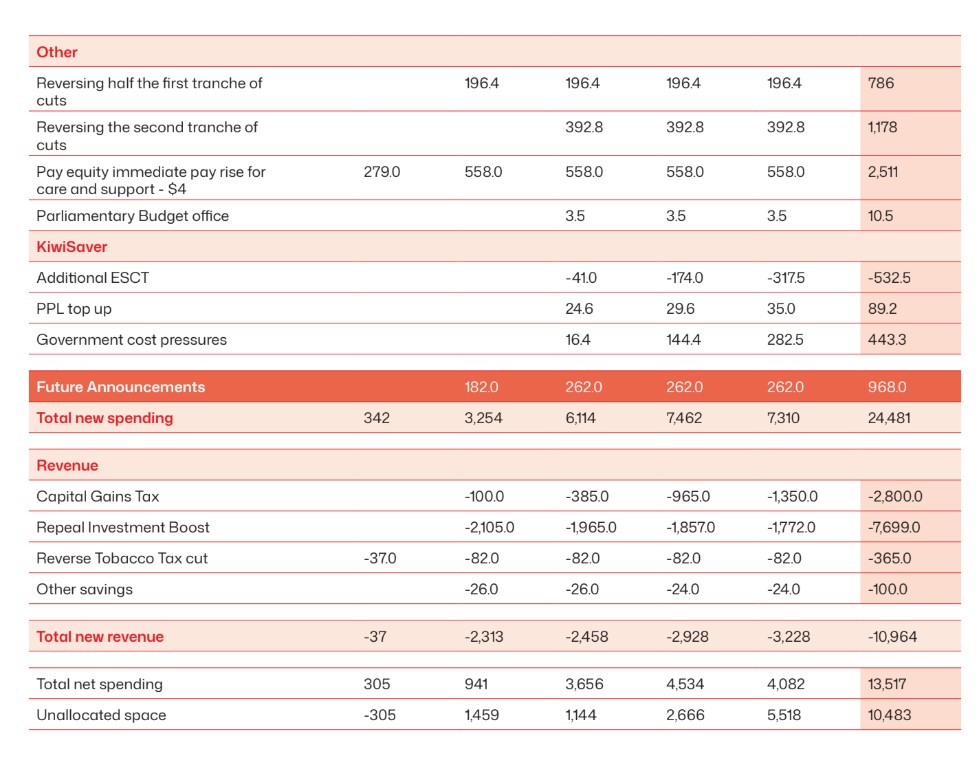
You can read Labour's full fiscal plan here.
Labour leader Chris Hipkins says care and support workers went through “a very long and arduous process to get pay equity about 10 years ago.”
He says this has “eroded away over time” with some workers barely on minimum wage.
He says the $4 increase is an interim pay rise so that they can then complete the pay equity process.
“I'm not going to say they have to wait until the whole pay equity process is finished before they can get some immediate relief. So we're going to be offering them an immediate pay rise.”
In terms of being able to pay for future claims, he says there’s plenty of headroom within the fiscal plan.
“We have a $10 billion unallocated amount of headroom, we've got multi-billion dollars for health cost pressures, and many of the pay equity plans are within the health system. So we're confident we will be able to meet the costs of pay equity within the flexibility that we built into the plan.”
Hipkins says everyone who was able to make a claim previously would be able to do so again.
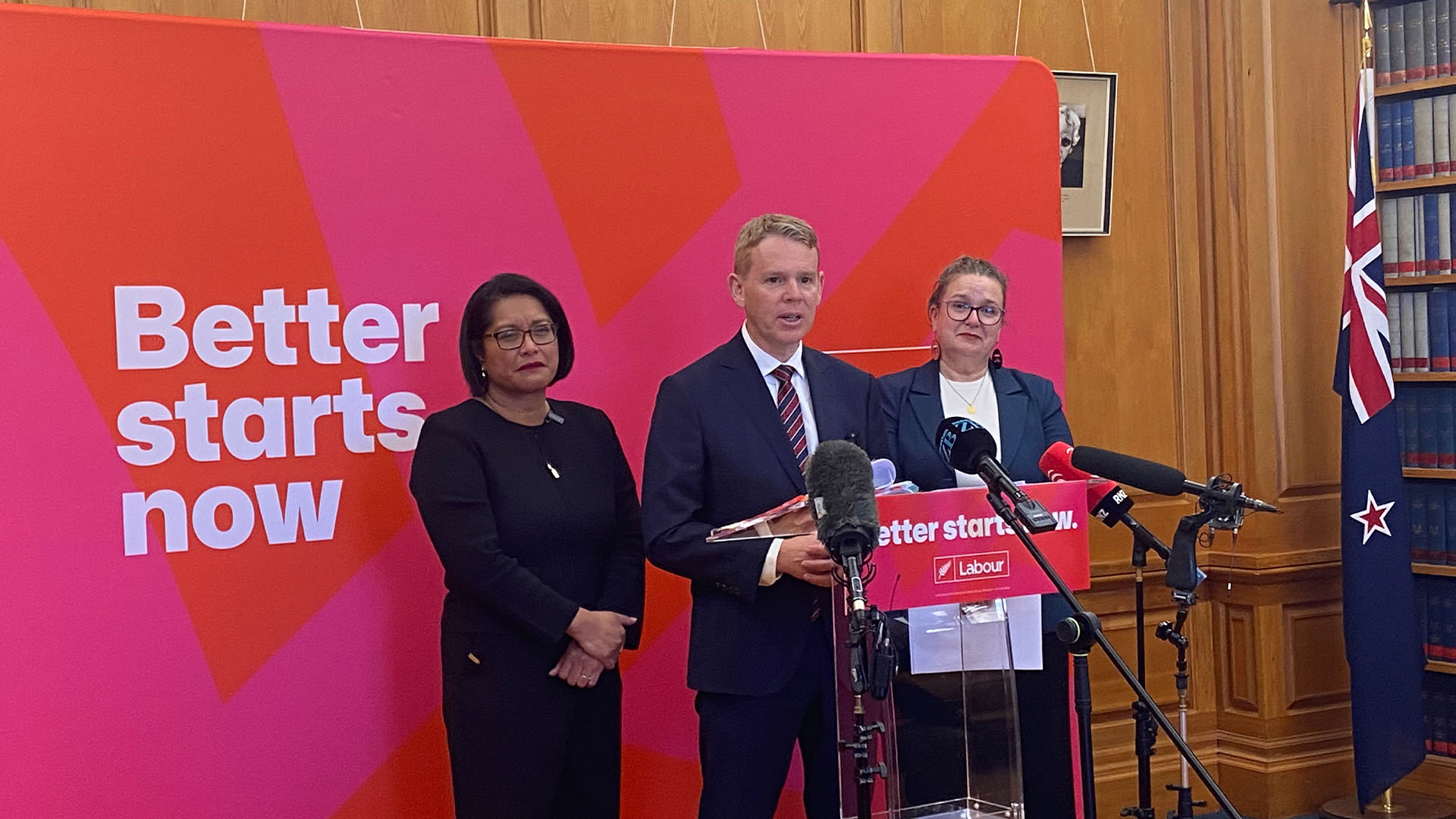
“The pay equity for care and support workers was the most advanced when we left government. Some of the others had only just started that process.”
On Labour’s proposal to restore the pay equity law, Hipkins says they would do all three readings in 100 days.
Asked if the law would go back to how it was or if it would be new, he says if there are minor, technical improvements that need to be made, Labour would look at those.
“But yes, we are restoring the principles that existed before the government changed the law. But I want to be very clear: we're not applying it retrospectively, so claims will be forward focused, not looking back over the last three years.”
Labour finance and economy spokesperson Barbara Edmonds says there was likely to be transitional rules because she did not want claims that had been started, become unwind and have to restart again.
“At the moment, the pay equity legislation is you start the claim, but actually the claims have already been started, then they were stopped, then the legislation was repealed.
“We bring it back. The transitional rules would need to be around them not having to start again.
Asked if that meant defrosting the 33 “frozen” claims from 2025 and allowing them to start from roughly where they were at, Edmonds says yes as she didn’t want them to have to start from scratch.
Hipkins says Labour was not committing to retrospectivity and was not committing to meet things like back pay.
“We believe that women should be paid equally for work of equal value, and we will make sure the law reflects that, and that they have the opportunity to go through the process to establish that and to get paid fairly.”
Equal Pay Act changes
Last year, the Coalition Government amended the Equal Pay Act.
In doing so, it:
- Raised the threshold of “predominantly performed by female employees” from 60% to 70% and required this to be the case for at least 10 consecutive years
- Ensured there were “reasonable grounds” to believe the work is historically and currently undervalued, including a requirement for evidence
- Provided further clarity and guidance on the use of comparators
- Allowed employers to meet pay equity obligations in a way that is sustainable for their business – for example through phasing of settlements
Current pay equity claims at the time were discontinued but new claims could be raised under the amended Equal Pay Act if it met the requirements. Alongside this, review clauses in existing settlements would become unenforceable with settled claims being allowed to be re-raised ten years after settlement - if the claim met the updated requirements.
Labour on the campaign trail in Upper Hutt
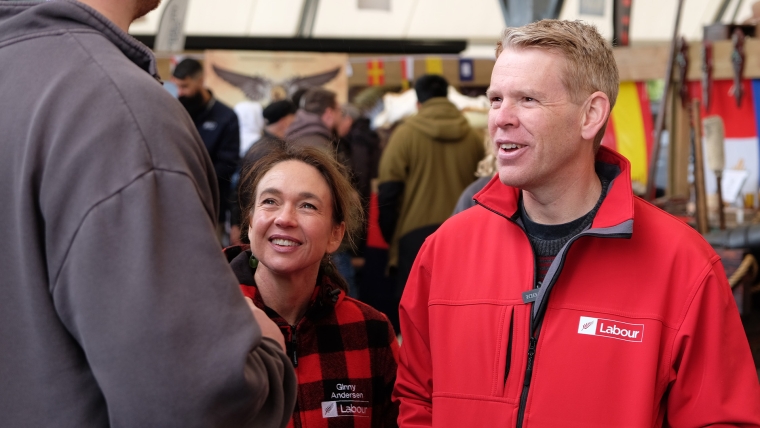
On Saturday, Hipkins along with Labour candidate for Hutt South Ginny Andersen visited the Summit to Sea: 4x4, Camp & Outdoor Show in Upper Hutt.
The pair spoke to stallholders with Hipkins spending a lot of time at one selling cargo nets (which he did purchase).
As well as this, he spoke to a stallholder who runs SunSaver, a company that stocks solar power banks (he also bought something from here too).
Along the way, Hipkins spoke with a real estate agent, who expressed support for him in the election - though she thought many in her sector did not.
Hipkins and Andersen later went behind a bar counter to pour beers - with the Labour leader very impressed with his pours.
We welcome your comments below. If you are not already registered, please register to comment
Remember we welcome robust, respectful and insightful debate. We don't welcome abusive or defamatory comments and will de-register those repeatedly making such comments. Our current comment policy is here.