
Dramatic days on the campaign trail this week saw National propose testing jobseekers for drugs, Labour wanting airlines to show what flights really cost, and ACT saying it was "no wonder the New Zealand dollar is in trouble" as the whole political conversation has lost its mind.
While the debate about the morality of billionaires continued.
Randomised drug testing
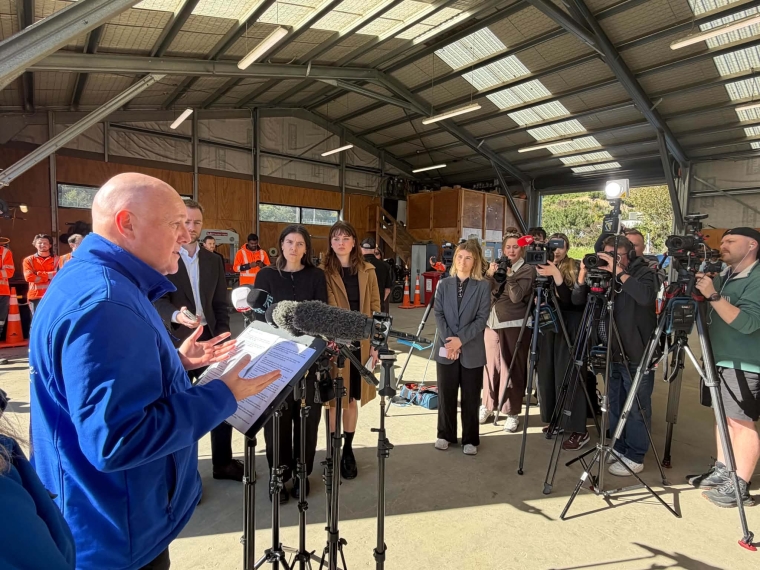
National announced on Thursday it would roll out randomised drug testing for people on the jobseeker benefit. It would introduce 10,000 tests a year from next year, expected to expand over time.
While the changes from drug testing were not expected to generate any savings, other changes National proposed were estimated by leader Christopher Luxon to save $583 million over four years.
That included reducing payments for those who had been on the benefit for more than two years, penalising those who repeatedly leave employment voluntarily, doubling the stand down period to 26 weeks, and extending the benefit residency requirement from two to five years.
Labour social development spokesperson Willow Jean Prime accused National of "moving the goalposts because National has failed to deliver" with unemployment higher than when it took office.
Transparent flight prices
Labour wants domestic airlines to show "all-in, real-time airfares so Kiwis can properly compare the true cost of flights."
Leader Chris Hipkins said the move would "open opportunities for smaller airlines to compete and give passengers more rights."
He also wants to require large airlines to give automatic refunds when flights were cancelled or significantly changed and require fair access to airport infrastructure to make it easier for small airline access.
Labour commerce and consumer affairs spokesperson Arena Williams said the proposal would "make airlines more accountable, with greater scrutiny of fares, costs and profits and clear reporting on delays, cancellations and baggage."
Dumpster fire of policy and the Kiwi dollar
In a speech to Gravity Credit Management on Thursday morning, ACT leader David Seymour spoke of the NZ dollar falling, saying: "Normally the Kiwi dollar tracks the Aussie, but it is at the lowest point since the Canterbury quakes knocked it for six."
"It’s no wonder the New Zealand dollar is in trouble. It’s not just that the coalition might lose office. Ninety per cent of the political spectrum has lost its mind."
Seymour pointed to what he described as the ugly "dumpster fire of a policy debate New Zealand has descended into over the past five weeks", taking aim at the supermarket proposals from parties, taxes on capital and debt.
"The Government is borrowing $9 billion, or two per cent of GDP, this year. Don’t worry though, as usual, it is promising a surplus in two years’ time," Seymour said.
"This relies on heroic revenue assumptions, such as the Government taking in $12 billion more this year than last year."
In response to this, Luxon, who had not seen the full remarks, said; "when you've got an economy growing at 2.6%, it's faster than Australia, it's faster than the UK, EU, Japan, Canada, the US... When you see 14% growth in Kiwis leaving Australia and coming home in the last 12 months, you see less Kiwis leaving to go overseas..."
"That says that we're actually getting on, this recovery is underway. We can see it. That's what we're talking about today. The next four years is continued growth," said Luxon.
The morality of billionaires & 'wowsers'
Speaking in the Herald Future of New Zealand Debate on Wednesday evening, ex-Prime Minister John Key described a question from TVNZ leaders' debate host Jack Tame - asking if it was morally acceptable for any one person to be a billionaire - as "nuts."
"What sort of wowsers have we become if we're going to sit there and say, 'Oh, we're going to celebrate the Warriors and the All Blacks, and we think a bunch of other people are really good, who are sports people or artists or whatever...
"Oh, but if you've built a world-class space company like Peter Beck, oh, that's morally offensive. If you're Graham Hart and you built the best packaging business in the world, that's morally offensive," Key said.
"That is nuts. If we want New Zealand to do better and be great, we have to have vision. We have to have ambition, and actually, collectively, we have to all say we're going to be better off because of that."
Green MP Tamatha Paul said she did think being a billionaire was immoral.
"Billionaires don't just get there because they're better than anybody else, and it's not an isolated case of success. Often they are utilising public infrastructure to allow them to innovate. They are utilising government grants," Paul said.
"That means that they need to pay their fair share. So I'm not saying they should not exist altogether. What I'm saying is they need to pay their fair share because why do nurses, teachers, and tradies have more of a tax rate than they do?"
Both Luxon and Hipkins during the debate did not give a 'yes' or 'no' answer to the question about billionaires and morality.
Hipkins later said he did not want to see an economy where wealth could be concentrated as heavily in the hands of a small number of people.
We welcome your comments below. If you are not already registered, please register to comment
Remember we welcome robust, respectful and insightful debate. We don't welcome abusive or defamatory comments and will de-register those repeatedly making such comments. Our current comment policy is here.