
By Adrian Simmons*
In January 1973 my uncle, Albert Gubay, opened New Zealand's first true discount supermarket in South Auckland. He called it 3 Guys, after the relatives who talked him into it. My father was one of them. There were no barcodes. Gubay flew experienced checkout operators out from Britain, because every price lived in an operator's head. I pushed trolleys there as a teenager for 50 cents an hour.
Fifty-odd years later, supermarkets are back on the front page, and every party has a fix. National would ask the Commerce Commission to test splitting Foodstuffs into two competing banners. Labour wants cheaper wholesale groceries for small grocers. The Greens have floated a government-owned supermarket. Business groups warn of damage to investment. It is a fierce argument about who should own what.
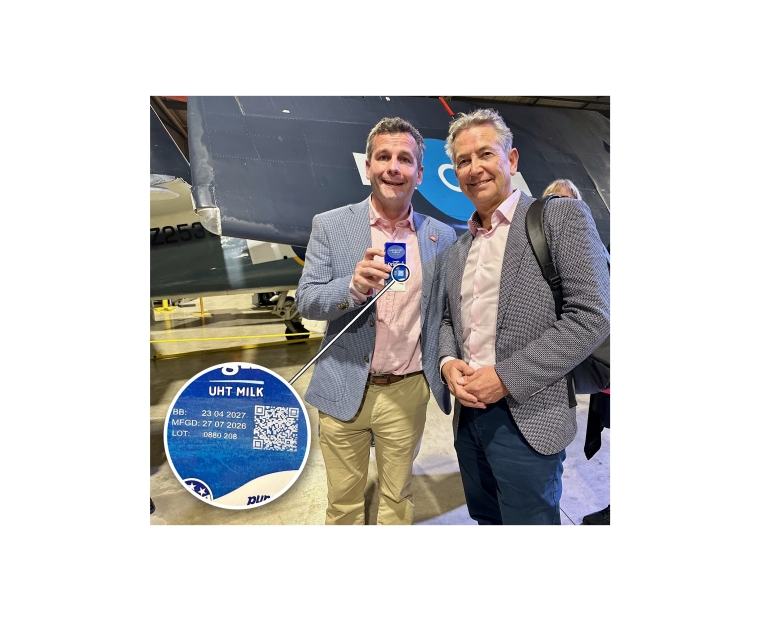
Missing from it is something announced barely a week before National's policy. On 7 September, Deputy Prime Minister David Seymour stood in GS1 New Zealand's Auckland office and said regulators will be directed to consider digital labelling, with a New Zealand Standard in development built on the GS1 QR code. It got a fraction of the coverage. It may matter more.
And it already works: at his town hall in Tauranga on 5 October, Seymour scanned a laser-coded milk carton with his own phone and saw its batch and best-before date appear.
Here is why it may matter more. The last time grocery changed fundamentally, it wasn't because of a break-up. It was the barcode. Studies in the United States found scanners lifted store labour productivity by around 4.5 per cent and let supermarkets carry more than three times as many products. NZIER, in a deliberately conservative 2019 analysis for GS1, estimated the barcode is worth $1.2 billion to $1.5 billion a year to New Zealand's economy, counting labour savings in retail and wholesale alone.
The 2D code, known as GS1 Digital Link, is that barcode's upgrade. Same beep at the till, but the code also carries the batch, the expiry date and a web link. That sounds dull. Its effects are not:
- Short-dated stock can be marked down automatically at the checkout instead of binned.
- A recall pulls one batch, not every jar on the shelf.
- A grower's own origin story travels on the pack, readable by any shopper's phone, rather than filtered through a retailer's marketing.
- The product data follows an open global standard. Any retailer, whether an incumbent, a new entrant or a corner dairy, reads it on the same terms.
That last point is the one I would put to Nicola Willis. On Ryan Bridge's show she told the story of a horticulturalist near tears at the gap between farm-gate and shelf price, and too afraid of being blacklisted to say so publicly. A structural separation might, after years of review, narrow that gap. Open product data gives that grower something sooner: a direct line to the shopper that no buyer controls.
We have seen this pattern before. When Telecom was split in 2011, much of what followed came from Chorus's network becoming wholesale-only infrastructure that every retailer could build on. Competition grew on the open layer. Grocery has an equivalent layer, and it is the data on the pack.
To be fair to the break-up advocates: competition does drive prices down, and New Zealand's grocery market is unusually concentrated. The OECD has said as much. I am not arguing against competition. I am arguing that the fastest, cheapest and least litigious way to create it is to make the information on every product open, standard and machine-readable, and then let anyone compete on it. A split takes years, and its costs are still being estimated. A digital-labelling standard can be adopted brand by brand, starting now. The global retail industry is already moving: GS1's "Sunrise 2027" goal is for checkouts worldwide to be able to read 2D codes by the end of 2027.
Willis says she wants choice, innovation and competition. Seymour says policy should be judged on outcomes. Here is an outcome both could measure: how many products on New Zealand shelves carry an open 2D code by 2028, and what that did to waste, to recalls, and to the cost of entry for a new competitor.
Nobody forced the barcode on New Zealand grocers. It spread because it paid, and it has paid us more than a billion dollars a year ever since. Its successor is ready. We should finish that upgrade before we reach for the scalpel.
*Adrian Simmons is managing director of Total Brand Security, a New Zealand packaging-technology company and GS1 New Zealand Alliance Member whose laser-reactive coatings mark 2D codes directly onto packaging.
We welcome your comments below. If you are not already registered, please register to comment
Remember we welcome robust, respectful and insightful debate. We don't welcome abusive or defamatory comments and will de-register those repeatedly making such comments. Our current comment policy is here.