
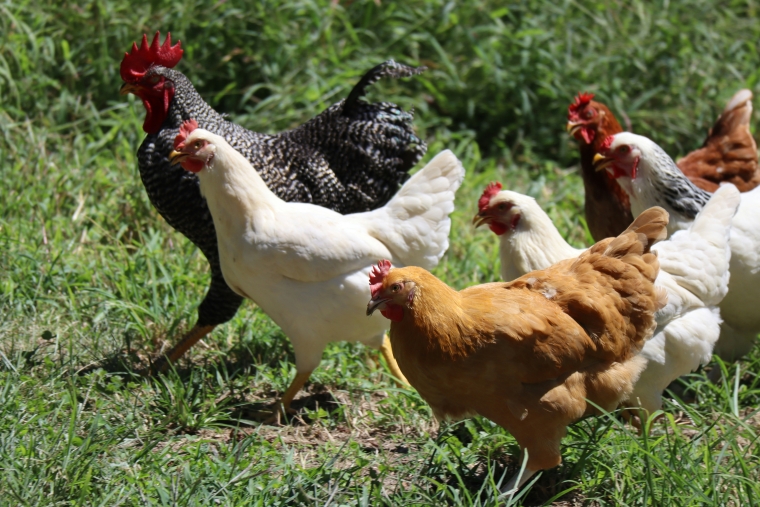
Research is intensifying among several state agencies to protect New Zealand from bird flu – officially called Highly Pathogenic Avian Influenza (HPAI).
One of the main agencies, the Ministry for Primary Industries (MPI), admits far more needs to be known about the way the disease could get here.
For now, the main focus of research is on migratory birds, which could bring in the disease on trans-oceanic flights. HPAI would be a huge danger to the poultry industry, and could decimate wild bird populations such as New Zealand’s unique wildlife.
In Australia supermarket chain Coles has imposed limits on how many eggs customers can buy after hundreds of thousands of chickens have been destroyed after bird flu was found at five large poultry farms.
It has also jumped the species barrier to affect 80 dairy cattle in 11 US states. And it can cause rare, but serious, illness to humans.
“Our teams are working hard with industry bodies to understand what information farmers need and to support with readiness planning,” MPI says.
“New Zealand has never had a case of HPAI, but we are closely watching events overseas and preparing.”
Health guidance
The Ministry of Health and Health NZ are also involved in this campaign and are currently updating the national pandemic plan and preparing new health guidance.
“This includes information for people who might be at higher risk of exposure to the virus if it were found in New Zealand, such as people who work with poultry and dairy cattle, or are exposed to infected birds and marine mammals,” a Ministry official says.
“HPAI can cause severe illness in humans, but the actual rate of infections is low. But viruses can change over time, so it’s important to be vigilant.”
It says people should wash their hands with soap and water or an alcohol hand-rub if they are going tramping, camping or hunting, or are walking dogs near bird colonies. They should also take care while even just being exposed to wild birds or marine mammals, which might have been eating infected birds.
The chicken sector industry body, the Poultry Industry Association of New Zealand (PIANZ), says the Australian outbreak of APAI was caused by a distinct strain of the avian flu virus, H7N3. It says this version is deadly to chickens but does not affect wild birds, so the Australian experience does not threaten New Zealand with infection by migratory birds.
“The strain of avian influenza that is causing the real problems is H5N1, and that is the strain that has gone around the world,” the association’s executive director Michael Brooks says.
“That is problematic because the pathogen has infected wild birds. It’s gone down through South America and crossed into Antarctica…where potentially, migratory birds could come to New Zealand with the highly pathogenic H1N5 virus.”
These birds could include the Skua Gull, but MPI says there is a lot of uncertainty about this.
“As information emerges about the distribution of the disease in Antarctica, there will be a better understanding about the likelihood of HPAI reaching New Zealand through wild bird movements,” a Ministry spokesperson says.
“New Zealand is a partner in the Antarctic Treaty Area, and we are exchanging information with other treaty signatories. The Southern spread of the disease is where all eyes are at the moment.
“We’re talking regularly with colleagues around the world so we can learn as much as we can about how the disease is behaving as it spreads, and what other countries are doing to manage the disease,” an MPI official says.
Threat to dairy sector considered low
MPI puts the danger to dairy herds as very low.
“While we should be vigilant, we don’t need to be alarmed about the situation in the US, where an isolated spillover event led to dairy cattle being infected,” the Ministry says.
“But it is a good reminder of the importance of robust biosecurity systems and practices, such as disinfecting clothing, boots and equipment between farms and recording animal movements. We are liaising with cattle industry representatives in the United States about how spillover might be handled in New Zealand if that situation were ever to arise.”
There is also regular contact with the US Department of Agriculture, the US Chief Veterinary Officer, and the Center for Disease Control and Prevention.
But the poultry industry is most at risk from this disease. It is a huge business, providing New Zealanders with their biggest source of meat protein. Brooks says the industry has over 300 farms with four million laying hens and an extraordinary output of 125 million meat chickens annually.
“Chicken has been our number one meat protein for 20 years now. It surpassed lamb and beef in 2001,” Brooks says.
This huge business would clearly be under severe threat from avian flu, and protocols are being developed to manage an incursion, along with special alerts being sent out to chicken farmers and vets.
“There are many types of avian influenza surveillance that we do,” MPI says.
“There is routine testing of domestic poultry in commercial settings. To enhance surveillance, we’re working with veterinarians and poultry industry organisations to ensure people are aware of clinical signs in poultry and wild birds."
“The poultry industry regularly tests flocks for Avian influenza for export purposes, as the importing country requests a negative test result as proof of freedom from the disease. The poultry industry supplies these test results to MPI on request or on an annual basis.”
Finally, there is sampling for any sign of avian influenza in sick or dead birds in New Zealand’s sub-Antarctic islands and at Scott Base.
“Community surveillance is important. We ask everybody to keep an eye out for sick or dead birds and report them to the exotic pest and disease hotline,” MPI says.
We welcome your comments below. If you are not already registered, please register to comment
Remember we welcome robust, respectful and insightful debate. We don't welcome abusive or defamatory comments and will de-register those repeatedly making such comments. Our current comment policy is here.