
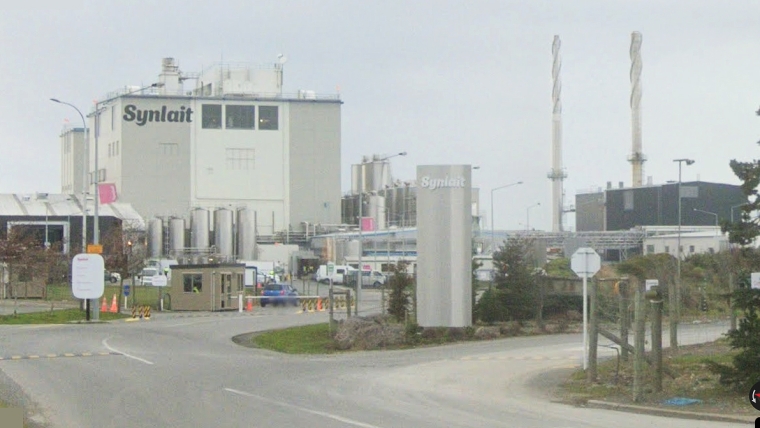
Synlait is New Zealand’s third equal largest dairy company, vying with Yili, the owner of Westland and Oceania, for that position. But Synlait, in stark contrast to Yili and other New Zealand dairy companies, is in lots of trouble.
Synlait has recently been in major contraction mode, selling its North Island assets but still being financially insecure. Go back some seven years, then Synlait’s shares were consistently selling above $9 and peaked at over $12. The most recent market sales on the NZX were 42 cents.
Ouch! Synlait’s investors, primarily Bright Dairy and The a2 Milk Company, but also mum and dad investors, have lost more than 95% of their shareholding value.
It is remarkable that a significant player in New Zealand’s largest and highly profitable industry can be in such a situation.
Things have been going wrong at Synlait since at least 2020. It was around then, or soon thereafter, that their fundamental relationship with The a2 Milk Company started to sour.
However, the first big strategic mistake was made two years earlier when Dunsandel-based Synlait decided to expand into the North Island and purchased land for a new factory at Pokeno, south of Auckland.
At that time the Synlait philosophy was all about growth. The key focus was infant formula but there was a perceived constraint of geographical concentration and earthquake risk. The answer was to go north.
To me, the northwards move, funded by debt, was always in itself a big risk. But the philosophy of Synlait oozed confidence.
The North Island Pokeno factory opened in 2019, but never had enough suppliers of milk.
When Synlait began its commercial operations way back in 2008, it was easy to sign up dairy farmers to supply milk. Those were the days when Fonterra was much less efficient than it is now. Also, there were lots of dairy conversions occurring and the appeal of not having to take on further debt to buy Fonterra shares was very appealing to farmers.
In that environment, Synlait beat the Fonterra payout in each of the first five years from 2008 to 2012 and had a queue of prospective farmer suppliers. As a consequence of those experiences, 10 years later Synlait underestimated the challenges of having to compete for farmers with a newly efficient Fonterra plus Open Country.
The problems associated with underutilisation at Pokeno could be ignored initially in 2019 as first-year minor growth issues. That was until COVID arrived at the start of 2020.
COVID was a disaster for both Synlait and its most important customer, The a2 Milk Company.
To understand Synlait’s current predicament, it is necessary to understand something about The a2 Milk Company. Hereafter I refer to The a2 Milk Company by its NZX ticker ATM. (In Australia the ticker is A2M, but it is the same company).
Prior to COVID, the A2 infant formula business was conducted by Synlait producing the A2 infant formula product (i.e. product free of A1 beta-casein), but with ATM being the brand owner and marketer. It was a gold mine generating both great growth and cash for both companies.
By 2018, the A2 infant formula marketing strategy was largely based on English-label infant formula taken to China, via Australia, by Chinese traders called daigou living predominantly in Australia. Chartered planeloads of infant formula from Australia to China were then loaded to the roof with pallets of infant formula, owned by daigou, and labelled for their trader-mates across China.
Here I make the disclosure that it was me who first introduced the Synlait and ATM CEOs to each other, way back in January 2011 at a meeting in Dunsandel. The meeting was set up to explore the idea that the two companies could mutually benefit by working together. A partnership followed from there. But by the time the daigou trade started I was just an interested observer.
The COVID debacle was made worse because, given the nature of the daigou trade, neither ATM nor Synlait had visibility as to the existence or otherwise of available inventories in China. Without that visibility, supply chain management was impossible.
Since then, ATM has essentially restructured itself, focused primarily on a mix of Chinese-label and English-label infant formula, with slightly different formulations, and China being the key destination for both brands.
ATM has this year shifted production of the English-label product to its own modern and recently purchased factory, also at Pokeno. This ATM factory was originally built by Yashili back in 2015. It has existing capacity to produce more than 50,000 tonnes of infant formula per year and this is being expanded.
The Chinese-label product still comes from Synlait but only because Synlait has held the necessary production licence from China. As I was finalising writing this article on 22 June, ATM has announced it now has production rights at Pokeno for two China-label infant formula products.
This all means that Synlait has to figure out whether it has a long-term future in infant formula. Without ATM, it has no current infant formula brands. Producing infant formula without being tied to market brands is simply not a goer.
If Synlait does want to continue producing infant formula, then it not only needs to deal with the issue of brands, but it has to decide what is its differentiating characteristic. Should this infant formula rely on A2 milk of which Synlait has significant quantities?
Over the last 10 years I have introduced to Synlait multiple European dairy marketers looking for A2 infant formula, either as powder or consumer packed, but Synlait’s contracts with ATM were exclusive.
If these were the only challenges that Synlait faced, then the path forward would be a lot simpler. Alas, Synlait has had quality problems, linked to inadequate plant hygiene.
Synlait has not been explicit as to the precise nature of the problems, but it seems that considerable infant-formula base powder had to be destroyed. It did not lead to publicity at the time because the affected product never left the factory and hence never got near the market.
However, this still led, not only to big losses, but created a need for the Number 1 dryer to be diverted to infant formula production to make up for the lost inventory. The production of this particular dryer when used for infant formula is only of the order of 25% of its production when drying commodity milk. Hence, there was a major backlog for drying of commodity milk, with considerable milk having to be destroyed at the peak of the 2025 production season, and with other companies not wanting the milk.
Even then, that was not the end of the calamities. Synlait has committed to its farmer suppliers that not only will it pay farmers the Fonterra base price for their milk, but there are various add-ons. These add-ons total, as I understand it, an average of 40c per kg milksolids, primarily as an incentive to stay with Synlait but also specific quality premiums. That will hurt.
In early 2025, Synlait appointed Richard Wyeth as its new CEO. Some of us heaved a sigh of relief. We could not think of a better man to take the reins of Synlait, following a period of leadership churn.
Hence, it was an enormous shock when on 13 May this year it was announced that Richard Wyeth was leaving Synlait. Everyone in the industry is wondering why Richard Wyeth decided to leave after just one year.
My own take is that perhaps the challenge of Synlait was simply too much for Wyeth’s personal well-being. Perhaps there was less than total alignment between Wyeth and majority shareholder Bright about the path ahead. To use Wyeth’s own words from a few weeks earlier, Synlait had limited ‘optionality’.
As I write this in late June, Synlait has given no guidance on its expected loss as at 31 July, the end of its trading year. We know that Synlait made an after-tax loss in excess of $80 million for the half year ended in January 2026. It seems likely that losses have continued in the second half of the year but at lower levels.
My own take is that Synlait is desperately in need of new equity. The apparently obvious candidate to supply this would be Bright Dairy, but that is probably being over simplistic.
Bright has itself announced to the Shanghai Stock Exchange that it is making a loss this year, for the first time in 15 years, because of the losses it is carrying from Synlait.
Bright has already come to the aid of Synlait once in late 2024, with substantial equity plus a major shareholder loan, which stands below bank debt in terms of security. My understanding is that Bright was not totally happy about doing this, with discussions being held between Shanghai-based Bright and Beijing authorities, before making a decision. It was about politics and national standing, not just economics.
Alas, things at Synlait have only got worse, greatly worse, since then.
*Keith Woodford ONZM was Professor of Farm Management and Agribusiness at Lincoln University for 15 years through to 2015. He is now Principal Consultant at AgriFood Systems Ltd. You can contact him directly here.
We welcome your comments below. If you are not already registered, please register to comment
Remember we welcome robust, respectful and insightful debate. We don't welcome abusive or defamatory comments and will de-register those repeatedly making such comments. Our current comment policy is here.