
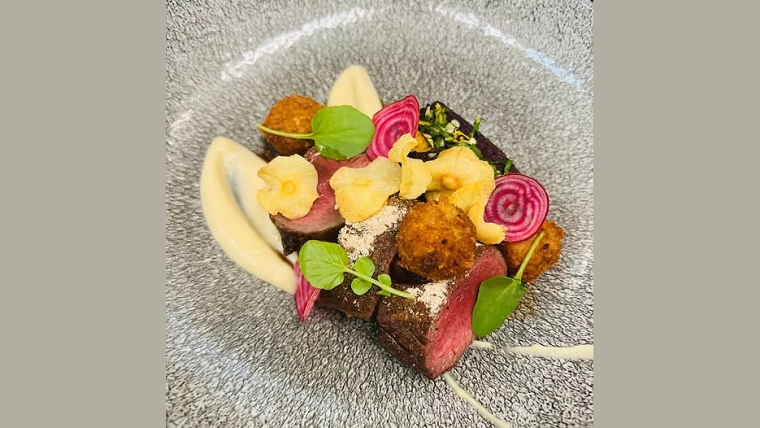
After several difficult years for New Zealand’s deer industry, the message coming back from some of its most important overseas markets is becoming increasingly positive. Demand for New Zealand farm-raised venison remains strong, supply is tight and there are signs the industry is beginning to break out of the traditional European game season that has shaped venison production and marketing for decades.
For Deer Industry New Zealand’s Terry Meikle, who has spent several weeks travelling through Europe meeting customers, importers, distributors and chefs, perhaps the most important finding has been the strength of the relationships New Zealand has built in those markets. Every country presents a slightly different perspective, with its own culture, consumers and expectations, but the underlying message has been remarkably consistent.
“The fundamental takeaway for me is this is a relationship market, and we’ve done a great job as the deer industry in creating some really deep relationships over here,” says Meikle. “So it’s in good health.”
That does not mean European consumers are immune from the economic pressures being felt elsewhere. Higher energy and labour costs and broader cost-of-living pressures are making consumers more price conscious. Meikle describes the mood among customers as “cautiously optimistic”, but says venison remains relatively well positioned. In fact, the greater concern he is hearing is around having enough product available to meet the demand that already exists.
“Supply is the major concern that they have,” says Meikle. “There’s certainly plenty of demand still for our product.”
That is an important distinction for New Zealand deer farmers. The national deer herd has declined considerably and farmers continue to weigh deer against sheep, beef and other competing land uses. Strong schedules provide an immediate incentive to retain deer, but rebuilding farmer confidence ultimately requires evidence that demand can support those returns beyond a single season.
What Meikle is hearing in Europe suggests the underlying market is strong, with one of New Zealand farm-raised venison’s biggest advantages being consistency. European customers know what they are buying and trust New Zealand suppliers to deliver a farmed product of predictable quality, separating it from some wild game products where eating quality and supply can be considerably more variable.
“They can trust us,” says Meikle. “They have confidence in us delivering that farmed product, being delivered in a consistent, high-quality manner.”
Maintaining that position will increasingly require the industry to demonstrate more than eating quality. Provenance, traceability and sustainability remain important and Meikle believes New Zealand has a strong story to tell, but the challenge is putting credible evidence behind it.
Work is being explored around life-cycle assessment and biodiversity, building on practices already captured through farm quality assurance programmes. Meikle says the opportunity is to bring those different elements together into a stronger proposition that can be supported by research and understood by customers.
“We have a great story,” says Meikle. “It’s a matter of how we get those evidence proof points.”
That work is particularly relevant in Europe, where Meikle has been looking at opportunities to partner with research organisations that are closer to both the market and the regulatory environment. The aim is not simply to make broad claims about New Zealand farming, but to have evidence that can support the story being told about farm-raised venison.
At the same time, there is a potentially significant shift occurring in the way venison is being consumed. Europe has traditionally been a strongly seasonal market, particularly in Germany, with demand concentrated around the game season. That seasonality has influenced the entire New Zealand supply chain, including when farmers have traditionally aimed to have animals ready for processing.
Meikle does not expect that traditional market to disappear and says some of the more conservative parts of Europe will probably remain seasonal. However, what he is seeing elsewhere suggests there is scope to broaden consumption considerably.
“I think the real opportunity for us is to crack into the 52 weeks a year, getting our product placed,” says Meikle.
Sweden is one market showing potential, alongside the Netherlands and other parts of the Benelux region, while Meikle also sees opportunities emerging in Switzerland and northern Italy. Year-round chilled and retail programmes are beginning to appear and the way venison is being presented to consumers is changing.
Rather than relying solely on traditional cuts and larger portions, chefs and retailers are looking at smaller and more specific cuts that better reflect changing consumer preferences. Meikle describes a trend towards consumers eating less protein in a sitting but looking for greater quality and nutritional density from what they do eat, something he believes could suit venison particularly well.
He saw some of that potential first-hand in Sweden, where Deer Industry New Zealand’s Berlin-based chef Shannon Campbell demonstrated New Zealand venison to the Strawberry Hotel Group, one of the largest hotel groups operating across the Nordic countries. The response reinforced Meikle’s view that there is room to take venison beyond its traditional place on the European menu.
“Seasonality is still real,” says Meikle. “We’ve got to just accept that in certain more conservative traditional parts of Europe, it’s just going to be the way.”
But he says the evidence from several countries suggests there is “real scope” to move closer to a 52-week-a-year opportunity. Pasted text
A less seasonal market would give the supply chain more flexibility and reduce some of the dependence on having animals ready for one concentrated period of demand. It would also continue a diversification process that accelerated dramatically during Covid, when the closure of restaurants exposed New Zealand venison’s reliance on European food service.
That experience forced the industry to put considerably greater emphasis on retail and North America has subsequently emerged as an increasingly important part of that strategy. Meikle does not see the United States replacing Europe, which will remain the established premium market, particularly for high-value cuts. Instead, he sees the two markets as complementary, providing different opportunities for different parts of the carcass.
Much of the venison currently sold into the United States goes into ground products, burgers and jerky, while the challenge is achieving greater value from the large leg cuts. Whole-carcass utilisation has long been one of the difficulties for the deer industry and Meikle says getting those cuts into markets at the highest possible value will remain a priority.
That makes chef education an important part of the strategy. If chefs understand how to use different venison cuts and consumers become more comfortable preparing venison at home, the opportunity extends beyond simply selling more product and becomes about extracting greater value from each animal.
“The more we can work with chefs in the European and the North American markets to get them to really understand the sustainability and the nutrition pieces of the puzzle and what we can provide as farm-raised venison, I think the world’s our oyster,” says Meikle. Pasted text
The move into retail has another advantage in introducing venison to consumers who may never order it in a restaurant and helping overcome the perception that it is difficult to cook. Meikle says some chefs trying New Zealand venison for the first time expected a much stronger, gamey product, only to discover something quite different.
“The vast majority of them were like, ‘Wow, this is really good’,” says Meikle.
The next step may be to give those consumers another reason to choose it. Deer Industry New Zealand is looking more closely at the nutritional attributes of farm-raised venison and how those can be supported by credible science, with work involving a registered dietitian and nutrition company intended to provide stronger evidence behind future health and nutrition messaging.
Meikle sees particular potential for that approach in the United States, where he believes the conversation around red meat, whole foods and nutrition is changing significantly. For a relatively small New Zealand industry, competing with mainstream proteins on volume makes little sense. The opportunity instead is to better establish the attributes that differentiate venison and then provide credible evidence to support them.
That fits with the broader direction emerging throughout this deer farming series. The opportunity is not necessarily about producing substantially more venison or trying to turn it into another commodity protein. It is about extracting more value from a relatively scarce product and giving farmers a stronger reason to retain deer within their businesses.
Meikle believes New Zealand is well positioned because the product is already trusted in its established markets, while the industry is only beginning to explore some of the opportunities available in North America.
“We’re only really scratching the surface,” says Meikle.
There are limits to how far price alone can carry that story. Meikle acknowledges there is consumer price sensitivity in Europe and believes venison is getting towards what the market will tolerate. That makes creating value around the product even more important, rather than relying on schedules simply continuing to climb.
After several weeks talking directly with the people buying, selling and serving New Zealand venison, however, Meikle’s message to farmers at home is clear.
“We know our product’s well liked. We know it’s well regarded. We know we’ve got great trust and deep relationships out here in a traditional market, and then we’ve got the United States of America that we’re really only scratching the surface on.”
With both major markets presenting opportunities at the same time, Meikle believes the industry may be approaching an unusually important point.
“This is a really, really big moment,” says Meikle. “It’s probably almost one of those once-in-a-generation moments where both of our major markets are humming.”
There are still challenges ahead and rebuilding confidence among farmers will take more than one period of strong venison schedules. The industry also needs to continue improving whole-carcass utilisation, build year-round demand, provide evidence behind its nutrition and sustainability story and ensure enough of the value created in market ultimately reaches the farm gate.
But the picture emerging from Meikle’s conversations in Europe is not one of an industry struggling to find customers for its product. If anything, scarcity is becoming part of the proposition and he believes that should help support relatively stable pricing.
For farmers deciding whether deer still deserves a place alongside sheep and cattle, that matters. Across this series we have looked at the wider industry outlook, heard the farmer perspective and tested the economics of deer within a mixed farming system. This final conversation takes the story to the other end of the supply chain and suggests the markets themselves are providing reasons for confidence.
An industry the size of New Zealand deer does not need unlimited demand or enormous increases in production. It needs enough high-value demand for the amount of venison New Zealand can sustainably produce and a market prepared to recognise what differentiates that product.
Meikle believes those pieces are increasingly coming together and his message to farmers considering the future of deer within their businesses is straightforward.
“The message that I hope our farmers back home hear is actually, hey, stick with venison.”
After the disruption and uncertainty of recent years, that may be one of the strongest indications yet that the outlook for New Zealand venison has moved into a considerably more positive phase.
Have a listen to the podcast to hear the full story.
Angus Kebbell is a producer at The Weekly Hotwire. You can contact him here.
We welcome your comments below. If you are not already registered, please register to comment
Remember we welcome robust, respectful and insightful debate. We don't welcome abusive or defamatory comments and will de-register those repeatedly making such comments. Our current comment policy is here.