Content supplied by Robobank
A softening in dairy farmer sentiment and rising interest rates have led overall New Zealand rural confidence to a significant slide in the past quarter, but beef and sheep farmers have bucked the trend, with their confidence levels rising to three-year highs.
The latest Rabobank Rural Confidence Survey – completed in June – has shown a sizeable dampening in overall farmer confidence, with just 25 per cent of the country’s primary producers now having a positive outlook on the performance of the agricultural economy in the next 12 months.
This was down from 42 per cent with that expectation in the previous survey.
A total of 24 per cent expected conditions to worsen (climbing from 13 per cent with that view previously), while 50 per cent expected the agricultural economy to remain the same in the coming year.
Much of the softening in confidence was driven by dairy farmers, who reported a significant decline in sentiment, primarily because of falling commodity prices – a reason given by 63 per cent of dairy farmers who had a pessimistic outlook.
Dairy is now the least confident of all the New Zealand agricultural sectors in terms of future outlook, reflecting the reduction in milk payout expectations for the 2014-15 season compared with the record high prices from 2013-14.
Sheep and beef farmer sentiment, on the other hand, recorded a healthy surge, with 57 per cent of farmers in this sector reporting a positive outlook (up for 37 per cent in the previous quarter).
Just seven per cent expected conditions to worsen in the next 12 months, down from 10 per cent previously.
Rabobank New Zealand CEO Ben Russell said the results reflected the strengthening being seen in sheep and beef prices, on the back of lower supply due to high slaughter levels in the past 12 to 18 months.
Mr Russell said the slump in dairy farmer sentiment had been driven by lower dairy commodity prices, as well as the strengthening New Zealand/US dollar exchange rate.
“Dairy commodity prices have fallen from record high levels in 2013, and have been down between 10 and 20 per cent since mid-March in US dollar terms,” he said. “The dollar was also cited as a concern, with 28 per cent of dairy farmers saying the exchange rate had contributed to their pessimistic view.”
Overall, New Zealand farmers were also concerned about rising interest rates – 22 per cent who had a negative outlook on the 12 months ahead nominated interest rates as reason for their pessimism.
“With the RBNZ now hiking the official cash rate three times over the past three consecutive months, and clearly signalling further rises are likely, it is not surprising that interest rates are weighing heavily on farmers’ minds,” Mr Russell said.
“This will be impacting on farmers’ plans in terms of spending and investment in the coming 12 months.”
For those New Zealand farmers with a positive outlook, the main causes for optimism were rising commodity prices (31 per cent) and overseas markets/economies (nominated by 29 per cent).
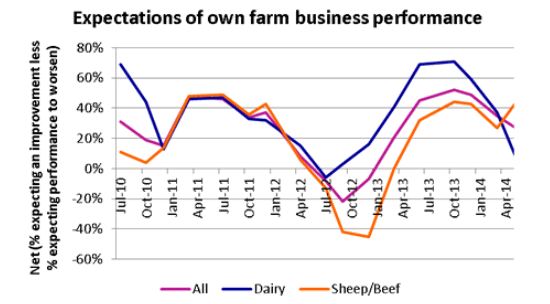
Farmers’ expectations of their own business performance were also down overall, though more positive than their view of the agricultural economy generally.
A total of 42 per cent expected improved business performance in the next 12 months – slightly down on the 46 per cent in the previous quarter – while 39 per cent expected performance to remain stable and 18 per cent for it to worsen (compared with 11 per cent previously).
Mr Russell said sheep and beef farmers had the highest expectations of their own businesses since July 2011. “And it is the first time they have been ahead of dairy farmers on this measure since December 2011,” he said.
Interestingly, New Zealand farmers’ investment intentions remain unchanged since last quarter with 93 per cent of farmers intending to increase or maintain the level of investment in their farm business.
Mr Russell said while the measure was stable, the sector composition was different. “Sheep and beef farmers have increased their investment intentions, while dairy farmers have lowered their expectations in this regard,” he said.
Questioned on the topic of sustainable practices – 82 per cent of New Zealand farmers indicated they were actively implementing best practices to improve environmentally sustainable outcomes on their farms.
Sheep and beef farmers were, however, trailing behind the rest of the agricultural sector in this regard, with just 74 per cent of producers in this sector assessing that they were implementing best practice in this regard.
On the topic of succession planning, 62 per cent of farmers were currently considering succession of the family farm, with only half of these farmers having a formal succession plan in place.
Conducted since 2003, the Rabobank Rural Confidence Survey is administered by independent research agency TNS, interviewing a panel of approximately 450 farmers each quarter.
We welcome your comments below. If you are not already registered, please register to comment
Remember we welcome robust, respectful and insightful debate. We don't welcome abusive or defamatory comments and will de-register those repeatedly making such comments. Our current comment policy is here.