
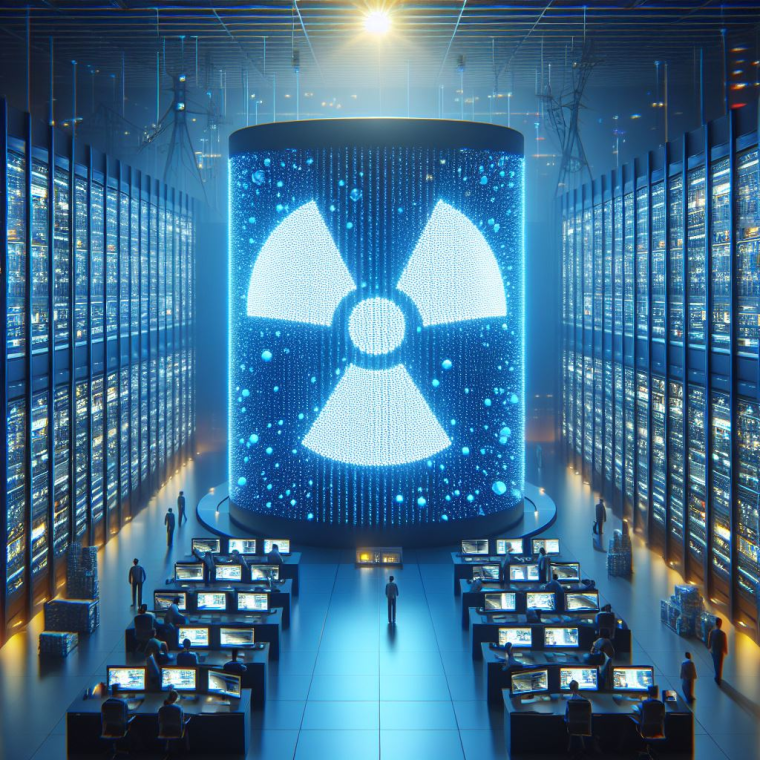
That artificial intelligence (AI) would need tremendous computing resources has been known for a while now, but just how much is truly mind-boggling.
Over Easter, The Information reported that Microsoft and the AI company it bankrolls, OpenAI, are looking at building a US$100 billion data centre for the technology.
Nicknamed "Stargate", the monster facility would cost around 100 times more than current large data centres; in comparison, Microsoft spends somewhere in the region of US$50 billion on its existing Azure facilities.
What's more, the "Stargate" data centre campus could require up to five gigawatts of power when fully deployed. US real estate firm CBRE pinned the North American primary market supply in 2023 at 5174.1 MW, having grown 26% year on year.
No wonder then that Microsoft is studying the option of powering AI data centres with nuclear energy. How the heat generated from the electronics in the "Stargate" data centre will be dissipated remains to be seen.
"Stargate" is scheduled to open as soon as 2028 as well.
What graphics processing units or GPUs for AI use will go into "Stargate" is yet to be decided, but semiconductor makers are already plotting ones with a staggering one trillion transistors.
In comparison, the current Nvidia Grace Hopper 1000 AI chip is considered huge with a die size of 814 mm2 and 80 billion transistors.
The chairman of Taiwan Semiconductor Manufacturing Co (TSMC) which makes chips for Apple and other household device names, Mark Liu, along with the company's chief scientist, H-S Philip Wong, wrote about how to cram in a trillion transistors into a chip; it seems stacking in three dimensions with high-speed optical interconnects is the way to do it.
How much power such a giant chip would use was not mentioned.
Everything is becoming bigger, more powerful and faster - like fibre-optic networks. Researchers at UK's Aston University in Birmingham have added two wavelengths that aren't used currently to the lasers pumping bits through the fibre.
The result is 301 terabits or 301,000,000 megabits per second; 400 and 800 Gbps networking is considered state of the art currently.
We welcome your comments below. If you are not already registered, please register to comment
Remember we welcome robust, respectful and insightful debate. We don't welcome abusive or defamatory comments and will de-register those repeatedly making such comments. Our current comment policy is here.