
The government is facing a judicial review over its decision in July to weaken exhaust emissions standards, as the Better New Zealand Trust took issue with how the quick consultation process was conducted.
To recap, Transport Minister Simeon Brown announced New Zealand would align its vehicle emissions reductions standards with those of Australia. The idea is to ensure a steady supply of affordable vehicles.
Here's what Brown said at the time:
The government supports the Clean Car Importer Standard to ensure that New Zealand has an affordable mix of clean vehicles. Following a comprehensive review into the Standard we will be making key changes to ensure the Standard strikes the right balance between reducing transport emissions while ensuring that New Zealand’s have access to affordable vehicles.
Advice provided to me by the Ministry of Transport found that under current targets set by the former government, CCS penalties are forecast to amount to approximately $800.6 million of cost to consumers purchasing a new car in 2027 which is around $5,549 per vehicle.
The additional cost figures are from the Motor Industry Association (MIA) of New Zealand, as quoted in the Ministry of Transport (MoT) CCIS review document.
MIA was one of four car industry organisations consulted for the review; the others include the Imported Motor Vehicle Industry Association (IMVIA/VIA), the Motor Trade Association (MTA) and the Automobile Association (AA).
None of the four organisations above were in favour of the CCS that was phased in from December 1 2022 by the former government. However, they were the only ones asked to submit on the review of the CCIS, Better NZ Trust's Kathryn Trounson told interest.co.nz.
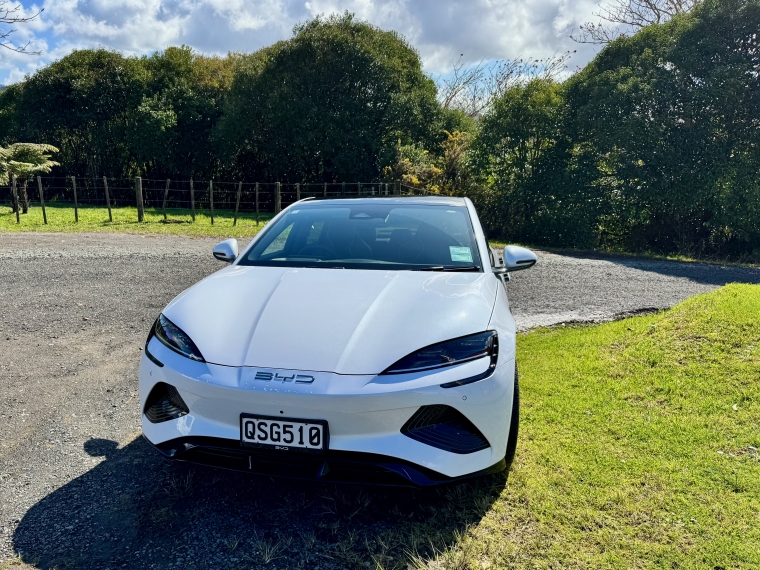
The trust was not asked to submit, but did so anyway; zero-emissions vehicle organisation Drive EV wasn't invited either for the consultation round. The court document says Tesla and BYD, the two biggest suppliers of EVs in the New Zealand market, were not consulted.
Trounson is clear on the purpose of the consultation strategy:
"The MIA and IMVIA had vested interests in weakening the standards so they could keep on doing ‘business as usual’ and not having to charge the heavily polluting vehicles with the additional fee - the dog whistle calling this fee a ‘ute tax’ was designed to enrage the farming community and it did that perfectly!"
Having repealed the Clean Car Discount by the end of last year which hit EV and hybrid sales hard and saw them decline by two-thirds, the CCIS changes would further impact the number of low and zero-emission vehicles in New Zealand.
The BNZT says the government's own modelling would result in 39,000 fewer EVs and 19,000 plug-in hybrids being registered by 2035. This in turn would lead to an increase in emissions of 0.6 to 0.9 megatons by 2035, and 1.2 to 1.9 MT by 2050.
The backdrop here is that transport accounts for around 40% of New Zealand's energy greenhouse gas emissions. Without reducing vehicle emissions, New Zealand is unlikely to meet its obligations under the Paris Agreement, which aims to limit the average global temperature increase to 1.5 degrees Celsius above pre-industrial levels.
"New Zealand was one of the last developed countries to adopt a regulated CO2 emissions standard. In 2019 when the standard was publicly consulted on, the vehicles being imported were among the most fuel inefficient and highest CO2 emitting in the OECD," the MoT admitted.
The Better NZ Trust might be a new name to many; its members include EV dealers, car parts chain Repco, charger network ChargeNet, the Interislander ferry company and electricity retailers Orion and Unison.
It is now seeking a High Court order to quash the Minister's decision to weaken the emissions standards regulations.
"The Trust wants to make the public aware of the fact that NZ will miss its Paris climate targets by a country mile with this weakening of the regs – but the Coalition appears unmoved by that prognosis – and is going full steam ahead to keep fossil fuels at the centre of our energy strategy. As I am sure you are aware, even if we stopped pumping CO2 into the atmosphere tomorrow, the lag time for that to lower the CO2 levels are huge," Trounson said.
TBNZ doesn't buy the government's argument that there's an insufficient global supply of EVs and that prior emissions standards would push up car prices.
Figures from analyst firm Gartner released this month estimate that EVs in use by 2025 will grow by a third, reaching 85 million globally. Gartner has New Zealand's installed battery EV and PHEV base at 140,989. By 2025, that number is expected to reach 182,596 with nearly 135,000 being BEVs.
Australia is expected to have a sizeable electric vehicle fleet by 2025, at 488,061, Gartner figures say. In both countries, the numbers show marked increases, with 49% in Australia and 30% in New Zealand.
As it is before the court, Minister of Transport Simeon Brown would not provide further comment on the CCIS case beyond saying the government wants to ensure an affordable mix of clean vehicles, which is why the Standard was aligned with Australia as the two countries are effectively the same car market.
Has the government completely abandoned a low and zero-emissions transport strategy? Not quite.
There are at least some government policy initiatives aimed at reducing transport emissions.
For starters, the government maintains it will stick to the Net Zero 2050 goal, and a modestly sized low emissions heavy vehicle (LEHV) fund with $27.5 million has been set up.
One flagship policy is to build out the nation's EV charging network. By 2030, the government aims to have 10,000 charging points installed, with the policy costed at $257 million over four years.
Brown explained the difference the additional chargers would make to improve access for EV drivers
"New Zealand currently has approximately one charge point for every 90 EVs (battery electric and plug-in hybrid). Most comparable countries have one public charge point to less than 40 EVs (eg, Germany has one to every 25 EVs, the United Kingdom has one to every 31 EVs, and Australia has one every 68 EVs," Brown said.
As of April this year, the number of charging points nationwide is thought to be 1250, with 21 being installed every month. Whether or not it is feasible to up that number by a factor of eight in four years remains to be seen.
It is possibly in the light of the promised 10,000 EV charging network that gentailer Genesis taking a 65% majority stake in ChargeNet should be seen, however.
There will be co-investment from the government in the EV charging network build out, similar to the UltraFast Broadband (UFB). Brown said officials will work with the Electricity Authority to address barriers such as connection costs along with making it easier to get consent for the points.
"Our Supercharging EV Infrastructure policy is a shift in the government’s primary role from funder of public EV charging infrastructure to the facilitator that enables private investment through removing regulatory barriers. This will include a cost-benefit analysis framework to inform decision-making, as outlined in the National-ACT coalition agreement," Brown said.
Interestingly enough, although the majority of EV charging is done in owners' homes, the government is not currently looking at providing incentives for electricity suppliers to provide higher current connections to premises.
Presently, New Zealand households have a standard allocation of 63 Amps; a 7 kilowatt wallbox can use 32 A of that, which has led to electricity suppliers like Vector and WEL Networks to call for managed EV charging to avoid overloading the grid.
Will the above initiatives make a dent in the country's transport emissions?
In 2021, the MoT noted that New Zealand had a vehicle fleet that's over 4.5 million in size; that equates to 899 vehicles per 1000 people. This is one of the highest levels of vehicle ownership in the world. It is unlikely that measures to reduce the number of cars for private use would be welcomed, but can we maintain the composition of the fleet as-is, and hope to meet our emissions reduction commitments?
We welcome your comments below. If you are not already registered, please register to comment
Remember we welcome robust, respectful and insightful debate. We don't welcome abusive or defamatory comments and will de-register those repeatedly making such comments. Our current comment policy is here.