
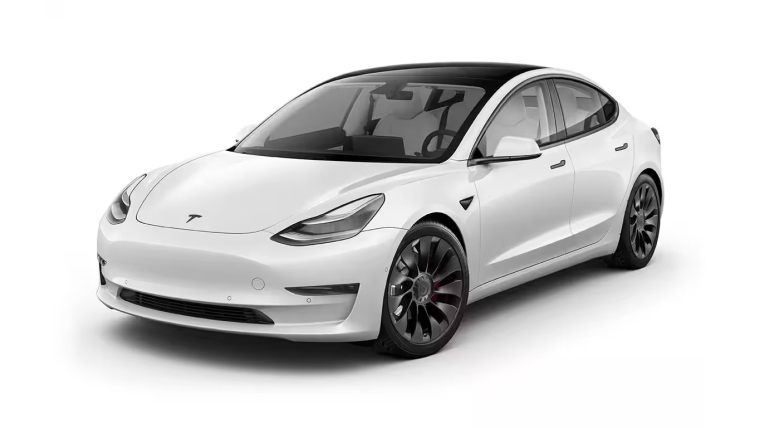
New research is out that points to battery electric vehicles now having lifespans comparable to diesel and petrol cars, even under intensive use. A group of researchers trawled through a large data set from Britain's Ministry of Transport (MoT), with numbers from 2005 to 2022. Almost 30 million vehicles are recorded in the data.
The researchers found that while early BEVs were not as reliable as internal combustion engine (ICE) cars, technological advances have seen them make rapid gains; they are now close to petrol vehicles for reliability, and have a longer lifespan of 18.4 years versus 16.8 for diesels.
Furthermore, the lifetime mileage of BEVs is higher than for petrol vehicles.
Tesla is the top-rated BEV in the research. It is the second most significant EV maker in the UK sample data, with Nissan being the largest.
Electric motors having fewer moving parts subject to wear and tear compared to ICEs, improved battery technology (Tesla claims theirs will outlast the life of the vehicle), are some factors behind BEVs' reliability.
All in all, the data shows BEVs are improving significantly, by a rate of 12 per cent per year, in terms of reliability and longevity.
Caveats such as the data being based on British conditions, the local car market there, and MoT testing, apply. It might not be directly translatable to other markets in the world with different conditions. BEVs are also represented in smaller numbers than diesel and petrol cars.
Here are some numbers collected by the researchers, in a simplified table using the 18-month preferred buffer time for missed MoT tests.
| Median lifetime (years) | Median life mileage (kilometres) | Number of observations | |
|---|---|---|---|
| All vehicles | |||
| Average | 17.8 | 221,392 | 29,858,458 |
| Average by powertrain | |||
| BEV | 18.4 | 199,865 | 41,640 |
| Diesel | 16.8 | 257,132 | 14,685,673 |
| Petrol | 18.7 | 186,744 | 15,131,145 |
| Average of top five makes by powertrain | |||
| Fully battery electric vehicles | |||
| TESLA | 20.3 | 328,616 | 7,810 |
| HYUNDAI | 15.6 | 223,033 | 192 |
| NISSAN | 18.8 | 196,344 | 20,449 |
| KIA | 18.5 | 187,520 | 438 |
| MERCEDES | 16.1 | 146,311 | 413 |
| Diesel | |||
| SKODA | 17.7 | 292,626 | 316,592 |
| VOLVO | 18.6 | 290,159 | 371,857 |
| LAND ROVER | 20.4 | 283,589 | 653,027 |
| VOLKSWAGEN | 17.6 | 282,654 | 1,572,090 |
| HONDA | 18.2 | 282,231 | 238,388 |
| Petrol | |||
| AUDI | 20.9 | 230,685 | 493,401 |
| VOLVO | 20.5 | 229,022 | 70,294 |
| LAND ROVER | 18.7 | 217,052 | 25,756 |
| LEXUS | 18.4 | 214,835 | 33,338 |
| SAAB | 17.6 | 213,987 | 38,591 |
(CC-BY-4.0; Attribution:Viet Nguyen-Tien, Chengyu Zhang, Eric Strobl and Robert J. R. Elliott).
We welcome your comments below. If you are not already registered, please register to comment
Remember we welcome robust, respectful and insightful debate. We don't welcome abusive or defamatory comments and will de-register those repeatedly making such comments. Our current comment policy is here.