
sign up log in
Want to go ad-free? Find out how, here.

ACT proposes introducing a bright-line test to make profits from digital assets exempt from tax if they're held for at least a year

Technology / news
ACT proposes introducing a bright-line test to make profits from digital assets exempt from tax if they're held for at least a year
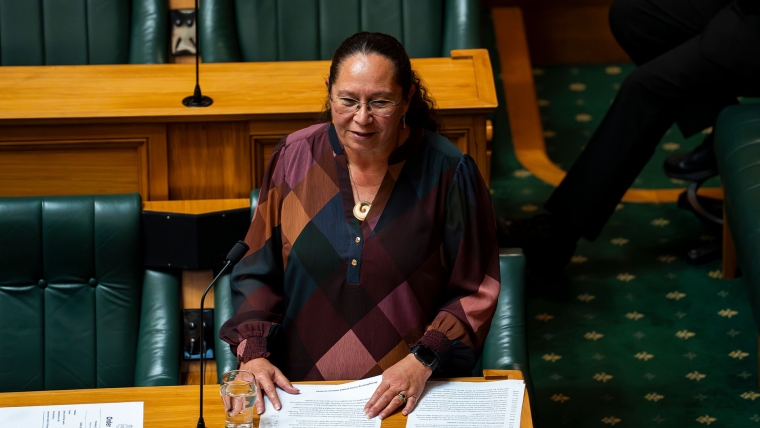
Nicole McKee, who is part of the ACT Party, is the Minister for Courts and the Associate Minister of Justice. Image source: Supplied

ACT is promising new digital finance rules and tax breaks to change the way New Zealand treats crypto currency and other digital assets, saying doing so would make it easier to invest and build new financial technology.

Deputy ACT Leader Nicole McKee said tokenised assets “can open up new sources of investment.”

“Stablecoins can make international payments faster and cheaper. New financial technology can create high-value businesses and jobs.”

The party promised to make profits from digital assets exempt from tax if they're held for at least a year, saying the country “should not rely on subjective assessments of why someone bought a digital asset”, the party’s policy statement said.

“Under a clear bright-line test, gains on qualifying personal investments sold within 12 months would remain taxable, while gains on assets held for more than 12 months would not be taxed. Professional traders and businesses would remain subject to the existing tax rules.

McKee said that proposal would give investors certainty “while keeping professional trading and business activity fully taxable so the system remains fair.”

They would also remove tax on low value purchases paid for by digital assets, saying Inland Revenue “should focus on significant taxable activity, not trivial transactions that create more paperwork than revenue.”

Proposed changes also included establishing “a supervised financial innovation sandbox where innovative businesses can trial new financial products before full licensing”, creating clearer rules for tokenised securities and real-world assets, and to also make new rules for qualifying payment stablecoins “to unlock faster, lower cost cross border payments.”

We welcome your comments below. If you are not already registered, please register to comment

Remember we welcome robust, respectful and insightful debate. We don't welcome abusive or defamatory comments and will de-register those repeatedly making such comments. Our current comment policy is here.

7 Comments

Lol. Which would mean that the OGs and long-term HODLrs of ratty, ETH, PaxGold, stables will enjoy CGT-free investments while the degenerates get hammered when chasing the 100x opportunity. Few things about this:

  • The OGs are likely to already have their house in order in terms of tax obligations 
  • As for the degens, my reckon that they could be using decentralized exchanges looking for the jackpot. Much harder for the tax authorities to keep an eye on this. 
  • There is a certain type of degen who gambles on sh*tcoins who will store their gains in rat poison (which makes sense when fiat currencies are being debased at an alarming rate). So it appears there is an escape hatch if they don't sell within a 12-month period from purchase. That doesn't sound too ominous but it all depends on which stage at the cycle they're at. For ex, if they buy in the bear mkt stage of the cycle, they're probably going to potentially going to have to wait for at least 2 years until the market starts moving. Not good for paper hands.   
Up
1

I believe ratty can be partly described as a Ponzi Power, but only if there is a central authority paying out earlier owners of BTC to new buyers. So who is the central figure? Exchanges, financial institutions? If someone buys BTC through a P2P mechanism, that doesn't really describe a Ponzi. The price paid may reflect the market rate of a Ponzi structure.      

Up
1

The Trump family's all-in stance on crypto makes me suspicious, and the $B1 point whatever profit their companies have made so far confirms my belief that the greater fool theory is alive and well, supercharged by the Trump administration's ability to twist the playing field to suit themselves wrt to mandated Treasury-backed stablecoins and other dodgy rule changes. 

I've noticed a lot of the NZ First and ACT proposals are just regurgitated MAGA talking points. The sooner those guys are removed as kingmakers the better.

Calling crypto an 'investment' when it's actually just a gamble, aims to fool people into believing it's a legitimate way to build wealth. 

Bitcoin doesn't earn interest. Stablecoins don't earn interest. On the other hand stablecoin issuers get wealthy via their Treasury holdings

Up
1

It is possible to stake and get staking rewards similar to term deposit type interest.

Risky in various ways, but it is possible.

Better chains pay for staking rewards from transaction fees. Worse ones through inflation and debasement of currency. So you know, sorta like the US Fed 😊 

Up
3

Better chains pay for staking rewards from transaction fees. Worse ones through inflation and debasement of currency. So you know, sorta like the US Fed 

I'm started to get more interested in sh*tcoins as speculative instruments - Hyperliquid and Ethena of course are up there. Might have missed the boat on the former but not on the latter. 

Up
1

Bitcoin doesn't earn interest. Stablecoins don't earn interest. On the other hand stablecoin issuers get wealthy via their Treasury holdings.

Not everyone believes owning BTC is a way to "get wealthy". Many people look at holding a proportion of their wealth in BTC is a way to preserve wealth as opposed to holding fiat currency. Quite similar to gold. Same same but different.  

That's completely different from owning Kioxia Holdings (ex-Toshiba Memory Corp), which is up 2,000% past 12 months or chasing the Aotearoa Ponzi.  

Up
3