
The Co-operative Bank's $1.425 million civil penalty for breaches of the Anti-Money Laundering and Countering Financing of Terrorism Act is "a very significant" one, equivalent to nearly three times its net profit after tax between October last year and March this year.
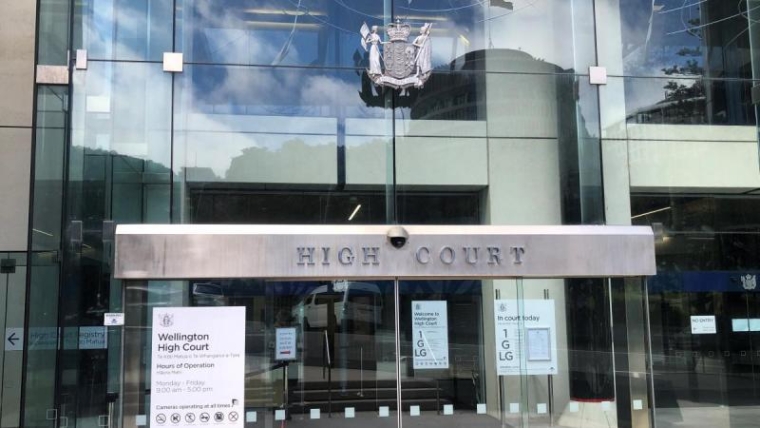
In a High Court judgment Justice Christine Grice has confirmed the $1.425 million penalty, which was agreed between Co-op Bank and its AML/CFT Act supervisor the Department of Internal Affairs (DIA). In a case initially brought by the Reserve Bank, Co-op Bank cooperated with the investigation, admitted the breaches and has addressed the deficiencies identified. The DIA took over as AML/CFT Act supervisor for banks from the Reserve Bank on July 1.
"The Co-op Bank agrees that the recommended penalty is consistent and appropriately penalises the conduct. It submits that the final penalty of $1.425 million is a very significant penalty for the Co-op Bank. To put that in perspective, in the period from 1 October 2025 and 31 March 2026, it reported a net profit after tax of approximately $500,000. The recommended final penalty of $1.425 million is nearly three times that figure, and sufficient to provide deterrence," Justice Grice's judgment says.
The maximum potential penalty Co-op Bank could have faced was $6 million. For the year to March Co-op Bank posted net profit after tax of $6.545 million.
Co-op Bank is the third New Zealand bank taken to court over AML/CFT Act breaches after TSB and ASB. TSB was fined $3.5 million in 2021. ASB was fined $6.731 million for seven AML/CFT Act breaches earlier this year in what was the highest AML penalty ever imposed by a NZ court.
In her ASB case judgment Justice Laura O’Gorman said ASB's failures were serious, occurred over a lengthy period of time and standards didn't meet what's expected from one of NZ’s largest registered banks. The maximum penalty ASB could have received was $13 million.
Justice Grice's judgment sets out that following an onsite inspection of the Co-op Bank in August 2023, the Reserve Bank was alerted by the Co-op Bank’s financial crime team to potential coding issues with some of its automatic transaction monitoring rules, which had first been identified by the bank in December 2022.
After a subsequent investigation, the Reserve Bank issued proceedings against Co-op Bank in May this year relating to three causes of action.
"In total, during the relevant period, between 1 January 2020 and 31 December 2024, Co-op Bank failed to trigger 7,845 alerts involving 36,744 transactions by up to 1,449 customers with a total value of approximately of $51.72 million," the judgment says.
"The Co-op Bank notes that the actual consequences of the failures were limited. In particular, no actual money laundering is alleged, and the alerts represented a small fraction of the Co-op Bank’s 70 million to 103 million annual transactions."
The three causes of action in the case related to compliance monitoring in the functioning of Co-op Bank’s transaction monitoring rules with issues dating to August 2020, the adequacy of Co-op Bank’s assurance activities, and failure to keep required records associated with the completion of transaction monitoring activities and suspicious activity reports for a minimum of five years after a transaction monitoring alert was closed or dealt with.
Each of the three causes of action had a maximum penalty of $2 million.
"In a case such as this where the parties have agreed on an appropriate penalty, in this case a total of $1.425 million, the Court’s role is to consider whether the proposed penalty is within the proper range rather than embark on its own inquiry on what would be an appropriate penalty," Justice Grice said.
The final $1.425 million penalty was reached by adopting a starting point of $850,000 for the first cause of action, $700,000 for the second and $350,000 for the third, giving an overall starting point of $1.9 million. Applying a 25 per cent discount reduction, results in the final $1.425 million penalty.
"A total penalty of about 25 per cent of the maximum penalty available ($6 million) is appropriate. As the Department points out, the agreed penalty reflects conduct more serious than inadvertent non-compliance, but materially less serious than cases involving brazen or wholesale disregard of the Act’s requirements. It also reflects the long-standing and systemic contraventions and its status as a registered bank. It reflects the seriousness of Co-op Bank’s civil liability acts and promotes the purposes of the Act," Justice Grice said.
"I enter judgment for the sum of $1.425 million against the Co-op Bank. That penalty must be applied first to pay the AML/CFT supervisor’s actual costs in bringing proceedings."
The Co-op Bank itself notes there were no allegations that it was involved in money laundering, terrorist financing or any other criminal activity, or that the non-compliance resulted in adverse customer impacts.
"The Bank previously acknowledged and accepted responsibility for these breaches and has worked constructively with both the Reserve Bank of New Zealand and now the Department of Internal Affairs as New Zealand’s sole AML supervisor from 1 July 2026. We have uplifted our capability, resources and systems to enable a strong and ongoing commitment to compliance," the Co-op Bank says.
John Sneyd, DIA's General Manager of Regulatory Services, says the judgment highlights the importance of effective AML/CFT systems and controls.
"New Zealand's AML/CFT regime relies on reporting entities having effective systems and processes in place to identify, assess and manage risk. Robust compliance programmes help support the integrity of New Zealand's financial system and maintain public confidence in it."
"This decision reinforces the importance of meeting AML/CFT obligations and maintaining strong compliance frameworks," Sneyd says.
*This article was first published in our email for paying subscribers early on Friday morning. See here for more details and how to subscribe.
We welcome your comments below. If you are not already registered, please register to comment
Remember we welcome robust, respectful and insightful debate. We don't welcome abusive or defamatory comments and will de-register those repeatedly making such comments. Our current comment policy is here.