

The world order is changing.
For decades, the benchmark interest rates were from the US Treasury market.
But that is changing fast recently. In fact since the start of 2024, and the second Trump presidency, financial markets have been bidding up US rates. And that is undoubtedly due to unease about US fiscal management.
That unease is turning more pointed.
There are many ways to measure the unease, but one that may resonate here for saver is the difference between the average term deposit rate in New Zealand, and the US Treasury benchmark yields.
Apart from a brief post-pandemic adjustment period, New Zealand term deposit rates were a premium to the US Treasury benchmark.
Now they are not. And the new discount to the US benchmark is as large as it has ever been and is almost 50 basis points (bps).
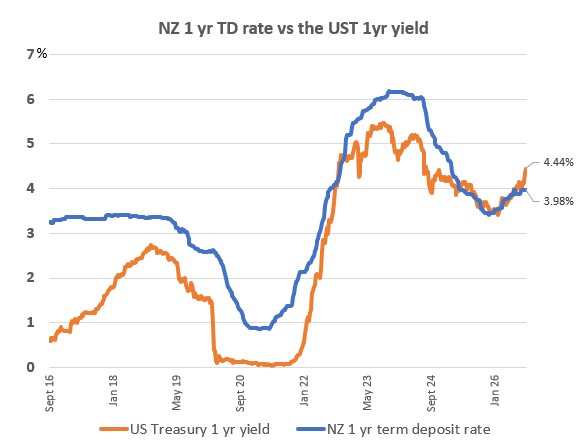
Although this chart only covers the past decade, it is true from when we started archiving New Zealand term deposit rates in 2002, almost a quarter of a century ago. And the premium New Zealand savers got over the US Treasury equivalent maxed out at 730 bps in March 2008 just before the Global Financial Crisis bit us, but had already affected bond markets in the US.
The question arises, will savers here ever earn a premium to the US benchmark again? No-one knows of course, certainly not us. But is hard to imagine the premium returning as long as the US fiscal situation stays bad with poor prospects for improvement. They will need a competent Administration first, and hopefully without a crisis to precede that.
The other thing that the US benchmark yields influence is asset prices, including residential and commercial real estate. Rising yields depress prices. That might lead to the worst of both worlds for New Zealand savers - stunted cash yields and falling property prices.
We welcome your comments below. If you are not already registered, please register to comment
Remember we welcome robust, respectful and insightful debate. We don't welcome abusive or defamatory comments and will de-register those repeatedly making such comments. Our current comment policy is here.