
By David Mahon*
The Chinese economy will continue to expand into next year, and social confidence will remain strong, even as the Chinese Government faces mounting economic and political pressure from abroad.
As the Chinese economy continues to recover from a sharp, first-quarter COVID slump, losses in the catering, tourism, hospitality, and entertainment sectors have been partly recovered elsewhere through growth in e-commerce, a surprisingly resilient property sector, robust health insurance market, and year-on-year increases in auto sales. But as many smaller enterprises in catering, retail, transportation and general services may never reopen, a significant minority of the labour force are unemployed. These sectors employ around 200 million people, many of whom are migrant workers from small towns and villages in central and northern China.
In a total workforce of 800 million, approximately 30 to 40 million are presently unemployed across all sectors. Not yet unmanageable social crises, un- and underemployment, and increased income disparity have the potential to erode the government’s credibility in the long term, just as it undermines so much Western social confidence now.
International observers often decry China’s heavy focus on stability and employment as socialist recalcitrance and a ploy to increase the power of the state-owned industries over the private sector. But China’s financial and fiscal policies are generally cautious and measured. The banks have increased credit to the private sector, while total social funding which rose in the first quarter, appears to be decreasing. Demand in China’s domestic market is such that, given present investment and consumption trends, China may achieve over 2% GDP growth in 2020, while stimulating its economy less than many Western countries.
China also enjoys the hard-won advantage of having implemented a strict, science-based COVID management regime, sacrificing some personal privacy for the sake of individual and community safety, and accepting deep, short-term economic losses to ensure longer-term economic stability.
The role of ideology
In crises, the West is often trapped by assumptions derived from laissez-faire capitalist ideology, leaving markets to correct anomalies that government interventions are often better able to repair. In contrast, the former Marxist-Leninist, People’s Republic of China now eschews communist economic orthodoxy, preferring to foster market forces while implementing strict regulatory tools. Quick to learn from their own and others’ mistakes, Beijing is presently stimulating the economy to sustain growth, employment, and consumption, while freeing capital markets, fintech initiatives, encouraging the issuance of corporate bonds, and opening its financial sector to greater foreign competition.
The Great Recession of 2008 to 2009 occurred because Western investment banks worked outside the constraints of already-weak regulations to generate higher profits. In the last four years, many Chinese banks also strove to circumvent banking regulations, but were checked by regulators, who did not just issue decrees from Beijing, but criss-crossed the country assessing balance sheets and the quality of assets. Regulators threatened severe penalties for non-compliance, thereby averting an explosion of unsustainable bank debt and shadow-banking liabilities. As compliance with financial sector regulation and governance (much of which has been adopted from the global system) has weakened in the West, it is strengthening in China.
The evolution of the Chinese banking and financial sector provides Western firms with increased opportunities stemming from domestic demand for high technology, imported components, raw materials, food, and agricultural products, creating the potential to lift the global economy out of the COVID recession, just as it did the Great Recession of 2008. But the world must allow China to do so.
Coalition of the anxious
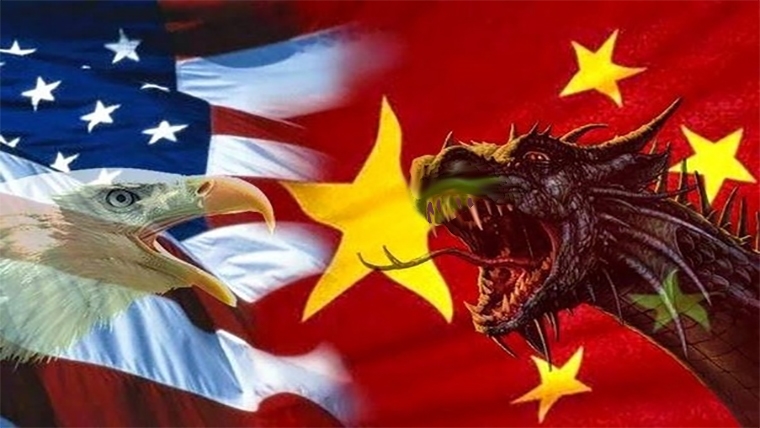
The bloc the United States is struggling to build against China will become little more than an ineffectual coalition of anxious allies, but it will still cause significant global economic and political damage, and may weaken China’s ability to help reignite the global economy. Washington’s actions will neither weaken the Chinese economy nor stem China’s inexorable rise. At no time since the Second World War has there been such a need for unity among the major powers to ensure the integrity of international public health, free trade, common wealth and stability. Seldom have the major Western powers been so darkly introspective and so poorly led.
China’s leadership is steady but needs to find better ways of communicating why it undertakes certain domestic measures, not in order to seek the approval of other countries, but to mitigate their frequent poorly-informed reactions. After a year of increasingly violent protests, Hong Kong needed to promulgate a security law. Beijing could have done more to allay the fears of the Hong Kong people and attracted less international condemnation by outlining limits to the law’s implementation.
The ‘wolf-warrior diplomacy’ of recent years reflects a strong nationalist vein in Chinese society, but it does not characterise all Chinese diplomacy. Within most populations there are nationalists, and the more powerful a country becomes, the more intense their nationalistic instincts. When empires falter, as the American empire is now, their inherent nationalism becomes desperate and aggressive.
Despite Beijing’s testy lapses of diplomacy, its general lack of reaction to Western barbs shows an attempt to abide by a principle of ‘action through non-action’, the power of sentient passivity (‘wu wei’ in Daoist and internal martial arts teachings).
China will need considerable patience and courage to face the blunt, petulant coercions of Washington and the wavering commitments of its trading partners, especially over the next three months. US Secretary of State Mike Pompeo stated in July that the aim of trade sanctions and prohibitions on Chinese tech companies was to bring about regime change in Beijing, but that they were not attacks on the Chinese people. This is the same point George W Bush made to the Iraqi people in 2003, before waging a war that led to the slaughter of hundreds of thousands of Iraqis.
Under present circumstances outright war is unlikely. In the face of growing domestic condemnation for the manner in which they have mismanaged the COVID-19 crisis, the Republican Party is groping for causes to distract its constituents from its own failings. Exaggerating the China security threat and emphasising that China is the architect of America’s domestic ills are crude tactics, but will resonate in an anxious, increasingly Sino-phobic society.
It would be naive to expect that the trust and respect between the United States and China built over decades, and now lying in ruins, may be rebuilt soon. One thing that Chinese people are unlikely to forget is that at their peak of suffering and dying of COVID-19, Washington tried exploit their vulnerability to extract strategic advantages.
Regardless of how polarised they may remain politically, the US and Chinese economies are intertwined directly and indirectly throughout the global trading and financial system in a way that makes Washington’s aim of ‘decoupling’ a fantasy. For all the sound and fury emanating from Washington in the form of threats to sanction China and block Chinese companies, American businesses are unlikely to allow their politicians to cut them out of the Chinese market that will be a key factor in their success for decades. China constituted 40% of global growth in 2019 and will be the strongest and one of the few growing markets in the world in 2020. Even though a Biden presidency will be no less anti-Chinese than the current administration, there are enough people with strategic common sense and humanity in Washington and Beijing for rapprochement to be possible, no matter how slow and painful.
*David Mahon is the Executive Chairman of Beijing-based Mahon China Investment Management Limited, which was founded in 1985.
We welcome your comments below. If you are not already registered, please register to comment
Remember we welcome robust, respectful and insightful debate. We don't welcome abusive or defamatory comments and will de-register those repeatedly making such comments. Our current comment policy is here.