

Food prices increased by just 0.7% in the 12 months to March, the smallest increase Statistics New Zealand has reported since April 2021.
According to figures released by Stats NZ on Friday, the 0.7% rise in the latest period is a steep decrease from the 12.1% food price surge seen in the 12 months ending March 2023.
Stats NZ reported the smaller annual increase was due to cheaper prices for fruit and vegetables which dipped down 13.3% in the 12 months to March 2024 and was driven by cheaper prices for tomatoes, lettuce, and avocados.
“The annual decrease in fruit and vegetable prices was the largest recorded since the series began in 1999,” Stats NZ’s consumer prices manager James Mitchell said.
ASB senior economist Mark Smith said the fall in food prices had continued the “soft run” they’d been experiencing and the bank expected the annual food price inflation to remain low over the rest of 2024.
“This will be a relief to beleaguered consumers and will help drive overall inflation lower,” he said.
Smith noted that ASB continues to expect people won’t want to pay higher prices for groceries and said discounts and deals from supermarket rebranding promotion will keep grocery prices from going up in the next few months.
Apart from fruit and vegetables, Stats NZ reported all other broad food groups increased in the 12 months to March 2024. Price movements, in order of their contribution, were:
- restaurant meals and ready-to-eat food prices – increased 6.4%
- grocery food prices – increased 1.7%
- non-alcoholic beverage prices – increased 4.3%
- meat, poultry, and fish prices – increased 0.2%
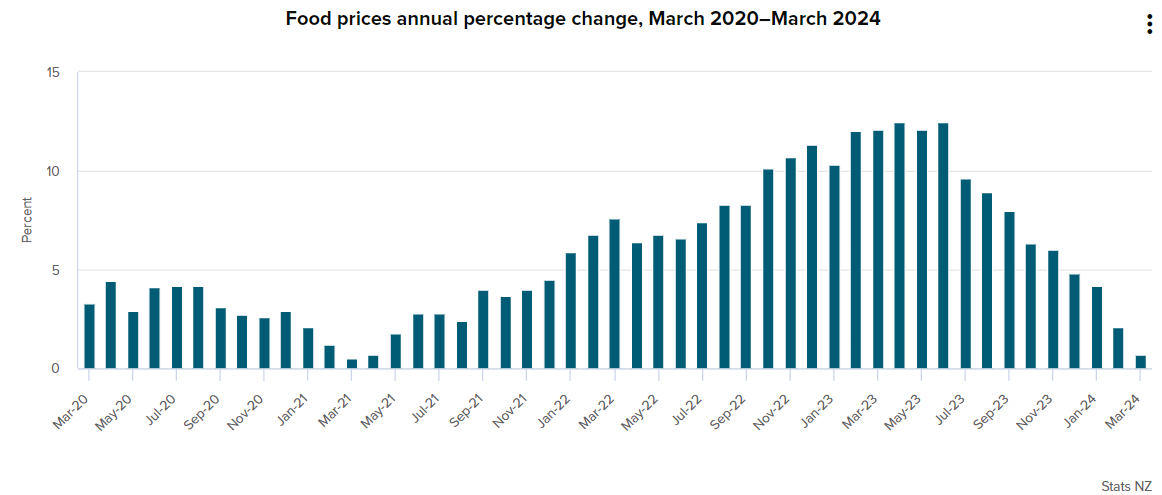
This is all according to the latest monthly release of Selected Price Indexes (SPI) by Stats NZ.
The SPI late last year replaced Stat's NZ’s previous monthly releases for food prices and rents and alongside those monthly indexes, they now also publish indexes for petrol, diesel, alcohol, tobacco, airfares, and accommodation.
Stats NZ's Selected Price Indexes incorporate about 45% of the Consumers Price Index (CPI), with the actual March quarter CPI being released next Wednesday. The SPI isn't meant to replace the CPI – which still comes out every three months – but is meant to give preview information about inflation.
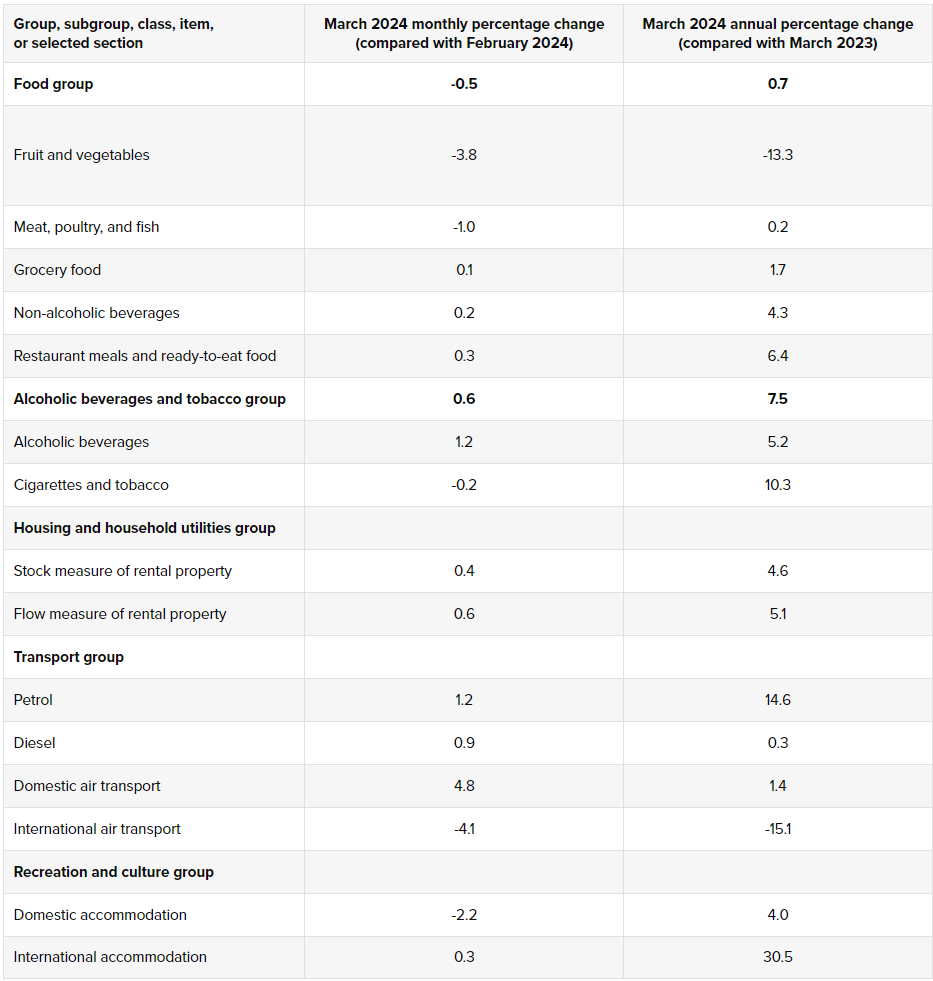
Stats NZ said monthly food prices had fallen 0.5% in March 2024 compared to February 2024.
Mitchell noted that food prices have declined in seven out of the last 12 months. The main drivers behind these monthly decreases were the fruit and vegetable category, led by reduced prices for kūmara, apples, and grapes.
Additionally, the meat, poultry, and fish category also played a role in lowering food prices, driven by decreased prices for lamb, beef steaks, and bacon.
In March 2024, alcoholic beverage prices saw a 5.2% increase compared to March 2023 when they were up by 1.2%, primarily due to a 7.1% rise in beer prices.
“The cost of buying a box of beer bought off license was 10% more expensive than a year ago, while a pint of beer at a bar or restaurant was 6% more expensive,” Mitchell said.
Tobacco prices – which sit under Stats NZ’s alcoholic beverages and tobacco group – were also up 10.3% compared to March 2023.
Petrol prices have rocketed up 14.6% since March 2023 but were up only by 1.2% from February 2024.
“Movements in global oil prices and the NZD will be pivotal, and we envisage some near-term upside. However, the dropping of the Auckland regional fuel tax from July and no increases to fuel excise over the next 3 years should help cap future fuel prices,” Smith said,
Going in the other direction is international airfares, which have fallen 15.1% in the 12 months to March 2024, and down 4.1% since February 2024.
“We still expect sizeable falls over 2024 as the COVID-19 premium unwinds,” Smith said.
Domestic airfares edged up 1.4% in the annual period and are 4.8% higher than February.
The cost of accommodation both internationally and domestically has increased in the 12 months to March 2024 – domestic by 4% and international soared up by 30.5%.
In terms of rents, which make up about 9.5% of the CPI and have been rising strongly in past SPI releases, the ‘stock’ measure of existing tenancies rose by 0.4% in March and an annual increase of 4.6%.
The ‘flow’ measure of new tenancies which can be volatile edged up by 0.6% on a monthly basis, while the annual rate of increase was 5.1% – down from 6% the previous month.
Here is the detailed SPI information as supplied by Stats NZ:
The March 2024 food price index figures follows a 2.1% food prices increase in the 12 months to February 2024, which was also considered low last month.
In the month of February there were signs of potential stabilisation in the rate of rent increases, alongside a resurgence in domestic airfares over that month.
Petrol prices in February also saw an uptick, while the cost of overseas travel accommodation for New Zealanders experienced a notable spike.
We welcome your comments below. If you are not already registered, please register to comment
Remember we welcome robust, respectful and insightful debate. We don't welcome abusive or defamatory comments and will de-register those repeatedly making such comments. Our current comment policy is here.