
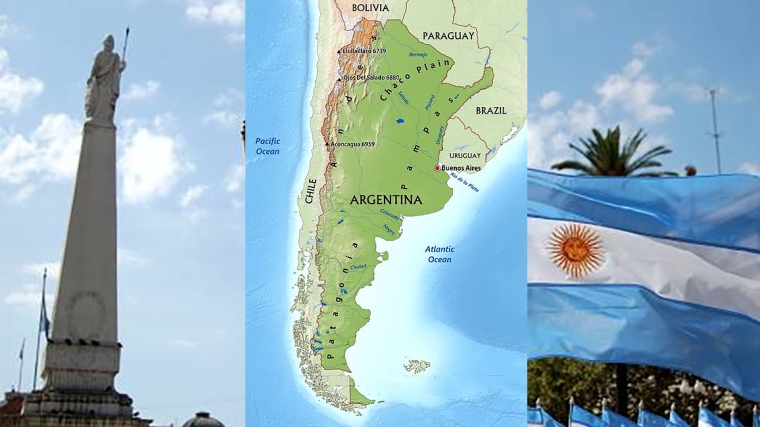
The following report provides a pulse-check of economic conditions in Argentina. The original is here.
Building on “The Argentine Economy – A Snapshot” [access the report here], we provide an update on progress and challenges in Argentina over the past year under the economic reforms implemented by President Milei.
Major Political and Policy Developments
IMF Programme and Key Reviews (July 2025 & April 2026)
Argentina’s 2025 - 26 macroeconomic stabilisation was anchored by a US$20 billion, 48 month IMF Extended Fund Facility agreed in April 2025, centred on fiscal surpluses, tight monetary policy and exchange rate liberalisation. The first IMF review in July 2025 unlocked US$2 billion, recognising strong early implementation of reforms despite reserve shortfalls. A second staff level agreement with the IMF in April 2026 cleared the way for a further US$1 billion disbursement following congressional approval of Argentina’s 2026 budget and improved foreign reserves.
La Libertad Avanza and Milei strengthen their position following the mid-term elections (October 2025)
In October 2025, Argentina held pivotal legislative mid term elections and President Milei’s coalition, La Libertad Avanza, significantly increased its representation in Congress. This result strengthened the parliamentary position of the governing coalition, facilitating continued policy prioritisation of deregulation, fiscal management, and integration into international credit markets. Improved market sentiment allowed both corporates and provinces to re-enter international debt markets, raising over US$14 billion, particularly in the energy sector. The Presidential election in mid-2027 may introduce some market uncertainty with a pre-election period of increased volatility, including pressure on the exchange rate and softer economic activity as investment decisions are postponed until the political outlook becomes clearer.
Trade Policy Liberalisation: EU-Mercosur, EFTA-Mercosur, Argentina-USTR, OECD accession
In 2025 and early 2026, Argentina has pursued a trade liberalisation strategy, both with its Mercosur partners and bilaterally. A significant step was the signature of the EU–Mercosur Association Agreement in January 2026. Argentina was the first Mercosur member to achieve domestic ratification the following month, positioning the deal as a cornerstone of long term market access and reform lock in. In parallel, Mercosur concluded a Free Trade Agreement with EFTA (European Free Trade Association) in September 2025, expanding access to European markets and reinforcing the bloc’s renewed outward orientation.
In February 2026, Argentina signed the Argentina–United States Reciprocal Trade and Investment Agreement (ARTI), reducing tariffs, easing non tariff barriers, and strengthening cooperation on digital trade, standards and critical minerals. Argentina’s OECD accession process and recent decision to seek membership of the CPTPP are clear commitments towards reducing trade distortions, aligning regulatory frameworks with international standards and deepening global economic integration.
Connectivity and Logistics
A new direct China Eastern flight connecting Shanghai, Auckland, and Buenos Aires was launched in December 2025, positioning New Zealand as a southern hub between Asia and South America. This is expected to stimulate not only tourism flows but also business travel and cargo efficiency across these continents. With outbound tourism from Argentina historically strong and facing limited long haul options, this new stopover route offers a competitive alternative for reaching Asia. China Eastern Airlines has now announced an increase from two to four weekly flights from December 2026, reflecting growing demand.
Macroeconomic Context
Fiscal consolidation has centred on achieving a zero primary deficit, reducing subsidies, and limiting public spending growth. In late 2025, the Argentine Congress approved the 2026 budget, projecting annual inflation of 10.1%, GDP growth of 5%, and a fiscal balance. While inflation will be higher (it has already reached 11.4% in the first four months of 2026), and GDP growth less (with current estimates at 3-4%), the economy is significantly more stable and growth is back, driven by a strong agriculture and energy exports (demonstrated by a record USD 8.9 billion worth of exports for the month of April).
A welcome recent development is the 21 May announcement of a phased reduction in export taxes which will provide increased predictability for key sectors of interest to New Zealand business and encourage further investment and growth. While there has also been some progress on labour reform it is politically difficult and slow going, and the necessary overhaul of the tax system
Inflation
Under the Milei administration inflation has declined sharply, from 211.4% in 2023 to 31.5% in 2025. This has been achieved through tighter monetary and fiscal policies and a sustained reduction in energy subsidies. While this downward trajectory has recently stalled at around 3% per month, driven by sensitivities related to exchange rate policy as well as higher transport and utility costs from the Middle East conflict, the overall trend remains positive.
Poverty, unemployment and income indicators
Poverty has fallen significantly from its 2024 peak of more than 50% to 28.8%, supported by stabilisation and improved real incomes in 2025, though gains are uneven. Wage growth has recently begun to lag inflation again, reflecting emerging pressures on household purchasing power which are also reflected in growing consumer debt.
Exchange Rate Dynamics
The Argentine peso exchange rate has been managed towards greater stability, supporting import planning. In April 2025, the Central Bank of Argentina (BCRA) introduced a managed float within an exchange-rate band (initially ARS 1,000–1,400 per USD), lifting most currency controls and allowing freer trade settlement. These measures, in addition to the stability of the exchange rate since the mid-term elections, have reduced volatility and improved predictability for foreign trade operations. While full pre-payment of imports is not yet possible capital goods imports now benefit from more flexible arrangements, allowing 30% pre-payment, a further 50% upon clearance at the port of origin and the remaining 20% upon registration of the customs entry.
As Argentina seeks to accumulate greater foreign reserves and build credibility, exchange rate policy will remain closely watched by external creditors, foreign trade operators, and financial markets as an indicator of continuity of the broader economic reforms and political stability.
Developments and Opportunities in Key Sectors
Agriculture and Agribusiness
The country’s agriculture sector commenced 2026 with one of the strongest outlooks seen in recent years, supported by rising commodity prices and favourable weather conditions. The 2025/26 wheat harvest has already broken national records, with production estimates reaching 27.7–27.8 million tonnes, up nearly 50% from the previous season. Soybeans one of Argentina’s main export crops together with its derived products are also performing strongly, with 2026 forecasts of 48-49 million tonnes, in line with recent historical averages.
The sector could further benefit from macroeconomic stabilisation and ongoing deregulation efforts aimed at reducing trade and production costs. Small and medium-sized farmers are expected to gradually regain purchasing power and financing. There is strong demand for agricultural financing, with producers rapidly taking up recent credit lines offered by the National Bank, both in pesos (at about 12% rates) and US dollars (including 0% financing) with nearly USD 12 billion in applications submitted during the recent Agroactiva trade show. This creates opportunities to sell agritech solutions including precision farming technology, smart livestock farming systems, management tools, innovative farm equipment, and logistics improvement solutions, where New Zealand firms excel and have a strong reputation.
Natural Resources: Energy and Mining
Energy and mining are central to Argentina’s economic growth. The country combines strong renewable energy potential with significant oil, gas, and lithium reserves, including Vaca Muerta (the second largest shale gas field and fourth largest shale oil field in the world) and the Lithium Triangle (with Argentina being the second or third largest lithium resource holder globally depending on the methodology used).
Recognising the strategic importance of these industries, the government introduced the Large Investment Incentives Regime (RIGI) in July 2024 to attract long-term projects above US$200 million. This regime offers 30 years of preferential tax, trade and foreign-exchange benefits. As of April 2026, 14 projects totalling more than US$28 billion had been approved (and 22 other projects are being reviewed) across oil, gas, lithium, and wind and solar investments.
Most recently, the government announced the Medium Investment Incentives Regime (RIMI), designed to incentivise purchase of capital goods by Argentine SMEs through accelerated depreciation of income tax and VAT recovery over a 2-year window. It also provides additional advantages for irrigation systems, livestock genetics and energy efficiency projects. While RIMI is not yet operational, it will be of particular interest for New Zealand businesses as it specifically targets farming systems and equipment, high energy efficiency assets, anti-hail nets for the agriculture sector, and eligible livestock.
Digital Economy and Services
Argentina’s digital economy continues to show strong momentum, supported by widespread connectivity and a dynamic tech ecosystem. E-commerce continues to expand at exceptional speed, with more than half a million new e-commerce platform users in 2024 according to the Argentine E-commerce Chamber. The growing availability of data, widespread broadband adoption and an increasingly tech-skilled workforce provide favourable conditions for artificial intelligence applications in areas such as customer analytics, agritech, fintech and digital public services, providing the potential for partnerships, software exports, and innovation exchange.
Conclusion
Argentina’s economic outlook is increasingly robust with significantly reduced inflation, a continuing trade surplus, and poverty and unemployment rates trending down. Broad and deep economic reforms including rapid deregulation have laid the groundwork for renewed market confidence and economic growth and Argentina’s determination to advance global economic integration through FTA and OECD accessions indicate a more sustained commitment to open trade than in the past.
While the outlook is positive and progress towards macroeconomic stability has been impressive there is still some way to go on the reform journey. Difficult but necessary tax and labour reforms are still to be implemented and further progress on exchange-rate policy and building of foreign reserves needed. Inflation and poverty rates, while improved, remain high by global standards, so continued reduction will be important to track. The sustainability of the economic turnaround also remains uncertain, with much depending on the result of next year’s Presidential election.
Despite the ongoing challenges, for New Zealand businesses, especially exporters focused on agriculture, energy and mining, and digital services, Argentina offers more opportunities than it has in decades and is worth some attention.
We welcome your comments below. If you are not already registered, please register to comment
Remember we welcome robust, respectful and insightful debate. We don't welcome abusive or defamatory comments and will de-register those repeatedly making such comments. Our current comment policy is here.