
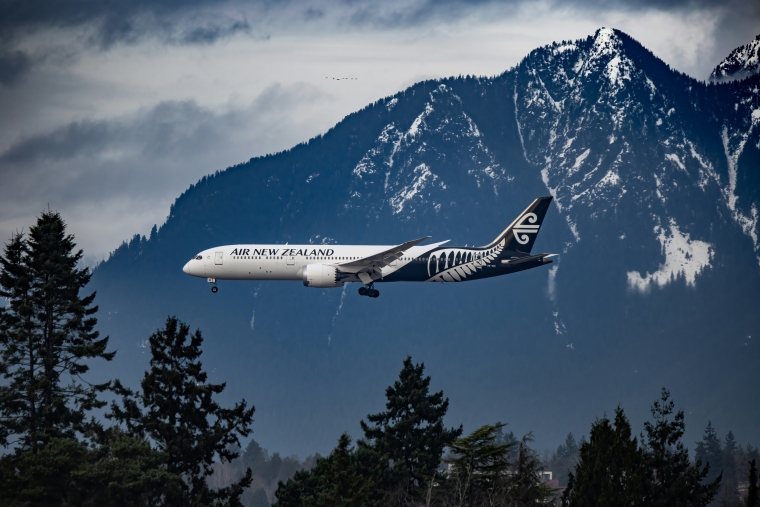
Air New Zealand reported an annual net loss of $242 million as soaring jet fuel prices, aircraft maintenance and aviation system costs sent the airline’s annual earnings into a nosedive.
The national carrier, which the NZ Government owns a 51% controlling stake in, posted a loss before taxation of $336 million and a net loss after tax of $242 million for its June 2026 financial year.
Air NZ described the year as "a very challenging" one for aviation, a “peak aircraft maintenance year,” and said it's not paying a dividend compared to a 2.5 cents per share dividend for its June 2025 year.
The net loss is, however, less than the national carrier had previously forecast in May, when it told the NZX it expected an annual net loss after tax of between $340 million and $390 million, driven by trading conditions and high jet fuel prices.
Air NZ described the result on Friday as “slightly better” than its May forecast and said the company’s earnings reflected the combined impact of increased fuel prices, the ongoing impact of multi-year engine availability issues, lifecycle maintenance costs and additional maintenance costs on leased engines and aviation system costs rising at a rate well above inflation.
In particular, Air NZ said the Middle East conflict increased fuel costs by an estimated $328 million compared to what the company originally expected going into the second half of the 2026 financial year, and by $205 million after hedging. Increased fuel costs had an estimated $135 million impact on the pre-tax result after fare adjustments and capacity reductions.
“While fuel prices declined 4% in the first half of the financial year compared to the same period last year, this was more than reversed by a sharp 58% increase in the second half compared to the same period last year,” Air NZ said.
Jet fuel prices averaged US$111 per barrel in the 2026 financial year, compared with US$88 per barrel in 2025, according to the airline.
Engine issues impacted the result by an estimated $190 million, Air NZ said, through lost capacity, additional lease and engine costs, lower fleet utilisation and operating inefficiencies. The engines affected were the Rolls-Royce Trent 1000 and Pratt & Whitney PW1100.
The national carrier said aviation costs in NZ have also risen at more than twice the rate of inflation since 2019.
“Air New Zealand and our customers’ share of these aviation system charges across New Zealand and the offshore ports we fly to was $1.2 billion in 2026, a price increase of $142 million on 2025,” the airline said.
“Of this, approximately $720 million was recognised as a cost in our financial statements in 2026, a price increase of approximately $83 million compared to 2025.”
Air NZ added that the June year had been a “peak aircraft maintenance year” due to lifecycle maintenance costs and additional maintenance costs on leased engines. Aircraft maintenance costs jumped $139 million higher, excluding foreign exchange, compared to 2025.
'A very challenging year for aviation'
Air NZ’s total revenue in the 2026 financial year was $7.0 billion, up 3.9% on the prior year, while passenger revenue came to $6.1 billion, up 4.8% on 2025. Cargo revenue edged down 0.6% to $484 million, as higher fuel costs affected freight demand.
Operating cash flow fell 12.9% to $819 million, compared with $940 million the year before.
Available seats per kilometre (ASK) capacity, which is the metric used by airlines to measure total passenger-carrying capacity, was up 1.3% across Air NZ’s network from the previous year, as aircraft returned to service, but was “partly offset” by capacity reductions as the airline responded to elevated fuel prices.
Air NZ chair Therese Walsh said the airline’s annual results reflected the “significant external pressures the business has faced in the last financial year.”
Air NZ chief executive Nikhil Ravishankar said the airline had responded “decisively” to the increase in fuel prices and the prolonged engine constraints.
“It’s been a very challenging year for aviation, and our financial result reflects these challenges. Given the price sensitivity of air travel, airlines globally have not been able to recover the full increase in fuel costs. We took quick and decisive action through fare adjustments and capacity reductions to balance affordability for customers and maximise recovery and will continue to do so,” he said.
Ravishankar said Air NZ was making progress on what the airline “can control”, including improving its on-time performance from 77.5% in 2025 to 84.0% in the second half of the financial year, alongside a 0.9% improvement in customer satisfaction.
The airline is not paying a dividend in the 2026 financial year.
Airport charges at some ports expected to increase up to 10%
The Middle East conflict has put such a damper on the airline’s outlook that it didn’t include guidance for the 2027 financial year in the annual results.
“Given the continued uncertainty surrounding the conflict, the volatility of jet fuel prices, and with jet fuel currently around US$150 per barrel, the airline is not in a position to provide earnings guidance for the 2027 financial year at this time,” Air NZ said.
But the airline expects it to be “both a transition and recovery year” and for operational performance to continue to improve “even as elevated fuel prices weigh on profitability.”
Excluding fuel, the major factors that impacted the 2026 financial result are expected to continue to have some impact in the 2027 financial year, just to a lesser extent, Air NZ said.
Aircraft maintenance costs are expected to be $50 million to $100 million lower than in the 2026 financial period, while aviation system costs will “continue to rise well above inflation”, with airport charges expected to increase by upwards of 10% at some ports during the 2027 financial year.
Disruption from engine availability is expected to reduce “substantially” as more aircraft return to service, although the airline warned there remains an estimated financial impact of “between $70 million to $90 million” in the 2027 financial year from a combination of continuing lease commitments related to engine issues and available aircraft not able to be fully utilised due to the fuel crisis.
Ravishankar said Air NZ was currently seeing “encouraging inbound demand” and strong forward bookings into the country.
“This is a positive signal for tourism and for the country more broadly,” he said.
Following the release of the results, Air NZ's shares were up 1.3% to 39 cents in early morning trading on Friday.
We welcome your comments below. If you are not already registered, please register to comment
Remember we welcome robust, respectful and insightful debate. We don't welcome abusive or defamatory comments and will de-register those repeatedly making such comments. Our current comment policy is here.