
By David Mahon*
The greatest victory is that which requires no battle.
Sun Zi, Chinese general / sage, 6th century BCE
China recorded 5.3% GDP growth in the first quarter of this year. Industrial production expanded 6.1%, primarily from increased exports and retail sales, which grew 4.7%. China’s economic recovery is stronger than most analysts, including its own Ministry of Finance, forecasted. Imbalances in the housing sector and local government accounts remain, and social morale is still relatively weak.
Senior leaders seem to misunderstand the degree to which millions of people — who once trusted them — remain sceptical of their decisions following the policy blunders at the end of 2022. Some in the Chinese middle class fear that Beijing will continue to marginalise the value of their assets. Chinese householders are uncommonly resilient, and most are simply waiting for the economic environment to change before investing and spending again.
Today’s leaders may not readily express the empathy and understanding needed to rebuild public confidence as their predecessors did, but key decisionmakers in Beijing seem finally to be grasping the country’s economic challenges with a sense of direction they did not possess at the end of last year.
Despite lower confidence and some mis-steps, the Chinese economy will continue to expand into 2025, creating demand for imports of raw materials, components, food and household products, and ultimately foreign investment. China is transitioning from a model of high-risk growth, fuelled by real estate speculation and investment booms, to one founded on the fundamentals of a large, more mature economy with the potential to deliver slower but more sustainable growth.
Manufacturing nexus
Chinese factories have built critical links within global supply chains over recent decades, giving them high degrees of commercial leverage. Foreign companies may relocate factories to other countries, such as Vietnam and Mexico, but rather than diminishing China’s position in global production, this further strengthens it. Few companies can replicate the holistic strength and efficiency of Chinese supply chains, and so continue to procure components and semi-finished products from manufacturers on the Mainland.
Apple, with a market value of US$2.6 trillion (second globally only to Microsoft), is increasing its investment in Chinese supply chains for its global business, despite losing market share to local smartphone competitors. Where once China’s abundant supply of cheap, low-skilled labour gave its factories advantages over global competitors, it now draws on deep pools of skilled, competitive white-collar workers and technicians, and therefore leads the world in manufacturing automation and robotics in many industries.
After the US, China is the world’s largest investor in research and development, committing US$422 billion in 2022 and US$526 billion in 2023, primarily in computing, electronics and advanced technology, led by Huawei, Tencent and Alibaba. The Chinese economy is unique in offering domestic firms highly-competitive home markets for wide ranges of goods and services that no other economy can match, so when they enter global markets, they are lean and competitive. This is a greater factor than government subsidies for China’s advantages.
US Treasury Secretary Janet Yellen challenged China for its ‘over-capacity’ on her recent visit to Beijing. It showed her lack of understanding of how the Chinese economy has evolved. There are excess inventories in some sectors, but they are largely the result of lags in both domestic and global demand post COVID, not conspiracies to dump goods in foreign markets in order to break competitors. As China has released economic data over the past year, it has either been criticised by US officials and commentators for indicating China is not recovering fast enough and therefore delaying global recovery, or for growing too fast and taking unfair advantage of others, often in the same publications.
It is a dangerous irony that for all the shared understanding that the world needs to reduce emissions in the vehicle sector and develop economically viable solar technology, the West would still treat China as a pariah instead of leveraging the opportunities offered by China’s development of affordable electric vehicles and solar panels. Chinese EVs and solar panels are subject to swingeing tariffs to protect outdated, polluting vehicles and less cost-effective EV models and solar panels.
Partners in hegemony
Secretary Yellen’s visit was similar to that of Secretary of State Anthony Blinken’s: a sword sheathed in a dry, brittle olive branch. Washington exchanged diplomacy for might over a decade ago. Even before Blinken left Washington, he accused China of supporting Russia’s war with Ukraine militarily and interfering in American elections. The days of the US Government stating grievances behind closed doors, while expressing goodwill externally in order to maintain its relationships and support market confidence, have passed.
To justify war, a state needs to ensure its people learn to fear or even hate the people of the opposing country, to blame them for the problems of their day-to-day lives, and to cast them as threats to their freedoms. Many in Washington have gone to great pains to ensure Americans see China as their enemy. China has not reciprocated by demonising the American people, although the state media does respond peevishly, focusing on American social ills from time-to-time. Chinese people still have a generally favourable view of Americans. Three million Chinese students have studied in the US since the 1980s and over a million studied abroad generally in 2023.
Anti-China media reports reflecting increased geopolitical biases are having an inordinate influence on stakeholders and boards of foreign companies invested in China. The US and European media have unified against China in a manner unparalleled since the anglophone media joined en masse, absent a few commentators, to support the US invasion of Iraq in 2003.
Washington is coercing the UK, Canada, and Australia to contain China, and increasing pressure on the European Union to do the same as the Russia-Ukraine War grinds on. Due in large part to US pressure, Germany’s economic partnership with China — once an exemplar of European-Chinese cooperation — is diminishing. German companies already manufacturing in China such as BASF, Volkswagen and BMW will continue to prosper, but many medium-sized German and EU firms, which would have otherwise thrived in China, are deciding against investing there, fearing they will be sanctioned by the US if they do.
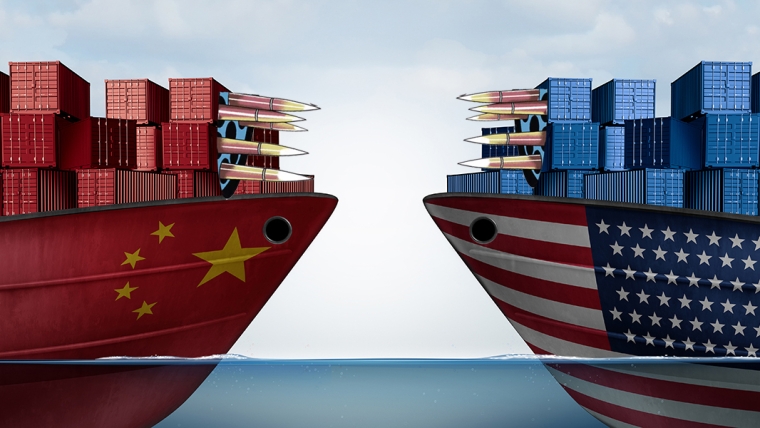
Chinese commercial partnerships with the non-Western world are filling the gaps created by US-led disengagement. The trade war Trump initiated and that Biden maintained has to date, according to the Brookings Institute, cost nearly 300,000 American jobs, and a loss in US company stock value of at least US$1.7 trillion. Yet both Democrats and Republicans are clamouring for more tariffs and embargoes, the latest being Tik Tok, which will remain (unless banned) the key delivery platform for Democratic Party campaign advertising, far outpacing television ads. President Biden has just increased tariffs on EVs, solar panels and a slew of other items, contradicting his earlier challenges to Trump’s boast that trade wars are easy to win.
Beijing maintains tariffs and non-tariff barriers against US goods too, inflicting unnecessary harm on its economy. If Beijing scrapped all politically motivated tariffs tomorrow, it would strengthen its economy and win over many foreign companies, leading some to lobby their governments to see China in a more objective light.
The AUKUS chimaera
The Chinese Government has demonstrated that China is willing to sacrifice short-term economic gains in order to maintain medium to long-term social stability and national security, reducing dependence on unreliable trading partners in the process. Many small and medium sized nations have spent decades building trust with Beijing. An example is New Zealand, which despite being a small nation of little political agency, forged a unique relationship with what was a developing China in the 1990s and 2010s, from which it has benefited hugely as China evolved to become the world’s largest economy by purchasing power parity.
New Zealand was the first developed nation to secure a free trade agreement with China, against stiff opposition and even condemnation from Washington, Canberra, London, and Brussels. Soon afterwards, it signed with Beijing’s assent a separate free trade agreement with Taiwan, one of the few developed nations apart from Singapore and some Central American countries to have done so. At times New Zealand’s rapport has been the envy of Western embassies in Beijing, but the relationship is at risk due to the New Zealand Government’s apparent interest in joining AUKUS, Pillar II. Although losing its nuclear-arms focus, Pillar II appears to carry on the main pillar’s intent to contain China, but by another name. The whole initiative has been framed as non-threatening and strategic, but it is hard to see the US funding it adequately, or crafting functional strategic objectives. Yet Washington’s solicitations of additional partners may serve as a sort of wrecking ball, damaging long-standing regional relationships with China.
New Zealand risks destroying 50 years of balanced, non-allied status in the Asia-Pacific region, a period during which it followed the principles of international law rather than the whims of its historical allies. The same allies have violated these principles from time to time (New Zealand refused to join the US invasion of Iraq), as has Beijing on occasion.
Henry Kissinger said, ‘The US does not have allies, only interests.’ Countries like New Zealand should consider what it has to gain by being a passing ‘interest’ to Washington. No American president has ever hosted a state banquet for a New Zealand Prime Minister or discussed a free trade agreement comprehensively. Small Asia-Pacific nations should be wary of grasping at the shadows of past alliances out of fear of a bewildering present, or an uncertain future. Most Southeast Asian countries understand this well, and informed by their histories of pushing colonial powers out, maintain relationships with countries in deep disputes with each other with equanimity.
If New Zealand were to join the so called AUKUS II, Beijing would not likely embargo Kiwi products as swiftly as it did Australian barley, wine, seafood, and beef. New Zealand has managed to maintain a regular, respectful dialogue throughout the past two decades. But it would send a signal that New Zealand is not as independent as it claims. Over time, Beijing would likely re-assess its relationship with New Zealand, a country that produces goods that can be replaced by those from other countries.
Mitigation
Firms from countries in political disputes with China may mitigate future commercial fallout by forming collaborations with local Chinese business partners, often without significant capital investment and leveraging instead intellectual properties, marketing skills and other more intangible assets. The testimonies of US and Australian firms over the last five years indicate that those established in the Chinese domestic market suffered little when their governments openly challenged Beijing, even after their governments imposed sanctions. Foreign firms of scale and influence do however need to speak plainly to their own politicians in regard to China. With all the talk of Chinese companies being afraid to challenge their government’s policies, there has been too little criticism of foreign companies’ timidity in respect of their politicians. More Western managers might question the fallacy that the democratic West is always right, and China as a one-party state must always be in the wrong.
When political considerations rather than economic factors become the overwhelming drivers of trade policy, it is fair to assume the country risks heading toward conflict and even war. Commentators have been using the term ‘cold war’ lazily to describe Washington and Beijing’s relations for some time. But now, it is hard to envision realistic alternatives to the two countries creating some sort of modern cold war. ‘Cold’ wars may mean the key protagonists are not killing each other’s citizens directly, but history shows us that millions can still become mired in proxy conflicts, to suffer and possibly die. From 1945 to 1990, Washington and Moscow’s respective proxies lost between six and seven million lives in the causes of their champions — over 140,000 deaths per year. A cold war between the US and China in the 21st century will likely, however, differ from the 20th century version.
Beijing does not want war, evidenced by its military expenditure over the last two decades, which has been largely naval and defensive. China spends just over half of Washington’s military expenditure of 3% of GDP. Historically, China has not been a territorially expansionist power, not necessarily because it is any more peaceful, but because it was already so large and difficult to govern. If China’s vital economic interests were to be marginalised, such as the loss of freedom of navigation through the Straits of Malacca, this could change. But China knows it cannot ‘win’ a military conflict with the US.
Europe and the US make much of China’s claims to ‘rocks and reefs’ in the South China Sea, but the weight of provocation in the region is with the US, for it currently maintains 375,000 military and civilian personnel across the Asia-Pacific in hundreds of installations in nations with which it shares no borders. The largest American base outside the US is in South Korea, only 540 kilometres from the city of Dalian, a city of six million Chinese citizens. China has one military base outside its borders in Djibouti, and this is largely for commercial maritime security.
A temporary calm
Asia’s diverse nations have avoided war since Vietnam’s 1979 invasion of Cambodia to end Pol Pot’s holocaust. This triggered China’s simultaneous month-long campaign in North Vietnam, inexplicably in support of Cambodia, but also to cauterise Vietnamese incursions along its southern border. This year, despite a history of enmity spanning thousands of years, Vietnamese and Chinese coastguard vessels are conducting joint patrols along maritime borders to combat smuggling and piracy. Absent Kim Jong Un’s ballistic fulminations, Myanmar’s seemingly fathomless sorrows, and scattered, largely contained separatist movements in a few countries, Asian nations have at least been at peace with each other for 45 years.
The American Empire will likely continue to contract, even as American financial and economic power prevails. The present US-China conflict is unlikely to end in a clear victory for one and abject defeat for the other, but rather in begrudgingly accepted compromises. It is also important to note that American and Chinese political exchanges often have more to do with each government dealing with its domestic issues than consciously reacting to the other.
China needs to maintain its low-key reactions to Western challenges while allowing its economic strength to express itself naturally. Beijing could improve internal and external transparency and recover more public trust. It could do more to catch up with its enquiring, widely travelled middle class, which bypasses government information firewalls at will, are increasingly indifferent to government propaganda, and continue to educate their children overseas.
Washington and Canberra tend to underestimate the strategic acumen of Southeast Asian nations, holding them in a time warp of outdated assumptions. Most of these countries are no longer the vulnerable proxies for great power competition that they were from the 1950s to 1970s, but educated, prosperous, open nations, tenaciously resistant to outside coercion. The Philippines are possibly an exception, and already the focus of US coercion. Washington may well allow a clash between the Philippines and China to effect a proxy US shot across China’s strategic bow. Asia, far more than the relatively contained conflicts in Ukraine and Gaza, has the potential to be the theatre of a clash of great powers.
The more Washington tries to force regional alliances and demand Asian countries to choose sides, the more they will alienate nations from the United States. It would help if the US dropped its term ‘Indo-Pacific’, which it would deny is a signifier for its efforts to create an alliance in the region against China. The very omission of the term Asia offends, unsurprisingly, many in Asia.
The Asia-Pacific’s real political future lies in an uneasy equilibrium in which neither China nor the US are hegemons, but both hold each other loosely to account, and no nation holds another’s trade or sovereignty hostage. This would ensure that regional and global trade may flourish. There are no assurances from Washington or Beijing, but neither side have drawn their swords fully from their scabbards, and so there is still time and opportunity to realise a more stable future.
David Mahon was also a guest on a recent episode of our Of Interest podcast. You can listen here.
*David Mahon is the Executive Chairman of Beijing-based Mahon China Investment Management Limited, which was founded in 1985. This article is here with permission.
We welcome your comments below. If you are not already registered, please register to comment
Remember we welcome robust, respectful and insightful debate. We don't welcome abusive or defamatory comments and will de-register those repeatedly making such comments. Our current comment policy is here.