
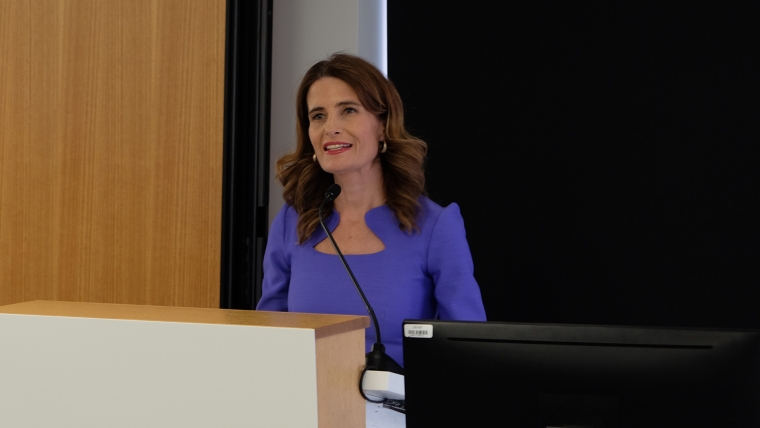
National Finance Minister Nicola Willis says returning to surplus is a priority for National, refusing to be pulled into a "rule in, rule out game" when it came to potential income tax changes.
"Today is about opening the books and demonstrating to New Zealanders that our plan is working”, Willis said at the release of Treasury's pre-election economic and fiscal update (PREFU) on Tuesday.
PREFU shows what the Treasury, the Government’s lead economic and financial adviser, is observing in the current economic and fiscal climate before a general election. It also includes future projections and potential risks over the forecast period.
Asked about potential to change tax settings, Willis said it was “important to note" that the surplus had not been delivered yet.
The Operating Balance Before Gains and Losses excluding ACC (OBEGALx), is now expected to return to surplus in 2027/2028 – one year earlier than in this year's Budget.
“Achieving that surplus is a priority for the National Party because that is what is required to secure New Zealand and ensure that we have lower debt in the future, and that we are more resilient to international shocks," Willis said, responding to questions about tax.
She was not prepared to allow for the surplus to be pushed out another year.
Asked about bracket creep (when inflation bumps up nominal wages leading to people being placed into higher income tax brackets even though they haven’t had an increase in purchasing power), earlier this month, Willis said if elected back into government, National’s position is to stick to budget responsibility rules.
After that, they would then prioritise “adjusting tax settings so that working people on average wages aren’t being slapped with bigger and larger effective taxes every year.”
The NZHerald also reported Willis had in July received advice on how much tax workers were paying due to bracket creep.
It followed ACT Party David Seymour, who last week told interest.co.nz he would much rather be in position where the government's in surplus first, before asking, "should people be able to keep more of what they make, and then start getting back to a balanced budget, but with less tax."
"The number one priority is balance the books. Number two priority is do it without adding new taxes, and then - and only then - you can start to talk about reducing tax."
Seymour said it was irresponsible to cut taxes; "if it means you're going to increase borrowing, because that's not really cutting taxes, that's just putting more tax onto future generations that will have to pay back that debt with interest."
"What's responsible is to get back to a balanced budget, and that's going to involve the government getting smaller and more efficient. And we've got a few ideas about that. And then, once you're paying back debt, then you can say, okay, time to cut taxes."
Labour looking under the hood
Labour finance spokesperson Barbara Edmonds, who has only just seen the economic and fiscal update, said they were going through the figures when asked if her party would match the timeline for a surplus.
"We're still going to take some time to go through the whole of PREFU, for example, and make the adjustments that we said that we'll need to do, and we'll release it as part of our fiscal plan, and be certain on that as part of our fiscal plan."
On the state of the books looking slightly better than expected, Edmonds said after "a quick read through PREFU, it's quite clear that fiscal drag is part of it."
If the Government needed to do something about fiscal drag, Edmonds said - if fiscal drag policies were to be announced - the Government would; "need to show how they're going to make those cuts before the election, so New Zealand can actually make an informed choice at the ballot box."
We welcome your comments below. If you are not already registered, please register to comment
Remember we welcome robust, respectful and insightful debate. We don't welcome abusive or defamatory comments and will de-register those repeatedly making such comments. Our current comment policy is here.