
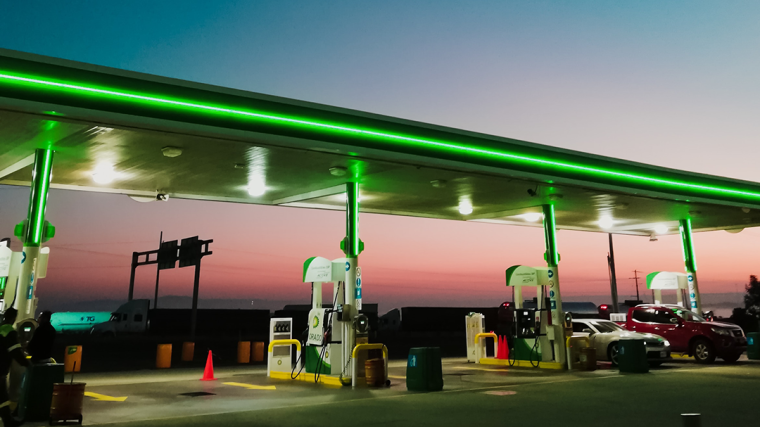
Westpac New Zealand says retail spending held up in September, even as fuel prices rocketed higher.
In Westpac’s latest Retail Spending Pulse bulletin, per-person spending on Westpac-issued credit and debit cards was up 1.4% during September and up 7.7% compared to September last year.
According to Westpac NZ senior economist Satish Ranchhod, part of the reason for the lift in September spending was the large increase in fuel prices.
“Fuel prices have rocketed higher over the past month, with the nationwide average price for 91 unleaded reaching $3.53/litre in recent days. That’s higher than we saw in the early stages of the Middle East war,” he said.
Because of this, fuel spending rose 3.8% over September, even as the volume of petrol purchased fell. Compared to September 2025, fuel spending was up 28%.
In response to higher fuel prices, New Zealanders drove and filled up their vehicles less often, Ranchhod said, with the volume of fuel sold in September dropping by around 9% compared to September 2025.
Higher fuel prices prompted other changes in spending habits in September, with daily spending on public transport up about 12% since the end of February.
Resilience in spending appetites
Even when spending on fuel is excluded, Ranchhod said spending levels have “continued to climb.”
“Looking under the surface, we are spending more on essentials and in non-discretionary areas. Notably, spending on utilities (like electricity) is up 5% over the past year, while spending on insurance is up 7%. Those are both areas where we have seen big cost increases, he said.
“Households have also told us that they’ve been more cautious about their discretionary spending since fuel prices have risen. Even when it comes to spending on essentials like groceries, many households have said they’re now purchasing fewer or cheaper items.”
Despite this, there was a “sizeable lift” in discretionary spending categories, Ranchhod said, like furnishings (up 15% compared to September 2025) and dining out (up 16% compared to September 2025).
“That points to resilience in spending appetites in the face of cost-of-living pressures and other headwinds,” he said.
“Spending on travel has also held up in the wake of the Middle East war, though many people are choosing to travel to more budget-friendly destinations or those that are viewed as less risky,” he said.
‘Strong rural backbones’
“The impact of higher fuel prices and increases in other living costs is being felt right across the country. That has seen spending growth slowing in every region over the past month,” Ranchhod said.
“Southland has continued to record the strongest spending growth in the country. However, the strength in commodity export earnings is helping to support earnings, confidence and spending in many areas with strong rural backbones.”
In contrast, Ranchhod said spending growth in Auckland and Wellington continues to trail most other parts of the country, which is consistent with the softness in their labour markets.
We welcome your comments below. If you are not already registered, please register to comment
Remember we welcome robust, respectful and insightful debate. We don't welcome abusive or defamatory comments and will de-register those repeatedly making such comments. Our current comment policy is here.