

Credit rating agency S&P Global Ratings says the reinsurance sector continues to struggle to earn its cost of capital as natural catastrophe losses and other factors mount.
In a new report S&P notes it has a negative view on the reinsurance sector describing its performance over the past five years as "dismal."
Reinsurance, or insurance for insurers, allows insurers to transfer some of their risk to other parties to reduce the likelihood of paying up large for an insurance claim. The sector has experienced a tough few years. In an episode of interest.co.nz's Of Interest podcast in July, Tower CEO Blair Turnbull said they were now "questioning whether they want to be down under."
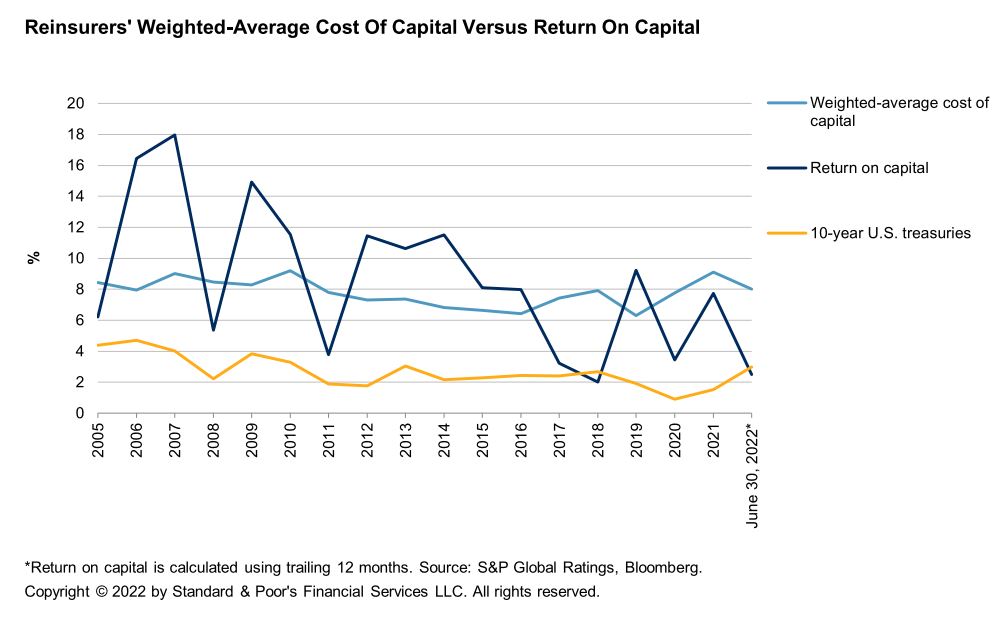
S&P says the reinsurance industry has a poor track record when it comes to earning its cost of capital, defined as the weighted average cost of capital.
"Reinsurers failed to surpass this hurdle in the past five years (2017-2021), except in 2019, and 2022 looks set to continue this trend. As central banks hike interest rates in sync to tame inflation, reinsurers' cost of capital is also rising, making their job even harder," S&P says.
"In 2017 and 2018, the reinsurance sector generated returns on capital of only 3.2% and 2.0%, below its 7.4% and 7.9% cost of capital, respectively. Natural catastrophe losses, loss creep, and investment market volatility in fourth-quarter 2018 all played significant parts in these results. However, the improved investment returns in 2019 helped the sector earn in excess of its cost of capital. This meant that the gap between the sector's actual return on capital and cost of capital was positive at 2.9 percentage points."
"In 2020, the sector took a major hit from COVID-19 and natural catastrophe losses, as well as significantly lower net investment income relative to the previous year. In 2021, return on capital improved to 7.7% but still did not exceed the relatively higher cost of capital of 9.1%. The trend will likely continue in 2022 because of financial market volatility. Although underwriting performance in property/casualty and life reinsurance is improving in our base case assumptions in 2022-2023, we believe the sector still needs to demonstrate its ability to sustainably earn its cost of capital before we could potentially revise our view to stable from negative," says S&P.
The credit rating agency does say, however, that the global reinsurance sector could finally be facing a turnaround, with price increases persisting for most insurance lines while property catastrophe lines are experiencing a "full-on" hard market environment.
"The question on everyone's mind, though, is will these pricing improvements be enough to combat the endless barrage of headwinds against the reinsurance sector that have muted returns for years? The combined impact of higher frequency and more severe natural catastrophes, untamed inflation across the world, mark-to-market investment losses eroding capitalization, and the Russia-Ukraine conflict all threaten the reinsurance sector," S&P says.
"As a result, S&P Global Ratings' view on the global reinsurance sector remains negative, reflecting our expectations of credit trends over the next 12 months, including the distribution of rating outlooks, existing sector wide risks, and emerging risks. As of Aug. 31, 2022, 19% of ratings on the top 21 global reinsurers were on CreditWatch with negative implications or had negative outlooks, 76% were assigned stable outlooks, and 5% were on CreditWatch positive."
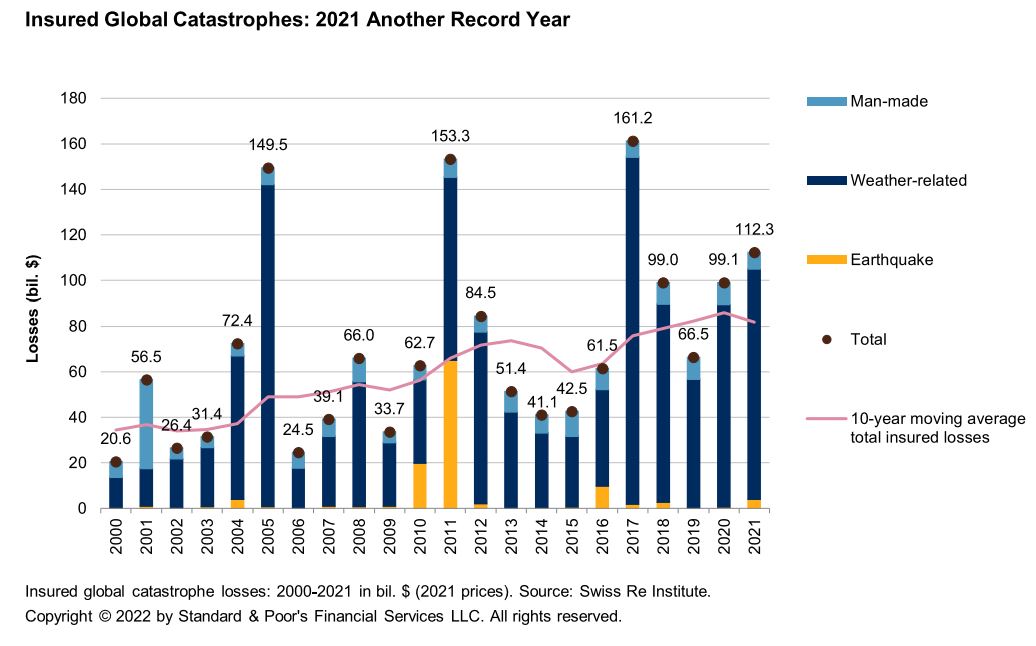
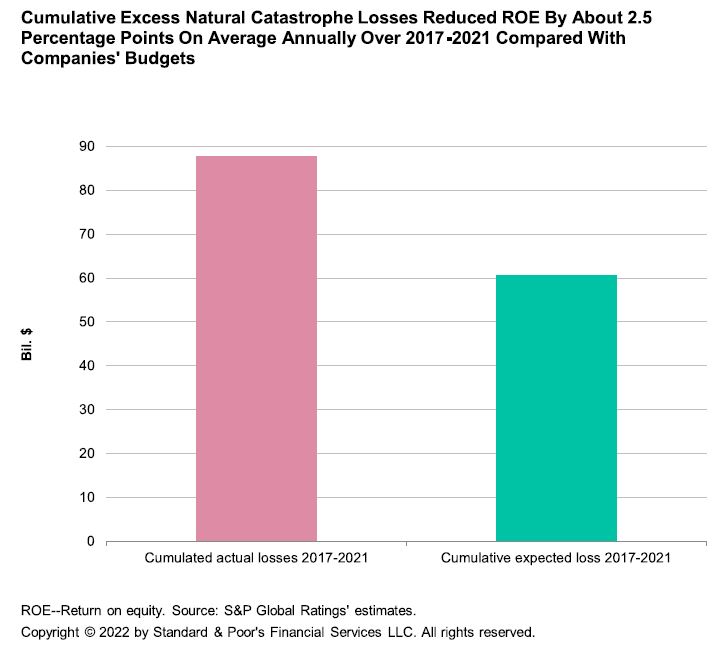
Citing the Swiss Re Institute Sigma report, S&P says in 2021, global economic losses from natural catastrophes were US$270 billion, of which about 40% was covered by the re/insurance industry. These natural disasters caused US$111 billion of insured losses, which were the fourth highest since 1970. S&P also says the top 21 reinsurers are budgeting about US$15.5 billion for natural catastrophe losses in 2022 versus US$13 billion in 2021.
Reinsurers S&P rates include the likes of global giants Munich Reinsurance, Swiss Reinsurance and Lloyd's, plus still significant but smaller reinsurers like Fairfax Financial Holdings, Everest Re Group, China Reinsurance and Qatar Insurance Co.
"This cohort of companies reported US$25 billion in pandemic losses from both property insurance and casualty insurance and life re/insurance in the past two and half years, US$19.1 billion in 2020, US$4.6 billion in 2021, and US$1.3 billion in the first half of 2022. In addition, the top 21 reported US$1.4 billion losses due to the Russia-Ukraine conflict in the first six months of 2022. We believe the situation is still fluid and further losses will be reported in the upcoming quarters," S&P says.
*This article was first published in our email for paying subscribers. See here for more details and how to subscribe.
We welcome your comments below. If you are not already registered, please register to comment
Remember we welcome robust, respectful and insightful debate. We don't welcome abusive or defamatory comments and will de-register those repeatedly making such comments. Our current comment policy is here.