
By Alex Tarrant
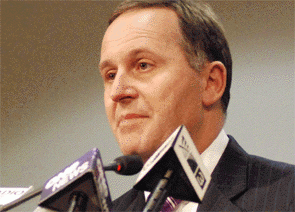
The KiwiSaver industry is well placed to deal with costs arising from the changes government has already made, and will make to KiwiSaver in its May 19 Budget, Prime Minister John Key says.
In his weekly post-cabinet press conference in Wellington on Monday afternoon, Key said more clues to the proposed changes to the scheme would become clearer in a speech he will give on Wednesday, and that he did not believe the changes would break any election promises National made about the scheme.
Industry groups have expressed concern over the costs changes to the scheme impose on providers, and that government might cut the Member Tax Credit or Housing New Zealand first home deposit subsidy incentives for the scheme.
Key defended changes already made to the scheme, saying there were not “constant changes,” in response to industry concerns over how much changes cost KiwiSaver providers.
“These are schemes where there are 1.65 million New Zealanders in the scheme, 20,000 people a week join KiwiSaver, it’s got tens of billions of dollars in the scheme over time, and so in my view the industry is well placed, actually, to cope with these issues because the gains are very significant for them,” Key said.
Before or after election?
Asked whether changes to KiwSaver would be in place before the November 26 election and therefore break an election promise, Key said: “You’ll have to wait and see when we discuss that on Wednesday, we’ll be making small comments there. But no, I don’t believe that they will be a broken promise.”
Asked whether changes would therefore take place after the election, Key replied: “You’ll have to wait and see, but I don’t believe they constitute a broken promise”.
Speech on Wednesday
Key would deliver a speech on Wednesday that could outline some of the changes that might be made, he said.
“We’re just taking this opportunity to spell out some of the challenges that the country faces, why it is we think a zero or balanced budget makes sense, and to give some greater clarity around some of the changes we might make,” Key said.
“We hope we’ll be able to give you some more guidance around changes we’re making to KiwiSaver and Working for Families, and as a government we’ve been very conscious that we need those schemes both to be there for New Zealanders, to be affordable and to be sustainable,” he said.
“What we are doing in Budget 2011, in my view, is putting those schemes, as well as interest free student loans, on a long-term sustainable footing.”
Big schemes
“They’re very big schemes, they cost a lot of money, they’re there to lift national savings, and in some areas where the government is borrowing for savings, that’s not lifting national savings,” Key said.
“But look, the view that we have taken as a government is that these were big schemes put in place in different economic conditions by the previous Labour government,” he said.
“We’re all aware about how those conditions have changed, but we also recognise how New Zealanders value interest-free student loans, Kiwisaver and Working for Families.
“What we want to do is make sure that they are there for the long haul, in a form that’s affordable, recognising that there are fluctuations in whether the government is in surplus or in deficit.”
'People will understand'
Key said he was confident that by the time people saw the changes to KiwiSaver they would understand the rationale for it, and feel comfortable as a KiwiSaver participant.
He did not think people would want to opt out of the scheme, given their contract with the government could be considered broken due to changes made to incentives for the scheme.
Meanwhile, government had tried as best as it could in tough economic conditions to take on board the recommendations made by the Savings Working Group, Key said.
“I’m not arguing that we’re going to go and address all of their issues come the May 19 Budget, but if we’re in a position to put together a government in future years, then future budgets might be able to address more of their concerns,” Key said.
We welcome your comments below. If you are not already registered, please register to comment
Remember we welcome robust, respectful and insightful debate. We don't welcome abusive or defamatory comments and will de-register those repeatedly making such comments. Our current comment policy is here.