
The Government is for the second time broadening its wage subsidy scheme in an attempt to keep more people employed.
This comes as it had paid $2.7 billion in wage subsidies for 428,768 workers, as at Friday morning.
Under the scheme, employers, contractors, sole traders, self-employed people, registered charities and incorporated societies can receive a subsidy to help pay wages if they can show a 30% decline (or expected decline) in revenue for any month between January and June 2020 compared to the same month in 2019.
Up until now, they had been required to keep paying staff at least 80% of their incomes to be eligible for the subsidy.
But as at 4pm Friday, this rule has been scrapped and replaced with a new rule that employers must pass on at least the entire subsidy.
This will mean the subsidy can be accessed by businesses that have had to close during the lock-down or significantly reduce their staff’s hours.
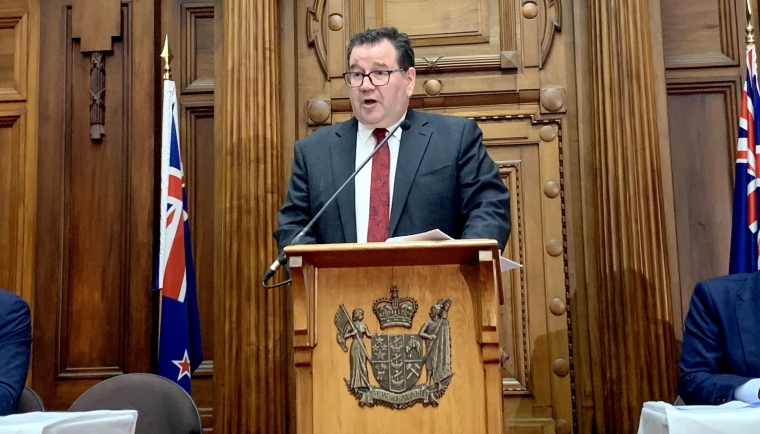
Finance Minister Grant Robertson explained: “Businesses accessing the scheme must still undertake best endeavours to pay employees 80% of their pre-COVID income.
“Where that is not possible – in particular where a business has no activity whatsoever due to the shutdown and workers are not working any hours – they must pass on at least the whole value of the wage subsidy to each affected worker.”
Businesses are still required to keep their employees in employment for the 12-week period of the subsidy to be eligible.
The subsidy is $585.80 a week for full-time workers (who worked 20 or more hours per week before COVID-19) and $350 a week for part-time workers (fewer than 20 hours).
It will continue to be paid in a lump sum covering 12 weeks.
Leave Payment canned
Robertson also announced the Leave Payment he created on March 17 will be folded into the wage subsidy scheme.
Under the Leave Payment, employers of staff in self-isolation, with COVID-19 or caring for the sick or self-isolated, could get a $585.80 or $350 a week payment for eight weeks.
Yet because most people are now in self-isolation, the scheme is no longer fit for purpose.
Robertson said: “We are working on arrangements for those in essential work who require sick leave due to COVID-19.”
Treasury estimates the wage subsidy scheme will now cost around $12 billion depending on uptake by businesses - an increase from the $8 billion previously expected.
“These modifications are about keeping New Zealanders currently at home in lockdown connected to the job they were in on Wednesday before it started,” Robertson said.
“This ensures businesses not able to operate do not need to lay off staff. Even if this requires businesses to operate with no activity, the subsidy allows them to keep their workers on the books, particularly during Alert Level 4.
“We are running this [wage subsidy] scheme on a high-trust model in order to get money out the door and support the workers, families and businesses who are affected by COVID-19. We are also preparing an appropriate audit process that will act as a backstop for this high-trust model.”
The wage subsidy scheme was introduced on March 17 and then broadened on March 23 when the $150,000 per business cap was removed.
We welcome your comments below. If you are not already registered, please register to comment
Remember we welcome robust, respectful and insightful debate. We don't welcome abusive or defamatory comments and will de-register those repeatedly making such comments. Our current comment policy is here.