
By Amanda Morrall
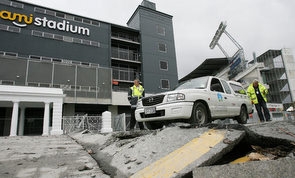
Christchurch's largest residential insurer AMI has rejected insurance industry talk that it may not have enough reserves and reinsurance to cover all the claims from the February 22 earthquake.
The mutually-owned and Christchurch-headquartered AMI has a 30% share of the insurance market for houses, contents and cars in Christchurch, meaning it has the largest exposure of all insurers to residential damage. AMI did not provide commercial insurance for businesses most affected in the city centre.
Prime Minister John Key's estimate of the need to demolish 10,000 houses and of a total cost to rebuild Christchurch of up to NZ$15 billion has caused some in the industry to ask if AMI can handle the scale of the likely claims.
AMI Chief Executive John Balmforth told interest.co.nz that while claim volumes "were large", AMI had reinsurance of NZ$600 million for the February 22 earthquake, in addition to assets worth NZ$540 million, 85% of which were liquid.
Balmforth declined to forecast how much the earthquake damage could cost the insurer, citing a lack of reliable information.
"Any estimate would be misleading,'' he said in a written statement to interest.co.nz
Balmforth said that as of March 9, the Christchurch based firm had received 7,833 claims. Following the less destructive Sept.4 earthquake, AMI had 12,000 claims. AMI also had a separate NZ$600 million reinsurance contract for that event. AMI also has two forward contract for reinsurance in the event of a third or fourth earthquake.
Insurance coverage for policy holders with AMI would include housing damage, loss of rent on rental policies, temporary accommodation and 'out of scope' claims for things like fences, pathways and driveways, motor vehicles boats and contents claims over the NZ$20,000 EQC cap.
Balmforth said 'out of scope' claims had so far accounted for 35% of all claims lodged and were of "relatively low value.''
Goldman Sachs estimate
Goldman Sachs, in an evaluation of earthquake implications and impact for Tower Limited, estimated 15,000 homes would have to be demolished, with moderate or minor damage sustained by another 140,000.
Goldman Sachs estimated the average building claim at NZ$40,000 with an additional NZ$8,065 for contents with total residential damage all up adding up to NZ$7.5 billion. The EQC and its reinsurers will cover the first NZ$4 billion, leaving the remaining NZ$3.5 billion for private insurers to cover.
With its 6% market share of residential insurance, Tower could face a pre-reinsurance bill of NZ$240 million, analyst Adrian Allbon concluded.
If the loss experience was replicated for AMI and AMI's estimate of a 30% market share was correct, then AMI's claims could rise over NZ$1 billion for the February 22 earthquake.
Treasury has estimated the cost of residential housing damage at NZ$6 billion, with infrastructure and commercial damage adding another NZ$6 billion.
However, more recent estimates by Civil Defence in recent days suggest the forecasts of 10,000 and 15,000 homes being demolished may be too pessimistic.
Official records being kept by Civil Defence indicated (as of March 11) that 59,316 residential buildings have been assessed.
Of those 1,506 (2.5%) have been red-stickered, 4,076 (6.9%) yellow stickered and 53,734 (90.6%) green stickered. Red-stickered buildings are deemed unsafe and fated for the wrecking ball. Yellow indicates moderate to heavy damage and green indicates minor damage.
EQC first in line
EQC spokesman Gordon Irving said on Thursday the EQC had received 52,817 claims so far from Christchurch, with another 2,000 odd coming from outlying areas.
AMI board of director Richard Flower said Wednesday he was confident the company was well placed to handle the fresh on-onslaught of claims whatever the colour.
"It's important to remember that the EQC will absorb a lot of those costs,'' he told interest.co.nz.
Co-directors Brian Gariulo declined comment as did Philip Shewell.
On all insured residential properties damaged by the earthquake, EQC pays out the first NZ$100,000 (plus GST) for building repairs, with a further NZ$20,000 (plus GST) for damaged contents. Private insurers then make up the rest. As with the Sept.4 earthquake, the EQC pays on first NZ$1.5 billion with EQC reinsurance covering the next NZ$2.5 billion.
Ratings agency 'comfortable'
Ratings agency AM Best told Interest.co.nz by email there was "no immediate rating impact as of now while discussions continue with the management in relation to loss development.''
Balmforth, in his written statement, said AM Best was 'comfortable' with the company's standing post-Sept.4 of A+. AM Best affirmed the rating on October 6 last year, after the September 4 earthquake. See the news release here.
Based on subsequent communications with the rating agency since February, he said "we believe they remain confident in our position.''
In the event that it needed to raise cash, Balmforth said the mutual had ways to raise capital.
The government indicated on Wednesday that it would not get involved in insurance issues arising from the earthquake.
Instead, Assistant Earthquake Recovery Minister Maurice Williamson suggested insurers could get "creative" to handle some of the logistical problems arising from insurers suspending new policies. (Read Alex Tarrant's story for details).
Balmforth said the 'scale of the event required a collaborative approach between all parties.'' As such, he said AMI was 'working closely with Government at all levels.''
He said the firm had not requested a hand-out nor has the Government offered one.
The Reserve Bank, which is now responsible for prudential regulation for insurers, declined to comment when asked by Interest.co.nz about AMI's exposure.
The following are AMI CEO John Balmforth's direct replies to questions from interest.co.nz:
Q) What share of the residential insurance market does AMI have in Christchurch?
A) Our residential market share in Christchurch is around 30%. AMI does not insure commercial property.
Q) What level of claims does AMI expect?
A) This is a major and complex event. Many claims have been made, many are still expected. There is little reliable information available at this point on the extent of the damage. Any estimate would be misleading.
Q) Can it remain solvent if those claims are made?
A) AMI is conservatively managed and has always maintained a strong balance sheet. For example, in addition to its extensive reinsurance cover it has assets of NZ$540 million, 85% of which are liquid made up of cash, bonds and term deposits.
Q) Is it delaying payment of claims because of any financial distress?
A) No payments are being delayed for financial reasons. We are dealing with a large number of claims and are processing them as quickly as possible. There are inevitable factors that contribute to delays in settlement such as the volume our assessors have to get through and customers selecting between the options that may have been offered to them. We have also taken a cautious approach on out-of-scope work due to the on-going problem of aftershocks - the earthquake of Feb.22 has vindicated that approach. We have met a number of significant number of claims from the September earthquake including claims for temporary accommodation and motor vehicles.
Q) Will AMI need to raise capital?
A) AMI is a mutual company and its customers are its owners. AMI does not have shareholders. In the event that the company may require more capital there are ways that it could be raised.
Q) Is AMI in discussions with Government about some sort of support?
A) The scale of this event requires a collaborative approach between all parties and in that respect we are working closely with Government at all levels. We have not asked and Government has not offered specific financial support for the company.
Q) Is AMI in discussions with AM Best about its credit rating?
A) Following the September quake, AM Best indicated to us that they were comfortable with our position. We have had further contact with them since the February quake and we believe they remain confident in our position.
Q) How much reinsurance does it have?
A) AMI is strongly reinsured and has received excellent support from its reinsurers. Cover of up to NZ$600 million was in place for the first earthquake with an automatic back-up of a similar amount. Since September 4, we have arranged a further back up cover providing a similar level of cover in case there is a third event, and we also hold cover should a fourth event occur before June 30, 2011. Our deductible or 'excess' on our catastrophe programme is NZ$5 million, which is, for example, well within last year's profit of NZ$31 million.
Further response to queries for clarification:
Reinsurance cover
AMI has cover of NZ$600 million for the 2 September, 2010 earthquake. Cover for the 22 February event is also for NZ$600 million. The cover is not cumulative. Cover for a third event of NZ$600 million is also held.
Claims received
Claims numbers recorded cover a range of claimed items including, actual hosue damage, loss of rent on rental policies, temporary accomodation, out of scope claims (for fences, pathways, driveways etc) contents claims over the EQC cap, motor vehicles and boats. It should be noted that "out of scope" claims account for around 35% of all claims lodged and of relative low value.
We have also received claims where there are existing damage recorded under a claim for the 4 September earthquake so there is an element of duplication in claim numbers for the 22 February event.
Calculating exposure in any claim category based on actual claim numbers will not give accurate figures especially given the potential duplication involved. Against this background as at 9 March we have received 7,833 claims across all categories listed above.
24 Comments
A note to all. I am being extremely vigilant on this post given the sensitivities involved.
Anyone posting should keep comments brief and to the point.
cheers
Bernard
OK mein commandant : The Chch City Council suck ............
........... the insurance companies blow .......
... between the two of them , expect nothing to get fixed this side of Christmas ! ....... Ho ho ho .
I got to read your valiant first effort Sore-loser.....sore on the bottom, I assume...as the course was coarse...But I do note some loyal posters seem to have faded away over the last week or two...or alter egoed :)..... All good things... and bad.... come to an end......
Green stickered does not mean minor damage, it means the property is safe to occupy which is an entirely different thing. We have green stickered properties that need demolished because of other issues such as liquifaction etc.
My estimate from what I have seen is that maybe 30,000 possibly 50,000 homes will have up to or over the $115,000 eqc cap.
A lot of older very large Fendalton, Merivale, Strowan, St Albans and Central City houses are total write-offs as well as a lot of expensive hill homes (houses of 300m2-600m2+ with replacement costs probably around $2,500/m2+). There are definitely hundreds if not thousands of houses in this category.
Conservatively say 30,000 at an average of $100,000 above the cap - that's $3b plus contents, cars etc.
If AMI have 30% of the market in Christchurch it could easily cost them all of their reserves.
I have to ask if they only have $600m in reinsurance what are they doing writting more policies than have provisions for?
Clearly the total Christchurch housing market is 120,000 houses at an average replacement cost of say $275,000 ($150,000 over eqc cap) that's $18b, and 30% of that is $5.4b and that is just for their Christchurch policies. What if we had a large event that irrepairably damaged most timber framed houses? They wouldn't come close to covering it. How can they sell insurance that they cannot cover??
One other point is that, AMI cannot definitively say they had 12,000 claims from the first earthquake. We had 4 houses that were over cap from that event that had not been processed and our insurer (NZI) had not received any information from EQC stating that they were overcap. One which was clearly overcap hadn't even been inspected by EQC prior to the second quake. For all AMI know they may have had significantly more exposure to the first quake which won't be known now because assessors from EQC were taking so long to do their assessments. This could cost insurers if they can't now make claims on the first lot of reinsurance.
Thanks for the clarification.
You'll be interested to hear that IAG, second largest player in Chch residential insurance market, notes they had 15,000 claims from Sept.4. On the estimated number of new claims arising from Feb.22, the company (which initially tagged their share of the damage at NZ$53 million two days post-quake) had this to say:
"It is too early to estimate this as many customers are yet to contact us to make claims. As you are aware, this earthquake produced more shaking damage which will obviously impact on claim types. Because of the proximity of the epicentre to the CBD, there will be more commercial claims as a result."
And if there's any value in it, this is how Civil Defence defines the colour coding system:
Understanding red, yellow and green building stickers
If you find a sticker on your home or business, it means the building has been inspected.
Green Stickered:
- Buildings are considered safe to enter and appear to be in much the same structural condition as prior to the earthquake.
- Building may need further inspection or repairs.
- Building owners are encouraged to obtain a detailed structural assessment of the building as soon as possible and report any unsafe conditions to your council.
Yellow Stickered:
- Buildings are considered suitable only for restricted access until repairs are complete. Further use may be possible in parts of the building that have not been damaged.
- Entry only for short periods of time.
Red Stickered:
- Buildings are considered unsafe to enter. Detailed Engineering Evaluation required before building can be used.
Yellow and red placards may contain more detailed written information concerning the damage sustained.
In some of the suburbs Black and White sheets have been left. These are equivalent to either a Green or Yellow Placard.
All building owners are recommended to contact a structural engineer for a thorough assessment if they suspect some damage has occurred, whether the building has a coloured card or not.
If you have any questions about these stickers, contact Christchurch City Council on 03 941 8999.
If the property belongs to Housing New Zealand, phone 0800 801 601.
Chris_J
Many thanks. Again much appreciate your on-the-ground view and thoughts.
FYI putting up your reportage/pics later tonight. Sorry. Swamped. On my to do list.
cheers
Bernard
It seems to me that the fact that we have an EQC insurance provision in legislation actually acts to complicate the claims process following such an event. I'm struggling to understand the benefit of the EQC levy/fund - why not simply pay a private insurer for full cover?
May be a stupid question - but what is the benefit of having an EQC?
How is the $600 million figure arrived at?
NZ$600 million is the reinsurance level that AMI has told us it has.
cheers
Bernard
At this point in time insurers will have no idea of the extent of their losses.
Neither EQC nor the insurer companies themselves, had got around to inspecting tens of thousands of damaged properties from Sept 4. Many properties would have had significant damage well beyond what they were anticipating. As I said before we had 4 over cap only inspected a couple of weeks before the second quake, the insurers would have had no idea of their exposure.
As a property owner, I am still not sure what damage we have. Firstly I haven't actually been in every property yet, secondly a lot of damage from liquifaction will take weeks to show up.
My brother went into one of the properties I thought it looked ok from the street (tenant had gone away so we hadn't been round there). It turns out the back of the house has a hump about a foot high and the house which has a lean to roof at the back (its a villa) was actually almost sloping backwards. So another one that will almost certainly need rebuilt because of land damage. Of our 25 in ChCh I previously said that up to 17 may need rebuilt. I should rephrase that and state that only 3 have minor damage (under $30,000), the rest have moderate to severe damage, with all but 1 other needing entire new foundations (which normally means that the house would be uneconomic to repair). Some of these properties are substantial including 5 with floor areas over 300m2 and stud heights up to 3.6m meaning that full replacement for those properties would be $600-800,000 each.
So IAG/NZI's exposure on our properties alone is well above $3m (after deducting EQC's cover).
(Edited for legal reasons. Sorry Chris_J we can't say that without evidence we can rely on in court)
Sorry about that Bernard, not trying to get you in trouble!
Perhaps I would be better rephrasing it as some questions you could put to AMI.
Question:
1/ The Canterbury Chamber of Commerce estimates the earthquake to have cost $30billion. Looking simply in broad terms, residential housing and contents would make up somewhere around half the value of insurable assets in Christchurch. Further, we could estimate EQC cover would account for about half of the residential losses, therefore private insurers could be expected to cover perhaps $7.5b. If AMI cover 30% of residential customers in Christchurch then would you not be concerned that AMI's potential insurance liabilities exceed combined reserves and reinsurance that you previously acknowledged of $1.14b?
2/ If you are confident you can cover the two events, could you please give us details of your total exposures in the Christchurch market.
3/ If your total exposure exceeds your total reserves and reinsurance of $1.14b, how can your customers be confident you could meet all claims if a more significant aftershock or new event occurred?
4/ The vast majority of the south, southeast, central city, inner north west and north east suffered major liquification. The majority of properties in these areas have some foundation damage. A large area of the southwest suffered from liquification in the Sept 4 event as well. Many hill areas also have subsidence damage. Can you identify your exposure in each of these geographic areas?
If AMI can give some definitive answers to those questions, you will be able to tell if my earlier statement (that Bernard graciously deleted) is true.
@ Chris_J
See my comment, this thread, 2 posts lower, 11 March at 4:50 pm.
That information is known. It has to be known. Of course they know. In an earlier incarnation I was employed as an international business trouble shooter for a multi-national and I can assure you that the answers to your questions are already known. If not there would be resignations and axings by now. The real question is will they see the light of day? Probably not. That's the way business is done. But it raises a serious question as to the need to keep the confidence of the population up, and un-informed. It will not be helpful to the national psyche if the answers to your questions became public knowledge. Thats why they are in constant talks with the Government. The potential risk now for the directors is, trading while insolvent.
Since the earthquake, I've had nothing good to say about AMI. Myself, and every person I've spoken to have also had similar issues. Once the dust settles, I'll be placing my insurance elsewhere.
IMHO,over the last 6 months, AMI have destroyed all the good-will they've created in Chch.
Agree with Chris_J. One would assume, a CEO of any insurance company with any exposure to the Sep 4 Christchurch earthquake would have called for a print-out of every current insurance policy on its books, as at Sep 4, and then had assessors / adjustors do at minimum, a drive-by of every single property, and determine if there is any damage at all, and from that, be able to determine the minimum number of properties they are exposed to. And the CEO would want that report on their desk within 14 days of the event. With that data in hand, reconciled with detailed claims since made, the Insurance company should be able to determine a realistic assessment as to their TOTAL current position. Then ditto for the February quake.
FYI Canterbury Employers' Chamber of Commerce chief executive Peter Townsend thinks the total cost could be NZ$30 bln
M8.8 earthquake has hit near the east coast of Honshu , JAPAN
6 metre Tsunami warning
Bad news for many in that region...Tsunami damage will be massive...will this be the event that knocks the wgtn city council into going public with the info Dunne demands be released.
Wgtn will get an 8.2....and it will be close by and probably shallow....so go figure for yourself.
Why the public should be forced to pay fees to get LIM reports relating to building safety is just bloody silly.
I walked through wgtn last week. Counted many brick and stone structures...hundreds of tons of shite...and the public expected to walk beneath this...to sit at tables for a coffee...to walk children on the footpaths....try the Lambton Willis corner for a start.
Is the Chch re-insurance money secure???
posted the Wellington list link earlier this week, (see also Mr Dunne's site).
I think the data has changed between the original post and now.
Superfically I would say that the "potentially earthquake proof'" properties have been removed from the originally published list. and we now have a reduced list of buildings where a section 124 notice has been issued. A subset of the original list?
Found original link if these things are of interest.
Huge aftershocks after the massive M8.9 in Japan
One of the aftershocks was a M7.1
FYI from Swiss Re saying the cost could hit NZ$16 billion.
Swiss Re, a Zurich-founded business which operates in 20 countries, said claims from the February 22 quake would range from US$6 billion to US$12 billion ($8 billion to $16 billion).
Who will have reinsured the cities along the Japanese east coast...and all the other areas in the process of being destroyed right now?
Yes, glad to see sustento/raf reported in the NBR.
The global financial house of cards is IMO set to tumble. Given we haven't as a nation hoarded gold - well there won't be many choices other than what Raf suggests.
I would'nt panic, it's not like they are going to pay out within a year or so, they will pay out over a 5-7 year period.
Bernard you should also ask EQC just how many funds they actually have, how much is liquid, talk here is that just after xmas they suddenly stopped paying and have been very very slow in paying anyone out, hence why builders etc will not do EQC work. I wonder just how much money thye have in the bank, or is it all sitting in overvauled Assets that they are trying to release.
Long time listener, first time poster...
IMHO - as eluded to by Iain Parker, the Insurance game is no different to the Home Loan game - remember the term "re-mortgage" from a few years ago? now replaced with the term "re-insurer" - just big gambling syndicates which rely on the simple hope that there are no major events in the future i.e. continuing growth the failure of which leads to people defaulting on loans in the thousands or natural distasters which wipe out cities full of assets. BTW - what do insurance companies do with the premiums we give them? They certainly don't stay liquid and more often than not end up in big buildings such as stadiums and business parks which are at the same if not greater risk from natural disasters than our own assets!
We welcome your comments below. If you are not already registered, please register to comment
Remember we welcome robust, respectful and insightful debate. We don't welcome abusive or defamatory comments and will de-register those repeatedly making such comments. Our current comment policy is here.