
By Alex Tarrant
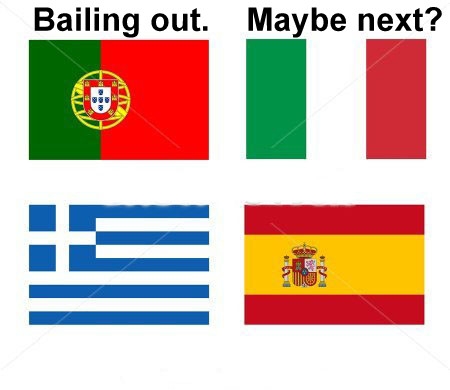
Money lent by New Zealand via the International Monetary Fund (IMF) to the Greek and Portuguese governments jumped during March and April as those nations received their latest tranches of bailout funds.
And figures for May are set to show yet another increase, after the IMF and European Union (EU) approved another payment to Greece last week. The IMF and EU have warned further tranches of Greece's €130 billion bailout may be withheld until a new government is installed in the troubled South European nation.
At April 30, New Zealand had lent the equivalent of NZ$125 million through a credit line the government has with the IMF called the New Arrangements to Borrow (NAB) facility. New Zealand signed up to the facility in 2010 and began loaning the IMF funds through it from May last year.
The US$570 billion NAB credit line with 40 countries was originally set up as a backstop for the IMF's US$385 billion quota system in case member nations' quotas had been exhausted. However, political wrangling over proposed quota increases saw the IMF turn to the NAB in 2011 and 2012 to help it fund bailouts for the Greek and Portuguese governments.
We started lending via NAB
NAB funds are able to be drawn on by the IMF for packages approved during six-monthly activation windows. The latest Greek and Portuguese bailouts were the two major packages approved during these periods from April 2011 and then October 2011. (St Kitts and Nevis has also drawn down partially on a small package approved during a NAB window.)
New Zealand began lending through the NAB in May 2011, loaning the IMF the equivalent of NZ$42.6 million after the Fund agreed to a €26 billion bailout for Portugal. In September 2011, New Zealand's lending through the NAB was increased to NZ$70.2 million as another tranche was paid to Portugal, and again in December, to what is the equivalent of NZ$85 million on current exchange rates.
In March that rose to NZ$95 million as a tranche of funds was released to Greece under its newly-agreed second package, and in April to NZ$125 million as another tranche was released to Portugal.
They could ask for NZ$3 billion
New Zealand could be called upon to lend the equivalent of NZ$1.2 billion through the NAB facility if called upon in full. New Zealand's total NAB commitment is set to fall to about NZ$700 million from October this year if proposed IMF funding reforms are passed.
The NAB credit line is on top of New Zealand's NZ$1.8 billion quota with the IMF, which represents promissory notes the Fund can call upon. Generally, 25% of a nation's quota sits at the IMF as a country's 'reserve tranche position'. That position is increased as the IMF calls on quota funding. New Zealand's reserve tranche position is currently 31.5% of its quota. The quota system had been the IMF's source of funds until the NAB was introduced. New Zealand joined the IMF in 1961.
See New Zealand's position in the Fund here.
While proposed funding reforms this year will see New Zealand's NAB commitments fall, its quota is set to rise to the equivalent of NZ$2.5 billion. Following the changes, New Zealand's total IMF commitments are set to rise from about NZ$3.1 billion to NZ$3.2 billion. However, its share holding in the IMF is set to fall from 0.38% now to 0.26% as funding reforms are passed.
These reforms are prior to any further increases in funding commitments New Zealand signs up to as the IMF seeks to double its lending capacity. See: NZ watching what other small economies do before committing to expansion of IMF funds, following US$430 bln G-20 pledge.
This article was first published in our email for paid subscribers this morning. See here for more details and to subscribe.
We welcome your comments below. If you are not already registered, please register to comment
Remember we welcome robust, respectful and insightful debate. We don't welcome abusive or defamatory comments and will de-register those repeatedly making such comments. Our current comment policy is here.