

Here's my Top 10 links from around the Internet at 5 pm in association with NZ Mint.
I welcome your additions in the comments below or via email tobernard.hickey@interest.co.nz.
I'll pop the extras into the comment stream. See all previous Top 10s here.
Clarke and Dawe made me LMAO. #2 is today's must, must read. You won't sleep. Good eh.

1. Getting ready - The Telegraph reports British retailer Tesco is shifting its currency exposure, holding cash and refusing to sign long-term supply contracts in preparation for the breakup of the Euro zone.
You can imagine what this is doing to business planning, employment intentions and economic growth generally.
This whole thing needs to be sorted very quickly before it becomes a self-fulfilling prophecy.
Companies across the Eurozone are doing this.
Travel bookers are actively preparing for Greece to leave the euro.
Anyone with savings in euros is thinking seriously about where exactly that money is and how stable the institution holding it is.
They will also have to look at which country the deposit is in.
Here's what Tesco is doing:
Laurie McIlwee, Tesco’s finance director, said of a possible break-up: “Of course we’ve looked at it. Any business has got to take disruption in the eurozone seriously”.
Tesco’s finance chief said the retailer did not have any businesses directly in the eurozone core but that “currency management has been appropriately derisked”. He did not elaborate but the retailer is thought likely to have cut its euro holdings and moved cash into safer currencies such as the dollar or sterling, as well as better managing its exposure to eurozone suppliers.
On supply contracts Mr McIlwee said of the current situation: “We wouldn’t go long on any contracts with any supplier – everything in the market is much more short-term. You wouldn’t know if they had the liquidity and they wouldn’t know if you had it.”
2. Printing other currencies - Wall St Journal reports central banks in Europe are now preparing contingency plans for printing their 'old' currencies again.
The first signs are surfacing that central banks are thinking about how to resuscitate currencies based on bank notes that haven't been printed since the first euros went into circulation in January 2002.
At least one--the Central Bank of Ireland--is evaluating whether it needs to secure additional access to printing presses in case it has to churn out new bank notes to support a reborn national currency, according to people familiar with the matter.Outside the 17-country euro zone, numerous European central banks are eyeing defensive measures to protect against the possible fallout if the euro zone were to unravel, other people said. Several, including Switzerland, are considering possible replacements for the euro as the external reference point, or peg, they use to try to keep their currencies' values stable.
3. The great re-hypothecation scandal - ThomsonReuters reports that MF Global used a legal loophole that means many people who thought their trading money was safe in a segregated account may never get it back.
And more importantly, this practice known as re-hypothecation may have injected US$4 trillion into the financial system and exposed many banks to an apocalyptic meltdown if there is a European sovereign default...
This is today's must read. HT Kevin.
MF Global's bankruptcy revelations concerning missing client money suggest that funds were not inadvertently misplaced or gobbled up in MF’s dying hours, but were instead appropriated as part of a mass Wall St manipulation of brokerage rules that allowed for the wholesale acquisition and sale of client funds through re-hypothecation. A loophole appears to have allowed MF Global, and many others, to use its own clients’ funds to finance an enormous $6.2 billion Eurozone repo bet.
How was MF Global able to “lose” $1.2 billion of its clients’ money and acquire a sovereign debt position of $6.3 billion – a position more than five times the firm’s book value, or net worth? The answer it seems lies in its exploitation of a loophole between UK and U.S. brokerage rules on the use of clients funds known as “re-hypothecation”.
Re-hypothecation occurs when a bank or broker re-uses collateral posted by clients, such as hedge funds, to back the broker’s own trades and borrowings. The practice of re-hypothecation runs into the trillions of dollars and is perfectly legal. It is justified by brokers on the basis that it is a capital efficient way of financing their operations much to the chagrin of hedge funds.
The volume and level of re-hypothecation suggests a frightening alternative hypothesis for the current liquidity crisis being experienced by banks and for why regulators around the world decided to step in to prop up the markets recently. To date, reports have been focused on how Eurozone default concerns were provoking fear in the markets and causing liquidity to dry up.
Most have been focused on how a Eurozone default would result in huge losses in Eurozone bonds being felt across the world’s banks. However, re-hypothecation suggests an even greater fear. Considering that re-hypothecation may have increased the financial footprint of Eurozone bonds by at least four fold then a Eurozone sovereign default could be apocalyptic.
U.S. banks direct holding of sovereign debt is hardly negligible. According to the Bank for International Settlements (BIS), U.S. banks hold $181 billion in the sovereign debt of Greece, Ireland, Italy, Portugal and Spain. If we factor in off-balance sheet transactions such as re-hypothecations and repos, then the picture becomes frightening.
4. Just in case you were wondering - Citigroup Chief Economist Willem Buiter details in an Op-Ed at the FT the choas that would happen if the Eurozone broke up.
A full or comprehensive break-up, with the euro area splintering into a Greater Deutschmark zone and about 10 national currencies would create pandemonium. It would not be a planned, orderly, gradual unwinding of existing political, economic and legal commitments. Exit, partial or full, would likely be precipitated by disorderly sovereign defaults in the fiscally and competitively weak member states, whose currencies would weaken dramatically and whose banks would fail. If Spain and Italy were to exit, there would be a collapse of systemically important financial institutions throughout the European Union and North America and years of global depression.
Than he looks at a Greek exit from the euro:
Most contracts, including bank deposits, sovereign debt, pensions and wages would be redenominated in new Drachma and a sharp devaluation, say 65 per cent, of the new currency would follow. As soon as an exit was anticipated, depositors would flee Greek banks and all new lending governed by Greek law would effectively cease. Even before the exit, the sovereign and the banking system would fail because of a lack of funding. Following the exit, contracts and financial instruments written under foreign law would likely remain euro-denominated. Balance sheets would become unbalanced and widespread default, insolvency and bankruptcy would result. Greek output would collapse.
5. The early signs are not good - Reuters reports the mega summit has failed at the first hurdle of getting all 27 European countries to agree a new treaty.
British PM David Cameron blew up the plan, it seems.
Now they will try to get the 17 Eurozone countries across the line.
The European Union failed to secure backing from all 27 countries to change the EU treaty at a summit Friday, meaning any deal will now likely involve the 17 euro zone countries plus any others that want to join, three EU diplomats said.

I oppose Financial Stability because it is the most misleading banner for a set of bad, harmful and expensive public policies protecting bad executive management and preventing recognition of realistic market outcomes.
So what would I promote instead? Resiliency and resolution. Resiliency means the ability to withstand stresses and shocks which will unavoidably arise in global, competitive markets. Resolution means the dispersion of assets to creditors - and competitors - when banks fail, in hopes the assets and enterprises will be better managed by other managers than the same ones that led the bank to failure. Together these two principles - if made the basis for public policy - would do more to restore sanity to global banking than anything else I can think of. Resiliency will favour more and better capitalisation, with a focus on marketable assets with transparent price discovery (e.g., traded on transparent markets and recorded on balance sheet). Speedy and certain resolution of failed banks will make management and shareholders conscious of the risks of failure falling first on them, then on unsecured creditors and bondholders, and never on the taxpayer.
We are a long way from adopting principles of resiliency and resolution, as demonstrated by the EU's continued efforts to forestall defaults while protecting incumbent managements and bondholders. Our policy makers continue to chase the chimera of financial stability, and make bad policies worse along the way.
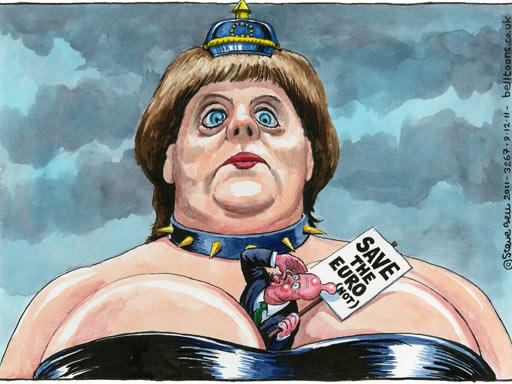
7. A US$12 trillion equity gap - McKinsey has done some interesting research into how companies face a US$12 trillion gap in their equity needs by 2020 because emerging economies typically invest less in stocks and are ageing.
Several forces are converging to reshape global capital markets in the coming decade and reduce the role of listed equities. The most important of these is the rapid shift of wealth to emerging markets where private investors typically put less than 15 percent of their money into equities (compared to 30–40 percent in many mature economies). At the same time, demand for listed equities in developed economies is likely to fall due to aging, shifting pension regimes, growth of alternative investments, and new financial regulations.
The result will be a potential $12 trillion “equity gap” over the next decade between the amount of money that investors will wish to hold in equities and the amount that companies will need to fund growth. MGI projects that the share of global financial assets held in listed equities could fall from 28 percent to 22 percent by 2020 if these trends continue.
The implications of this shift are potentially wide ranging for investors, businesses, and the economy. Companies that need to raise equity, particularly banks that must meet new capital requirements, may find equity is more costly and less available. Reaching financial goals may be more difficult for investors who choose lower allocations of equities in their portfolios. And, with more leverage in the economy, volatility may increase as recessions bring larger waves of financial distress and bankruptcy. At a time when the global economy needs to deleverage in a controlled and safe way, declining investor appetite for equities is an unwelcome development.

8. Interesting connection - Streetlight has looked at the connection between the US current account deficit and house prices there.
It's surprisingly strong and suggests that foreign borrowing drives up house prices...
Sounds familiar.

9. Most see a Chinese banking crisis - A Bloomberg poll has found most investors expect a banking crisis within China in the next 5 years.
Sixty-one percent of respondents said they anticipate a crash in the financial industry by late 2016, and only 10 percent were confident China’s banks will escape trouble, according to the quarterly poll of 1,097 investors, analysts and traders who are Bloomberg subscribers conducted Dec. 5-6.
Evidence of slowing growth in China -- including the weakest manufacturing performance in more than two years, falling home sales and ebbing export growth -- has stoked concern that non-performing loans will climb in the world’s second-largest economy. The risk is a legacy of a record 17.6 trillion-yuan ($2.8 trillion) lending boom unleashed by Premier Wen Jiabao in 2009-2010 amid the global recession.
“The deep-seated misallocation of resources, particularly in the real estate and banking sectors, will lead to a combination of political and economic instability,” says Lance Depew, managing director of UPI Management LLC in Santa Barbara, California, and a participant in the poll. “I expect further macroeconomic weakness and sub-par returns in the stock market for the foreseeable future.”
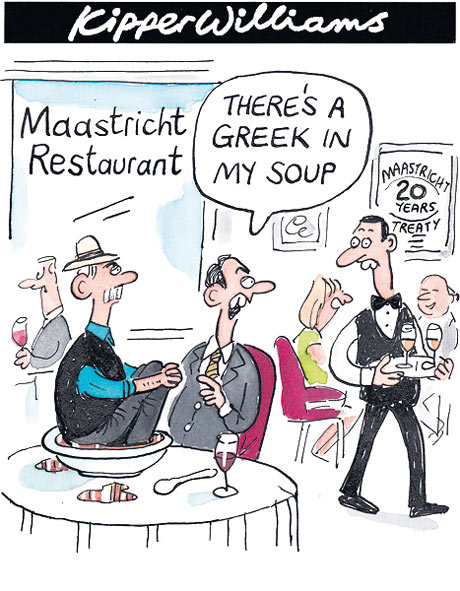
10. Totally Clarke and Dawe - John Clarke is Wayne Manger. He answers a few questions on the events of 2011.
We welcome your comments below. If you are not already registered, please register to comment
Remember we welcome robust, respectful and insightful debate. We don't welcome abusive or defamatory comments and will de-register those repeatedly making such comments. Our current comment policy is here.