

Here's my Top 10 links from around the Internet at 1 pm today in association with NZ Mint.
We welcome your additions in the comments below or via email to bernard.hickey@interest.co.nz.
See all previous Top 10s here.
My must read is #9 from Ed Hugh on the euro-zone mess. Measured, detailed and all the scarier for it.

1. China is on the cusp of a deflationary vortex - Ambrose Evans Pritchard from The Telegraph is never short of a frightening mental image when it comes to financial trends in the Euro-zone and elsewhere.
But he always has something interesting to say.
In this latest piece on China he has some blood-curdling things to say.
New Zealanders, and our Prime Minister in particular, have been remarkably complacent about the likelihood that China will rescue us again.
Ambrose isn't nearly so sure.
Here's why:
China is on the cusp of a deflationary vortex.
This was signalled late last year by the sharpest contraction in the (real) M1 money supply since modern records began. The hard data is now confirming the warnings.
Consumer prices have been falling for the last three months, producer prices have been falling for four months. This is not a food cost story. It is systemic.
"While an economy-wide generalized deflation is yet to be seen, the deflationary spiral looks to have started in some industrial sectors, attesting to considerable stress with the economy. Persistent deflation can be poisonous," said Xianfang Ren from IHS Global Insight in Beijing.
Can someone please pass this on to John Key.
Cheers

3. How to sell superannuation changes - Matt Nolan muses at TVHE about how Generations X and Y can convince the Babyboomers to extend the retirement age and avoid rapidly rising taxes wiping out the younger generations.
He says X and Y should threaten to cut their benefits when X and Y finally take charge. Fair enough.
If we believe it is the hubris or straight selfishness of older generations that is behind the refusal to change the superannuation age to make it affordable – then frame it in terms they understand.
Say that, when they are retired it will be the next generation in charge. The next generation won’t be willing to increase taxes, and so will cut them off – forcing them to leech off their children or live an impoverished existence. If the younger generations show this degree of bloody-mindedness now then older generations will definitely cut back on consumption, and start saving for their retirement.
They might even be willing to “make a deal” regarding the retirement age.
So if that’s the way you think, stop saying how much Gen X and Gen Y are going to get hurt by the superannuation issue – point out the potential for the Baby Boomers to have the rug pulled from under them, giving them a miserable impoverished retirement.
4. No wonder China's governments are reluctant to spend money - This China Daily article shows they are all freaked out about rules banning lots of spending. This is another reason why we're unlikely to see a repeat of 2008/09's local government-funded spending spree that helped save the New Zealand and Australian economies.
According to the regulation, anyone who overspends on the items or misappropriates funds from other budget items to cover them will be demoted or even removed from their posts in the case of "serious" violations.
The same punishment will be applied to other misconduct, such as retaining more official vehicles than the allowed quota, spending more than allowed on cars and interior decoration, and building luxurious office facilities.
Goldman's market capitalisation is where it was in 2005, back when it had a third of the staff and its assets were 60% of what they are now.
One view is that Goldman has always been run for the benefit of its employees, rather than shareholders – over the years, many of the former have gotten rich, while some of the latter have lost a lot of money – and shareholders have finally wised up. In this view, it doesn’t matter what Goldman earns because ultimately that wealth will be transferred to management, not shareholders, through ever-larger compensation packages. So Goldman should take itself private and stop pretending that shareholders are part of the equation.
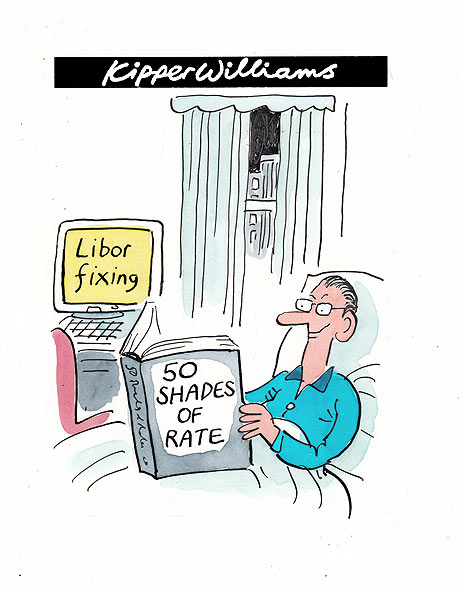
6. Just cheat - Reuters reports a quarter of Wall St executives surveyed by Labaton Sucharow believe they had to engage in wrongdoing to get success.
In a survey of 500 senior executives in the United States and the UK, 26 percent of respondents said they had observed or had firsthand knowledge of wrongdoing in the workplace, while 24 percent said they believed financial services professionals may need to engage in unethical or illegal conduct to be successful.
Sixteen percent of respondents said they would commit insider trading if they could get away with it, according to Labaton Sucharow. And 30 percent said their compensation plans created pressure to compromise ethical standards or violate the law.
7. Speaking of which - Reuters reports another US brokerage looks to have collapsed after US$200 million went 'missing'.
Sigh.
"The whereabouts of the funds is currently unknown," the CFTC said in a complaint against the PFG and its founder and chairman, Russell R. Wasendorf Sr., whose apparent suicide attempt on Mon day morning outside the firm's Cedar Falls, Iowa, offices appears to have triggered the crisis.
The shortfall is modest relative to the estimated $1.6 billion missing from MF Global's accounts, but news of a second broker violating sacrosanct segregated customer funds threatens to shatter the fragile confidence in the industry which once prided itself on an unblemished record in protecting client money.
8. Whatever happened to Bo Xilai? - John Garnault writes at the Sydney Morning Herald about what the silence around Bo Xilai's fate says about China's leadership turmoil.
Fourteen weeks have passed since Bo was toppled as party boss of Chongqing city and placed under some form of house arrest. It was widely billed as the biggest event in Chinese politics since the Tiananmen massacres of 1989, not least because Premier Wen Jiabao implicitly compared Bo's Chongqing with Mao's Cultural Revolution.
The Politburo is so factionally divided - and Bo subdivided it in so many personal and ideological ways - that they haven't yet worked out how to frame his sins, even though he gave them rich material to work with. Bo bypassed official channels, flirted brazenly with the military, arrested a lawyer working for a princeling peer and bent every rule of party discipline. One highlight was when a local billionaire testified how he had been tortured, stripped of his assets and then told that it was all for Bo looking after the interests of an old princeling friend in the army who has since moved on to control China's nuclear arsenal.
Bo's police chief, Wang Lijun, had been so nervous about what Bo might do to him that he tried to defect to the US, with detailed allegations of how Bo's wife had laundered money and murdered an English friend. And Bo was positioning himself as a neo-Maoist hero while his polo-playing son was driving a Porsche at Harvard.
9. Behind the failure of the latest European summit - Independent economist Edward Hugh is a close observer of the various shufflings back and forth in the Euro-zone debt crisis. He isn't confident about the future.
As Paul Krugman put it recently, the Euro crisis has three layers – troubled banks, overlaid on troubled sovereign debt, overlaid on a deep problem of competitiveness created by runaway capital flows between 2000 and 2007 which lead to a huge problem of external indebtedness. The lastest summit decisions (when implemented) will help Spain address the first and second of these. But the big outsanding issue is still growth, a topic which was almost relegated to the sidelines given the extent of the other decisions.
Economies in both Spain and Italy are sinking deeper and deeper into recession, and the 120 billion euro all Europe programme will hardly be sufficient to turn this situation around. Indeed in the case of all the rescued countries the same issues remain – where is the growth to come from? So while the summit outcome is certainly an example of yet another significant step forward, it is also a case of “oh so many rivers still left to cross”.
10. Totally Stephen Colbert on the problem with factory worker unions.
The Colbert Report
Get More: Colbert Report Full Episodes,Political Humor & Satire Blog,Video Archive
We welcome your comments below. If you are not already registered, please register to comment
Remember we welcome robust, respectful and insightful debate. We don't welcome abusive or defamatory comments and will de-register those repeatedly making such comments. Our current comment policy is here.