

Here's my Top 10 links from around the Internet at 10:00 am today in association with NZ Mint.
Bernard is on his summer break and will be back on January 22, 2013, from Wellington.
As always, we welcome your additions in the comments below or via email to david.chaston@interest.co.nz.
See all previous Top 10s here.

1. Inequality
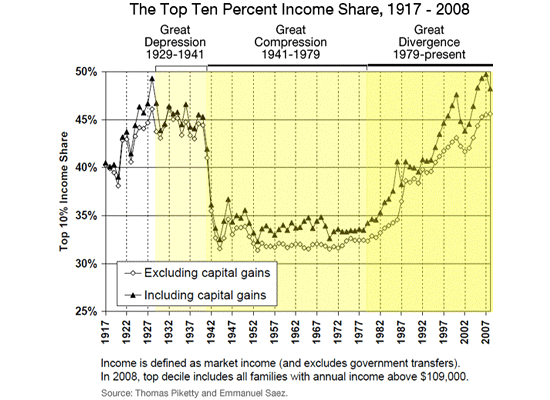
Quick question: How much of the wealth of the US was owned by the top 1% in 1915? How much today? A: 18%, 24%.
To me that is a surprise - I thought it would have been greater, both then and today.
However, I do agree that the shift is worrying and needs to be reversed - and there is no evidence that is happening.
Income inequality is a topic of huge importance to American society and therefore a subject of large and growing interest to a host of economists, political scientists, and other wonky types. Except for a few Libertarian outliers, these experts agree that the country's growing income inequality is deeply worrying.
Even Alan Greenspan, the former Federal Reserve Board chairman and onetime Ayn Rand acolyte, has registered concern. "This is not the type of thing which a democratic society - a capitalist democratic society - can really accept without addressing," Greenspan said in 2005. Greenspan's Republican-appointed successor, Ben Bernanke, has also fretted about income inequality. Yet few of these experts have much idea how to reverse the trend. That's because almost no one can agree about what's causing it.
I wish we had equivalent New Zealand data. Let me know if you can point to it.
2. The myth of technological unemployment
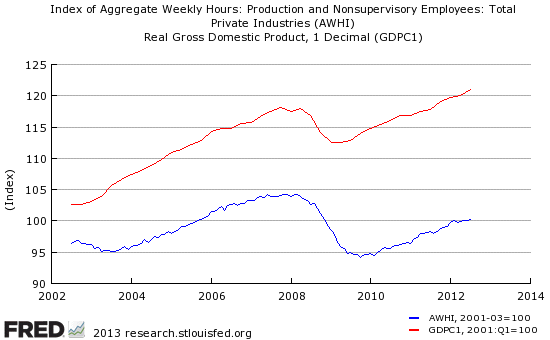
Worried about being replaced by a machine? You've got 200 years of company says Matthew Yglesias at Slate.
In 2012, a lot of firms employed a lot of new labor-saving technology in order to increase profits. That's true. But the same happened in 1992 and 1972 and 1952 and, for that matter, 1852. But whenever you have a prolonged labor market downturn, the salience of this fact increases and you start hearing more and more talk about how there isn't as much need for workers anymore because of mechanization.
In the contemporary context, people often use the word robots in this context because mechanization is obviously a trend that's been going on for more than 200 years so robots makes it sound more plausible that something new has happened recently.
Machines are replacing workers, in other words, but they've been doing so since the cotton gin and the spinning jenny. Over the long run this leads to higher incomes and more leisure. But across short spans of time, the ups and downs in the level of employment and the number of hours available to people who want to earn more money is driven by the ups and downs of the business cycle.
3. World Bank cuts its 2013 growth forecasts
A frustratingly slow economic recovery in developed nations is holding back the global economy, the World Bank said on Wednesday, as it sharply cut its outlook for world growth in 2013. They forecast that global gross domestic product will inch up 2.4% this year, from 2.3% in 2012. In its last forecast in June, the bank projected global growth would reach 3.0% in 2013.
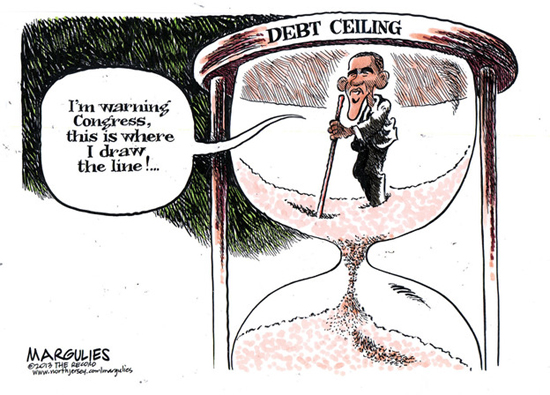
Policy uncertainty [in the United States] has already dampened growth. Should policymakers fail to agree such measures, a loss of confidence in the currency and an overall increase in market tensions could reduce U.S. and global growth by 2.3 and 1.4 percent respectively.
4. Today's raw market data ...
A quick holiday update:
| as at 11:10am |
Today 9:00 am |
Yesterday |
Four weeks ago |
One year ago |
| NZ$1 = US$ | 0.8404 | 0.8398 | 0.8339 | 0.7936 |
| NZ$1 = AU$ | 0.7963 | 0.7949 | 0.7959 | 0.7697 |
| TWI | 75.36 | 75.28 | 74.38 | 71.09 |
| Gold, US$/oz | 1,676 | 1,680 | 1,696 | 1,656 |
| Dow | 13,516 | 13,530 | 13,320 | 12,488 |
| Copper, US$/tonne | 7,945 | 8,030 | 7,825 | 8,185 |
| Volatility Index | 13.24 | 13.55 | 16.34 | 22.20 |
5. Want to be CEO? What's your BMI?
New research suggests those extra kilos, large waists undermine perceptions of leadership ability. More from the WSJ:
While weight remains a taboo conversation topic in the workplace, it's hard to overlook. A heavy executive is judged to be less capable because of assumptions about how weight affects health and stamina, says Barry Posner, a leadership professor at Santa Clara University's Leavey School of Business. He says he can't name a single overweight Fortune 500 CEO. "We have stereotypes about fat," he adds, "so when we see a senior executive who's overweight, our initial reaction isn't positive."
6. Using finance to expand their markets
Big tech companies are pushing new finance arrangements to keep the growth in their sales. Apple is now offering Chinese buyers a two year installment plan. This is innovative in the sense that it has been telecom retailers who have done that until now. A sign that Apple is going down-market in some regions? How long before they sell their personal loan portfolio to GE Money or similar. More from Bloomberg:
Urban workers in China had average monthly pay of about 3,585 yuan in the first nine months of last year, according to data from the National Bureau of Statistics. Apple “has likely approached maximum penetration in China’s higher economic stratas, and now needs to be able to appeal to students, workers and rural residents to sustain robust growth,” said David Wolf, China managing director for market consultant Allison+Partners in Beijing. “Financing is traditionally the best route to make expensive luxury items affordable to those unable to save the cash for them, and if Apple pulls it off it will be a pioneer in consumer credit in China,” Wolf said.
7. Personality change?
"Financial conditions in the euro zone have significantly improved since the summer, when euro zone risks peaked because of German policymakers’ open consideration of a Greek exit, and the sovereign spreads of Italy and Spain reached new heights. Since then, risks have abated significantly." Who has this less-doomster view? Nouriel Roubini. Lower risks, but the same problems however.
While there is a much lower likelihood of disorderly events in the euro zone, there are still significant obstacles to deeper integration, as well as country-specific economic and political vulnerabilities. The biggest obstacle to the formation of a banking, fiscal, economic and political union is that Germany is pushing back against the time line for action, with the initial skirmish on ECB supervision of euro zone banks. This backpedaling reflects deep German skepticism on whether the resolution of the euro zone crisis requires a move toward greater union. Without a more credible commitment to austerity and reforms from euro zone periphery countries, lurching forward would imply that risk-sharing will turn into a large, long-term transfer union, which is unacceptable to Germany and the core. Thus, Germany will do whatever is necessary to delay the integration process, at least until after elections in fall 2013.

8. Mercantalism 2013?
US retail behemoth WalMart is commiting US$50 billion to "buy American" over the next 10 years. Does this indicate a shift in how Americans see their self-interest? Or is it tokenism, a passing fad? After all it will be less than 1.5% of their total purchases. More from the NYTimes:
The chief executive of the American Apparel and Footwear Association, said the challenge for Walmart would be finding vendors who could meet its price points with American production, which was generally much more expensive than overseas production. "The trend has been to be offshore," Mr. Burke said. Overseas production is "indicative of consumer demand for product at a lower price."
9. Trust evaporating
Germany’s Bundesbank is to repatriate gold reserves held abroad to tighten control and combat currency crises in the future, pulling a chunk of its holdings from New York and all its bullion from Paris, reports Ambrose Evans-Pritchard in the English Telegraph. HT to a number of commenters yesterday who follow English papers.
The move marks an extraodinary breakdown in trust between leading central banks and has set off ferment among gold enthusiasts, with some comparing it with France’s withdrawal of gold from the US under President Charles de Gaulle as the Bretton Woods currency system crumbled in the early 1970s.
10. Today's quote
"The only reason a great many American families don't own an elephant is that they have never been offered an elephant for a dollar down and easy weekly payments." Mad Magazine
We welcome your comments below. If you are not already registered, please register to comment
Remember we welcome robust, respectful and insightful debate. We don't welcome abusive or defamatory comments and will de-register those repeatedly making such comments. Our current comment policy is here.