

This week's Top 10 is a guest post from Eric Crampton, head of research at the New Zealand Initiative.
As always, we welcome your additions in the comments below. If you're interested in contributing a Top 10 yourself, contact gareth.vaughan@interest.co.nz.
See all previous Top 10s here.
1. Nudge Nudge
Richard Thaler won this year’s Nobel Prize in Economics for his work in behavioural economics. With Cass Sunstein, he developed the now-famous Nudge concept. If people are subject to predictable biases, then small nudges might be able to change behaviour. And it beats more heavy-handed forms of paternalism because nudges are not supposed to be shoves: people can opt-out.
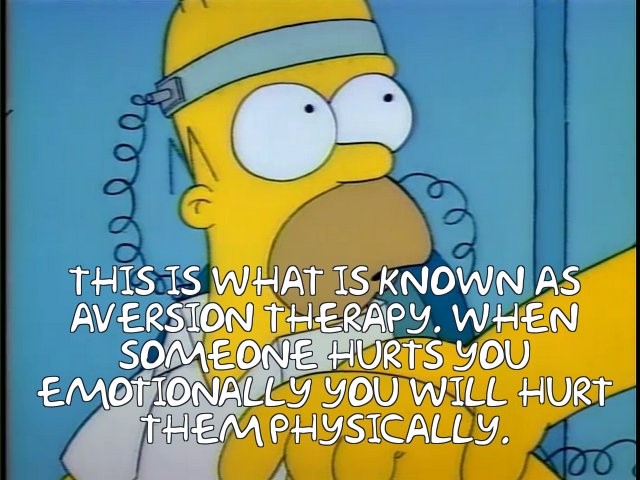
And you can even nudge yourself. Pavlok is like FitBit, but it gives you a shock whenever it catches you doing something you’ve promised not to do. Arguments that we need government to protect us from ourselves ring a bit hollow when those who really want the protection can shock their way to better behaviour. But be careful out there. They’ve now integrated Slack with Pavlok, so your boss or coworkers can zap you if you’re not paying attention in the weekly meeting. Careful out there.
2. But not always nudges
Nudges don’t always work. One clinical trial (New York Times write-up here) checked whether insights from behavioural economics could help encourage patients to finish their prescriptions. It’s a harder problem than it sounds – a lot of health spending winds up wasted because patients don’t follow doctor’s orders, stop taking their pills, and wind up back in hospital. And nothing worked. Paying people to take their pills, social support nudges, and piles of other interventions showed no effect.
3. Holidays
The holidays are coming, and that means a likely endless stream of tut-tutting about holiday drinks. Here’s a bit of help when your local nanny starts in. First up, despite all the headlines on alcohol and cancer, there’s really not much there there. The New York Times covers the evidence and reaches the same conclusion I did: there’s increased risk among heavy drinkers, but not really for lighter drinkers. And because alcohol has a pile of health effects – some positive and some negative – it’s a bit silly to focus on any one disorder rather than on the overall effect across all disorders.
Mark Forsyth provided another voice of reason in conversation with Jesse Mulligan over at Radio New Zealand earlier this week. Forsyth covers the history of drunkenness and how people, and animals, behave when intoxicated. Culture matters at least as much as chemistry.
4. Little rocket man
No, not that one. Trump’s stupid insults give a bad name to little rockets. And little rockets are awesome – they can launch lots of small things at low cost. Rocket Lab’s second launch is coming up – and is covered at the Washington Post. MBIE deserves credit for getting the rules right for a competitive space industry in New Zealand. We covered the behind-the-scenes regulatory effort in a report jointly authored with Internet New Zealand on regulation and technology. That was one of the success stories. Others aren’t quite as good. I like Sam Kennard’s take here, from Australia.
5. Meritocracy
There’s been a fascinating debate over in the UK on the limits of just what we might expect from schools. Toby Young warns that schools doing the absolute best possible job for every child could wind up reinforcing inequality rather than reducing it if heritable differences in intelligence matter. If we think that the most disadvantaged students are stuck in the worst schools, then at least fixing that problem shouldn’t make things worse. But what does it all mean overall? I really enjoyed this BBC Radio 4 programme on meritocracy. Interesting and challenging stuff.
6. Debunking is hard
There’s some kind of rule of thumb that debunking nonsense is orders of magnitude harder than producing it in the first place. Here’s a nice case study. Two psychologists in 1998 published a study claiming that you’re more likely to win a game of Trivial Pursuit if you’ve been ‘primed’ with words like professor rather than with words like soccer hooligan. Their original study had just over 40 participants and has been cited over 800 times. It is, of course, nonsense. You could tell as much just by smelling the thing. But debunking it properly – that’s harder. It took 124 authors in experimental labs around the world to show that it was nonsense, through careful replication. Michael Philipp at Massey University helped. I just followed him on Twitter. You should too.
7. Get out of the way: Part 1
Our report on regulation and technology hit on the ways that obsolete regulations are holding back technological progress. But it sure isn’t just a problem for the technology sector. Russell Brown shows how Auckland Council has screwed up a Lorde concert. Here’s what happened:
What it looks like is that the Powerstation had for years been operating in good faith under a licence that permitted a variation for all-ages shows. And then it was told, two working days out from its biggest shows of the year, that the licence was incorrect and under-18 year-olds who paid months ago for tickets would not be able to attend, even with their parents. That included any with tickets for the Monday and Tuesday shows, which were advertised with a “limited” all-ages area.
Yes, even with their parents, and even though they wouldn’t get anywhere near a bar.
This kind of thing has been a problem since National’s punting of alcohol regulation down to Councils. David Seymour pointed to the problem when he had to use a Member’s Bill to allow the bars to be open for the Rugby World Cup. In principle, the Act provides for that through special licences. In practice, it’s much too hard to overcome the objections of police, medical officers of health, and district licensing committees.
8. Get out of the way: Part 2
Meanwhile, Dunedin’s ban on Easter Trading is running into a bit of a problem with a coming Ed Sheeran concert. He’s to play three concerts over Easter weekend, and anybody coming into town for the show will have rather less fun than they might have with the bars and shops closed. First Union’s Shirley Walthew was quoted as saying “Why should we change everything just to suit that weekend? …They [concert-goers] won’t starve.”
There is a real problem to be solved: some people attach religious significance to Easter, and Easter isn’t a statutory holiday. Why not just make Easter a statutory holiday that doesn’t transfer – so you only get credit for it if you’re rostered to work on Easter. Restaurants can be open on Easter, and because it isn’t a statutory holiday, staff aren’t guaranteed extra pay or time in lieu. Get rid of the trading bans and make Easter a stat holiday. Then you don’t have to change it just for an Ed Sheeran concert, and you have a fix that should work more generally.
9. Australian GST
Kiwi firms shipping to Australia will be hit for GST even for low value shipments, if they ship enough in total to Oz over the year. Retail New Zealand has demanded that we do away with the GST threshold on low valued goods here too.
A government that seems keener on playing tit-for-tat with Australia might find it tempting, but it should be careful. The price difference between domestic retail and delivered-from-overseas is generally much much larger than the 15% GST – or at least for the goods that people will bother having shipped in from overseas. Adding GST at the border could do a lot of harm if there isn’t a clean way of applying it. A lot of foreign companies asked to collect GST for New Zealand might just decide to stop shipping here because it’s too hard, and that would be terrible for access to the broad range of goods available online. I worry too that parallel consumer importation provides a strong competitive constraint on domestic markets. I’d covered the issue in 2015 when it last came up. Until somebody figures out a seamless way of applying GST at the border, this really just feels like protectionism from the domestic retailers. The 15% at the border is a pretty trivial cost. But Customs holding goods for days while awaiting payment could do a lot to block competition.
10. And a final fun one
...With a hat-tip to @JenesaJeram. Washington D.C.’s nanny state has had a go at nanny goats. Goat yoga has somehow become popular in the US. It is exactly what you think it is: yoga classes with goats strolling around for pats. Anyway, it violates DC’s ban on spectators touching animals at public events. I wonder what they’d make of our A&P shows.
We welcome your comments below. If you are not already registered, please register to comment
Remember we welcome robust, respectful and insightful debate. We don't welcome abusive or defamatory comments and will de-register those repeatedly making such comments. Our current comment policy is here.