
This article originally appeared in LawNews (ADLS) and is here with permission.
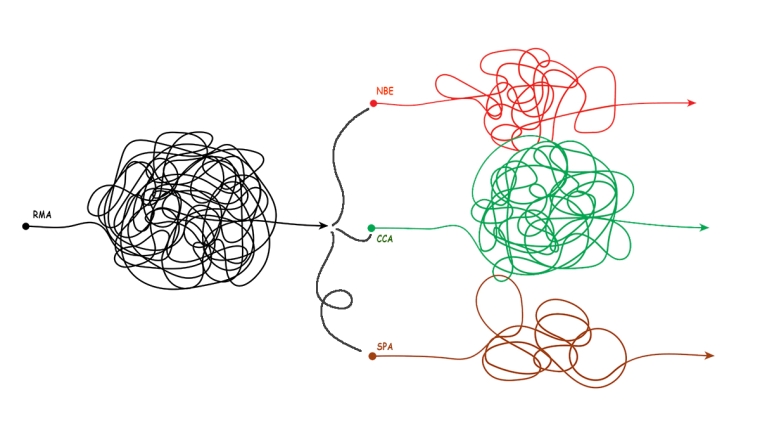
Environment minister David Parker has announced that the Resource Management Act 1991 (RMA) will be scrapped and replaced with three new pieces of legislation: the Natural and Built Environments Act (NBE), Strategic Planning Act and the Climate Change Adaptation Act.
Does this signal a brave new world? Drafting the perfect replacement for the RMA is a monumental task but the government has promised to do it within its current term.
Our law has evolved from a modest piece of legislation – the brainchild of former Deputy Prime Minister Sir Geoffrey Palmer – which was the envy of by the world to a behemoth bogged down in bureaucracy.
Over the years it has been amended to the point where it’s time to repeal it and start again. An exposure draft of the NBE will be released to a select committee in May.
In 2020 the independent Resource Management Review Panel chaired by retired Court of Appeal judge Tony Randerson QC considered whether the RMA should be scrapped or if amendments that had proved unworkable could be pared back into coherent legislation, says Berry Simons partner Helen Andrews, convenor of the ADLS’ Environment & Resource Management Law Committee
“The panel decided, and probably rightly, that it’s past of the point of no return, that it’s too hard to try to make those adjustments to salvage the Act itself.”
That doesn’t mean wholesale abandonment of the best bits of the RMA and starting from ground zero, says Andrews. Expect to see the more usable provisions of the existing Act appearing in similar guise in the new legislation.
That includes the RMA’s sections 5 to 8, containing the Act’s purpose, principles, matters of national importance and treaty provisions. “That’s really the engine room or the key lodestar as it has been described by the Environment Court,” she says.
In its submission the ADLS committee will focus on the wording, rather than policy because of the many varying views of the committee membership, encompassing private practice, in-house counsel, community and academic perspectives.
“Obviously we’re not there to advocate on behalf of a particular policy position. So, what we do in our submissions is comment on the workability of the proposals that have been put forward [and] how they might integrate with other legislation,” Andrews says.
The one area of unanimity, she says, is agreement that the RMA does need to be reformed. “The RMA has got too unwieldy. Too incoherent. The amendments weren’t always needed and they haven’t always been well targeted.” Even when they worked, they were amended yet again.
It’s a tall order to replace the RMA without those three new Acts piling up even higher than the existing pile of paper that comprises the current legislation, says John Tookey, professor at AUT’s School of Future Environments.
The tricky part for drafting shorter legislation will be finding the appropriate balance between the various priorities that need to be addressed by the legislation.
Although the engine room will be recognisable, inevitably with any new legislation there will be elements that will need to be tested in the courts. It’s notable that the RMA is one of the most singular pieces of legislation that encapsulates the principles of the Treaty of Waitangi, Tookey says.
One of the key issues, says committee member Dr Grant Hewison, director of Grant Hewison & Associates, is that the new legislation must be clear about the role of local government in the Tiriti/Crown partnership. The three new statutes must also ensure multiple institutions can quickly and easily implement what was intended.
Housing or climate?
The RMA is often viewed as the cure for the housing crisis, yet amending the RMA didn’t fix it in the past. Amendments didn’t work and weren’t given sufficient time to bed in, says Andrews. The lesson, however, may not have been learned.
The focus on the housing crisis in the current reform could be a real mistake, says Hewison, when what really matters is the climate crisis. “From what I can see [climate] is being treated as an add-on,” he says.
“We’re trying to address the housing crisis by reforming the RMA. It’s kind of like nonsense. You have a tax problem not a land-use problem.”
Without focusing on climate change we might be simply rearranging the deck chairs on the Titanic, Hewison says. “Although that will bring some better outcomes at the margins, it isn’t what we need or the government actually thinks it will get out of this process.
“If the RMA isn’t going to change much in terms of its core provision, then the outcomes are not going to be too different from what we’ve got now.”
Another big issue could be the large range of stakeholders to consider within an ambitious timeframe, says Tookey. “There will be individuals who are going to view this as a direct assault on their ability to have an input into the land use in Aotearoa, New Zealand,” he says.
At the same time, says Hewison, we have a very different style of government now than in the first –past-the-post days when the RMA was first drafted. This could make it harder to push legislation through.
“The government now under MMP has a majority and can force through legislation if it wants to. You have a much wider range of stakeholders and you have a much more delicate consensus-building process.”
Under the previous coalition, reforming the RMA might have been impossible, which may have given the government confidence to make the move now.
Enforcing bureaucracy
Not all of the issues with the RMA sit in the legislation.
Councils and their staff have at times been the roadblocks to the efficient operation of the RMA. Resourcing, capacity and cultural issues need to be addressed, says Andrews. Too often, she adds, councils held tightly to ownership of their plans.
“Certainly we hear the view from the council that the council plan is the council’s plan, and it wants to retain ownership of its plan and have it written how the council wants it written.” Suggestions for improvements weren’t always well received.
One of the key issues Andrews sees in the current regime is the focus by council officers on “adverse effects”. Hence the recommendation from the Randerson report that there needs to be a change from a simple focus on adverse effects to achieving outcomes.
“Having that change spelled out in black and white could well make a difference. To ensure that it does [happen] it has to be backed up by a review of what else needs to be done to address implementation issues,” Andrews says.
“Otherwise, some council officers in particular will simply say, ‘well, yes, we’ve got all these concepts and principles that we’re familiar with. This is basically RMA 2.0 and so I can continue operating and approaching things as I was’. Whatever we can do to try and avoid that and convince them it’s a brave new world and that approach has to change.
“If not, I can certainly say that in 10, 15, 20 years’ time people are going to be having exactly the same conversation around the NBE and why that failed to achieve the outcomes as intended.”
Tookey also sees issues from within councils. He points out that many bureaucrats working with the RMA started their careers under the Act and may well finish them under it, and may be invested in the existing system. “You have to change the cultural approach to doing business.”
Drafting the legislation isn’t the hard part, he says. And the issue is bigger than simply changing the culture in councils.
“You are going to have to spend an awful lot of time and effort re-educating folks and re rethinking what takes place. Simplifying legislation, then trusting that legalisation to a bunch of bureaucrats whose role is enforcing bureaucracy. I’m not necessarily convinced.”
This article originally appeared in LawNews (ADLS) and is here with permission.
We welcome your comments below. If you are not already registered, please register to comment
Remember we welcome robust, respectful and insightful debate. We don't welcome abusive or defamatory comments and will de-register those repeatedly making such comments. Our current comment policy is here.